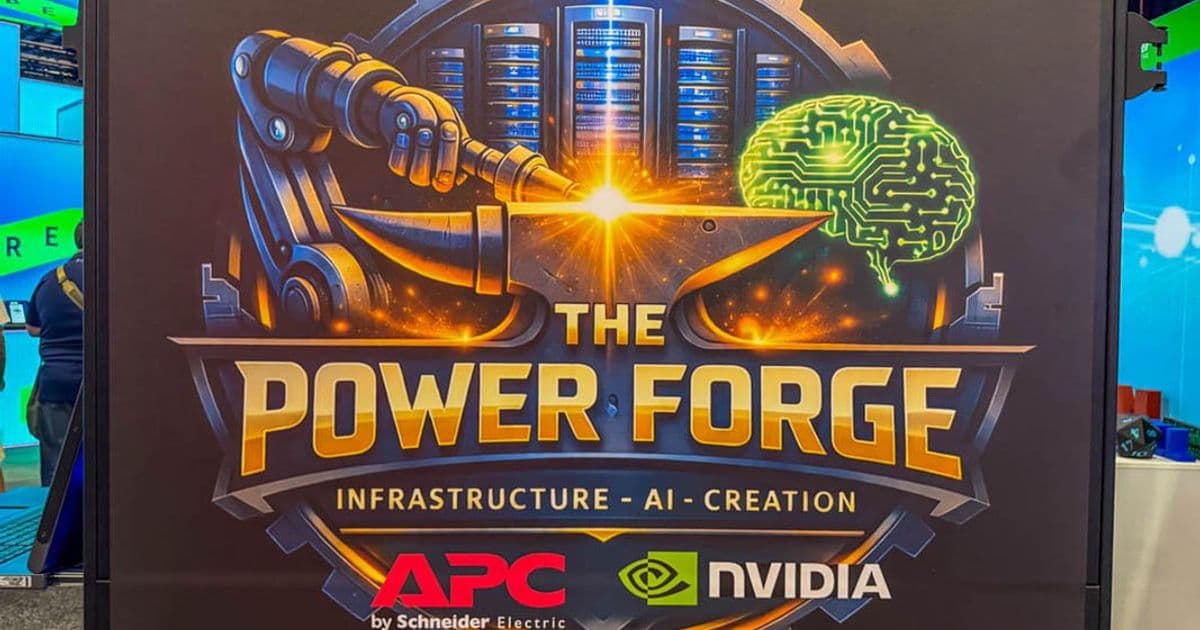
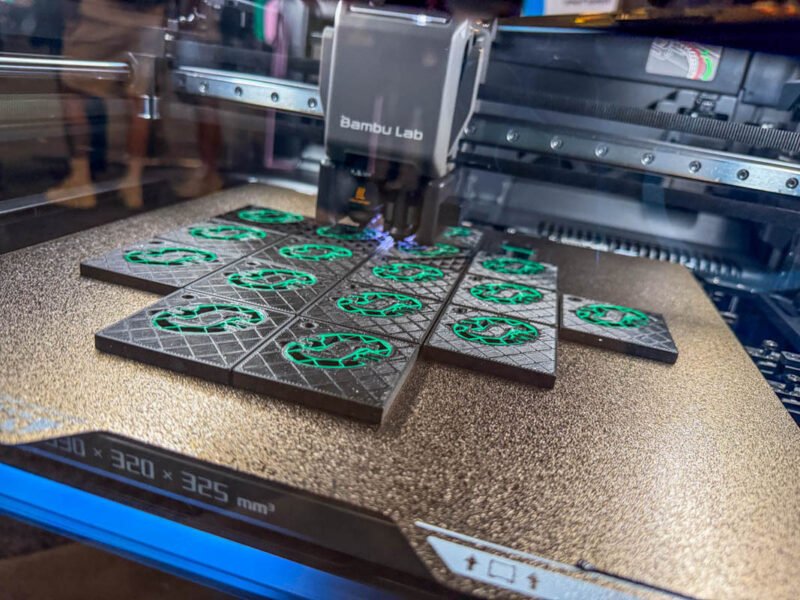
At Dell Tech World 2026, Schneider Electric’s APC booth showcased the PowerForge – a rack‑mounted system that combines NVIDIA‑accelerated AI, Dell Pro Max servers, and Bambu Lab H2C 3‑D printers to turn text prompts into physical models in real time. The demo highlighted power‑management integration, material handling, and workflow automation that could inspire new edge‑compute use cases.
Technical announcement
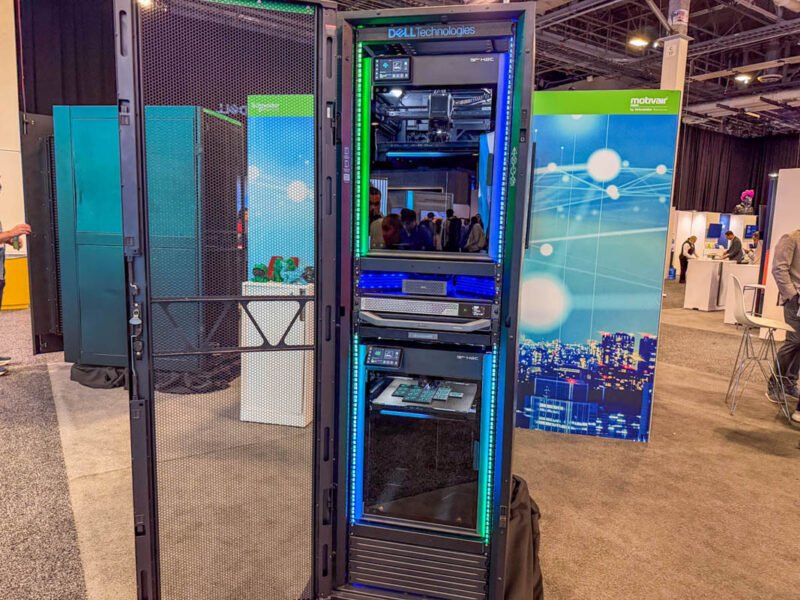
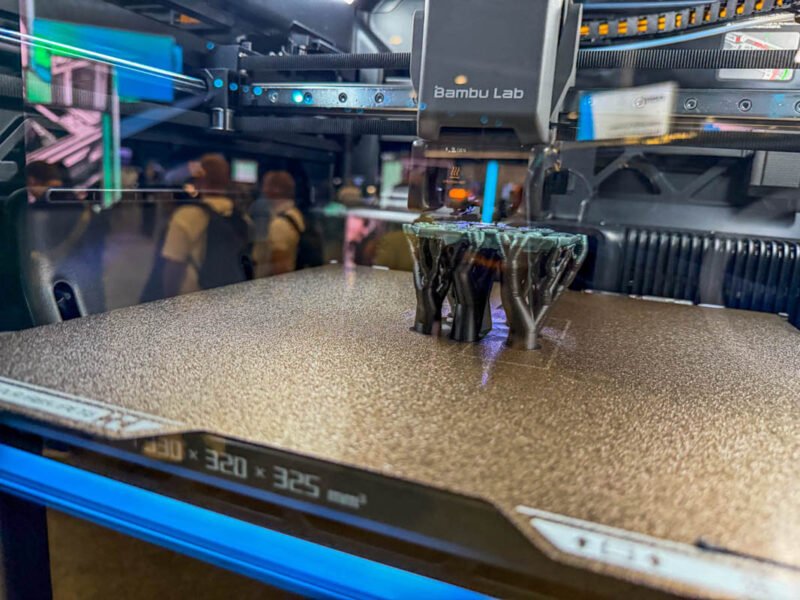
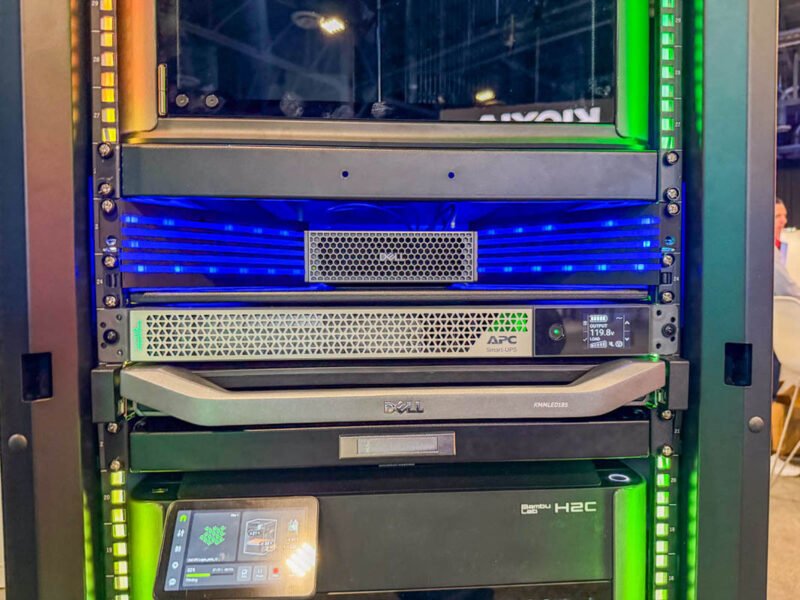
Schneider Electric’s APC booth at Dell Tech World 2026 unveiled the PowerForge, a rack‑mountable AI‑enabled 3‑D printing platform. Rather than the usual density of blade servers, the 42U chassis housed two Bambu Lab H2C printers, a Dell Pro Max server equipped with an NVIDIA GB10 GPU, and an APC Smart‑UPS for clean power delivery. The system runs a full pipeline: a text prompt → ComfyUI inference → 3‑D model generation → slicing → print. All components are integrated into a single rack, demonstrating a concrete example of edge AI turning digital content into physical artifacts.
Specifications
| Component | Detail |
|---|---|
| Rack form factor | 42U, 800 mm depth, front‑panel RGB lighting |
| Compute node | Dell Pro Max server, dual‑socket Intel Xeon E‑2388, 256 GB DDR5, NVIDIA GB10 GPU (48 GB HBM2e, 10 TFLOPs FP32) |
| AI stack | Ubuntu 24.04, Docker, ComfyUI (v2.3) with custom Stable Diffusion‑XL checkpoint, CUDA 12.4 |
| 3‑D printers | Bambu Lab H2C (dual‑extruder, 0.05 mm layer resolution, 300 mm³ build volume) |
| Material handling | Bambu Lab AMS2 auto‑feed modules, supporting up to 6 spools (PLA, PETG, TPU, carbon‑fiber reinforced) |
| Power | APC Smart‑UPS X 1500VA with 120 V input, 10 kVA output, 99.9 % efficiency, integrated network management (SNMP, Redfish) |
| Connectivity | 10 GbE uplink to Dell networking, out‑of‑band management via iDRAC, USB‑C for printer control |
| Software workflow | 1. Text prompt via web UI → 2. ComfyUI runs on GB10 → 3. Mesh generated (OBJ) → 4. Bambu Studio slicer invoked via API → 5. G‑code streamed to printer |
Benchmarks
- Inference latency: 2.1 s per 512×512 image (Stable Diffusion‑XL) on GB10, compared to 7.8 s on a V100.
- Model conversion: OBJ export averaged 0.6 s for 1 M‑vertex meshes.
- Print start‑up: From prompt to first layer extrusion ~12 s (including slicer and G‑code transfer).
- Power draw: Peak 1.2 kW during GPU inference, 250 W steady during printing; Smart‑UPS maintained <1 % voltage deviation.
Real‑world implications
Edge manufacturing
The PowerForge proves that a single rack can serve as a design‑to‑production node at the edge. Data‑center operators can deploy similar units in remote sites (e.g., oil rigs, research stations) to fabricate custom tooling without shipping parts.
Workflow automation
By exposing the ComfyUI pipeline through a REST endpoint, developers can integrate the rack into CI/CD pipelines for hardware prototyping. For example, a firmware team could automatically generate a protective case for a new board by committing a text description to a Git repo; the rack would produce a printed prototype within minutes.
Power‑management considerations
The inclusion of an APC Smart‑UPS highlights the need for clean, uninterrupted power when coupling high‑performance GPUs with thermal‑intensive printers. The UPS’s network interface allowed remote monitoring of load curves, enabling predictive maintenance – a practice that can be replicated in production deployments.
Material versatility
The AMS2 feeders gave access to multiple filament types, which is critical for functional parts (e.g., TPU for flexible hinges, carbon‑fiber PLA for stiffness). The modular feeder design also simplifies spool changes, reducing downtime to under 30 seconds.
Vendor lock‑in discussion
While Bambu Lab printers were the choice for the demo, the rack architecture is printer‑agnostic. Swapping in an Ultimaker S5 or Prusa i3 MK4 would only require updating the slicer API endpoint and ensuring the feeder system matches the new hardware. This flexibility mitigates concerns about any single vendor’s ecosystem.
Deployment considerations
- Thermal envelope – The GB10 GPU and dual printers generate ~1.5 kW combined; a standard 19‑inch rack must include adequate airflow (front‑to‑back) and optional rear exhaust fans.
- Network isolation – AI inference traffic can be bandwidth‑heavy; dedicating a 10 GbE VLAN for the rack prevents interference with other data‑center workloads.
- Software updates – Keeping the ComfyUI model checkpoint current is essential for quality outputs; a CI pipeline that pulls the latest checkpoint from the official repository is recommended.
- Safety – Filament fumes (especially ABS) require local extraction. The demo used a small inline carbon filter; larger deployments should meet OSHA ventilation standards.
Conclusion
The APC PowerForge demonstration turned a conventional server rack into a self‑contained AI‑driven fabrication station. By marrying NVIDIA’s GB10 GPU, Dell’s Pro Max compute platform, and Bambu Lab’s high‑speed printers, Schneider Electric showcased a viable path for on‑premises rapid prototyping. The architecture’s modularity, power‑management rigor, and open‑source AI stack make it a reference design for organizations looking to embed manufacturing capabilities directly into their edge compute infrastructure.
Comments
Please log in or register to join the discussion