Former AWS employee reflects on company's transformation from customer-centric cloud provider to AI-focused entity, raising questions about industry direction.
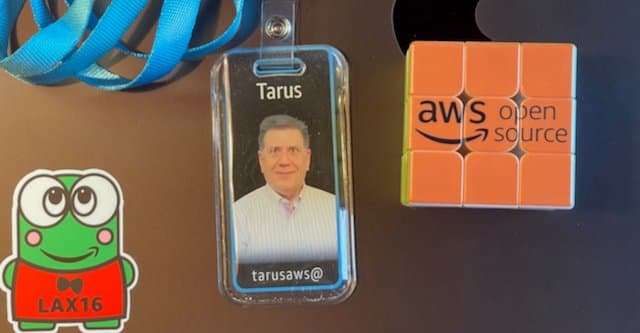
Amazon Web Services, the dominant cloud infrastructure provider, is undergoing a significant cultural shift according to a departing employee who spent four years with the company. The former member of AWS's Open Source Strategy and Marketing (OSSM) team announced their departure this week, citing organizational changes and an accelerated pivot toward Generative AI that has moved the company away from its original customer-centric mission.
When AWS first introduced cloud computing to the enterprise world, it revolutionized how businesses approached IT infrastructure. The cloud eliminated the need for companies to guess their computing needs in advance, order hardware that could take weeks or months to arrive, and face consequences if they misjudged their requirements. Services like S3, EC2, and RDS set industry standards and solved real customer problems.
"The cloud solved those problems, and AWS set the standard with services such as S3, EC2, RDS, etc.," the former employee wrote in their farewell post. "Go to re:Invent these days and try to find a session on those tools. Even when you can, AI will still dominate the presentation."
The employee's departure highlights a broader tension within the tech industry as companies rush to incorporate Generative AI into their product portfolios. At AWS, this shift has reportedly come at the expense of the customer focus that originally made the company successful.
"Instead of working backwards from a genuine customer need, the goal seems to be to create as many things as fast as possible, throw them into the world and see which ones gain traction, whether or not they serve a real need," the former employee stated. "There is this push to use AI to create content which will ultimately be consumed by AI, and we've lost the human being in the process."
The organizational changes included the departure of the employee's direct manager, David Nalley, who was promoted to run the entire AWS Developer Experience organization. While this advancement was positive for Nalley, it reduced the employee's access to leadership and changed their day-to-day experience at the company.
The employee also expressed frustration with what they perceived as Amazon's view of employees as "fungible"—replaceable resources rather than valuable contributors with institutional knowledge. While this approach may work in Amazon's retail fulfillment centers, it doesn't translate well to information technology, where success often depends on expertise developed over time.
"Amazon has a really odd viewpoint when it comes to the people who work there. They view almost all employees as 'fungible'. Now the first time I had ever heard the term 'fungible' was in reference to non-fungible tokens (NFTs), but it basically means 'replaceable'," the former employee explained. "Amazon built a huge retail business on processes that could take someone who was relatively healthy and relatively intelligent, and turn them in to a productive fulfillment center employee in a couple of weeks. While that may work for a shipping business, it doesn't translate all that well to information technology, since so much of being successful in that business relies on institutional knowledge that must be earned over time."
Despite these challenges, the employee took pride in their work helping customers, particularly in restoring a suspended AWS account for a customer in northern Africa who had lost access to a decade-old environment with little notice.
"The financial impact to the company was negligible as this customer wasn't a huge spender, but they are one of those people that made AWS successful in the first place," the employee wrote. "In the process of turning this person from an account number into a human being, I learned more about his situation and, while I won't share details, losing his AWS account was just one of a long list of issues he was dealing with at the time."
This incident highlights the tension between AWS's scale and its ability to maintain personal relationships with customers—a challenge that grows as the company expands its focus to new areas like Generative AI.
The employee also expressed concern about the future of open source in the age of AI, where they question how the principle of putting technological power into the hands of users will play out when advanced AI models are only accessible through APIs and running them locally requires prohibitively expensive hardware.
"Open source has always been, at least to me, about putting technological power and control into the hands of the user and not the vendor," they wrote. "How will that play out in GenAI, when every state of the art model can only be accessed by API? Even if you want to try to run models locally, who can afford the hardware? And what do you do when your job is to be a human being in a world of AI?"
The departure comes amid broader industry shifts as cloud providers balance their core infrastructure businesses with emerging AI opportunities. AWS faces increasing competition from Microsoft Azure, Google Cloud, and others, all of which are investing heavily in Generative AI capabilities.
For customers, the challenge will be determining which providers maintain focus on solving real problems versus those simply chasing the latest technological trends. As the former AWS employee's experience suggests, the most successful cloud providers may be those that can balance innovation with the customer-centric approach that originally made cloud computing valuable.
For more information about AWS's services, visit their official website. For insights into cloud computing best practices, check out resources from the Cloud Native Computing Foundation.
Comments
Please log in or register to join the discussion