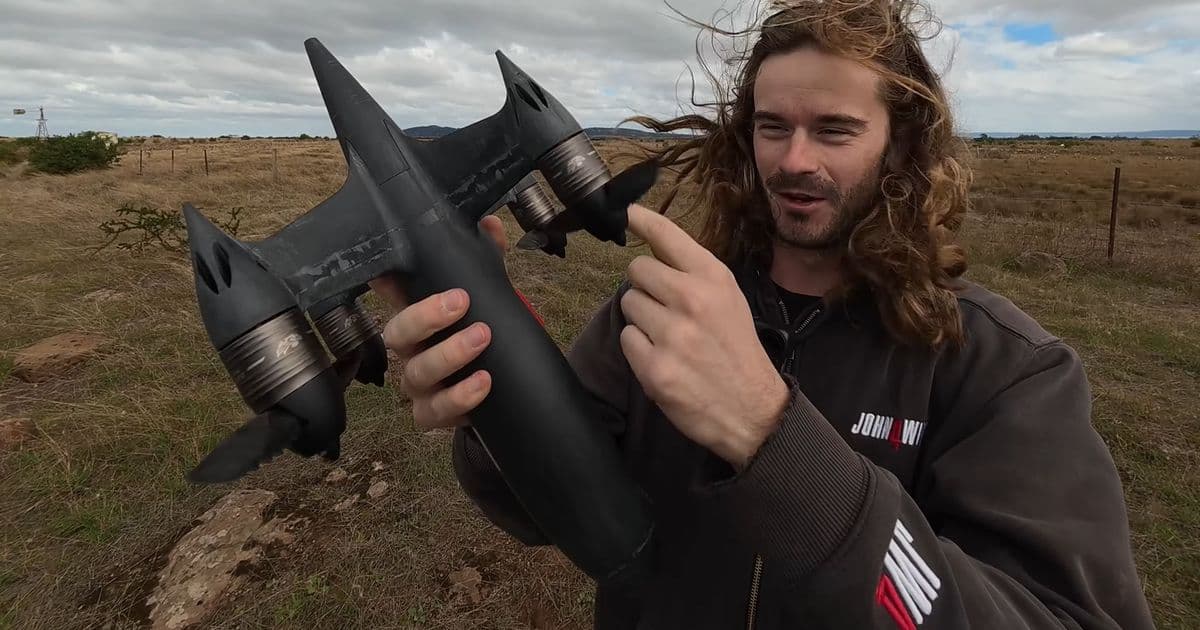
Aidan and Ben reclaimed the unofficial drone speed record with a 453 mph run, thanks to high‑pitch, sawtooth‑edged carbon‑fiber propellers that keep airflow attached at extreme angles. The achievement highlights the trade‑offs between thrust at low speed and drag reduction at high Mach numbers, and it underscores the niche supply chain for custom aerospace‑grade composites.
Blackbird drone hits 453 mph using exotic sawtooth carbon‑fiber props
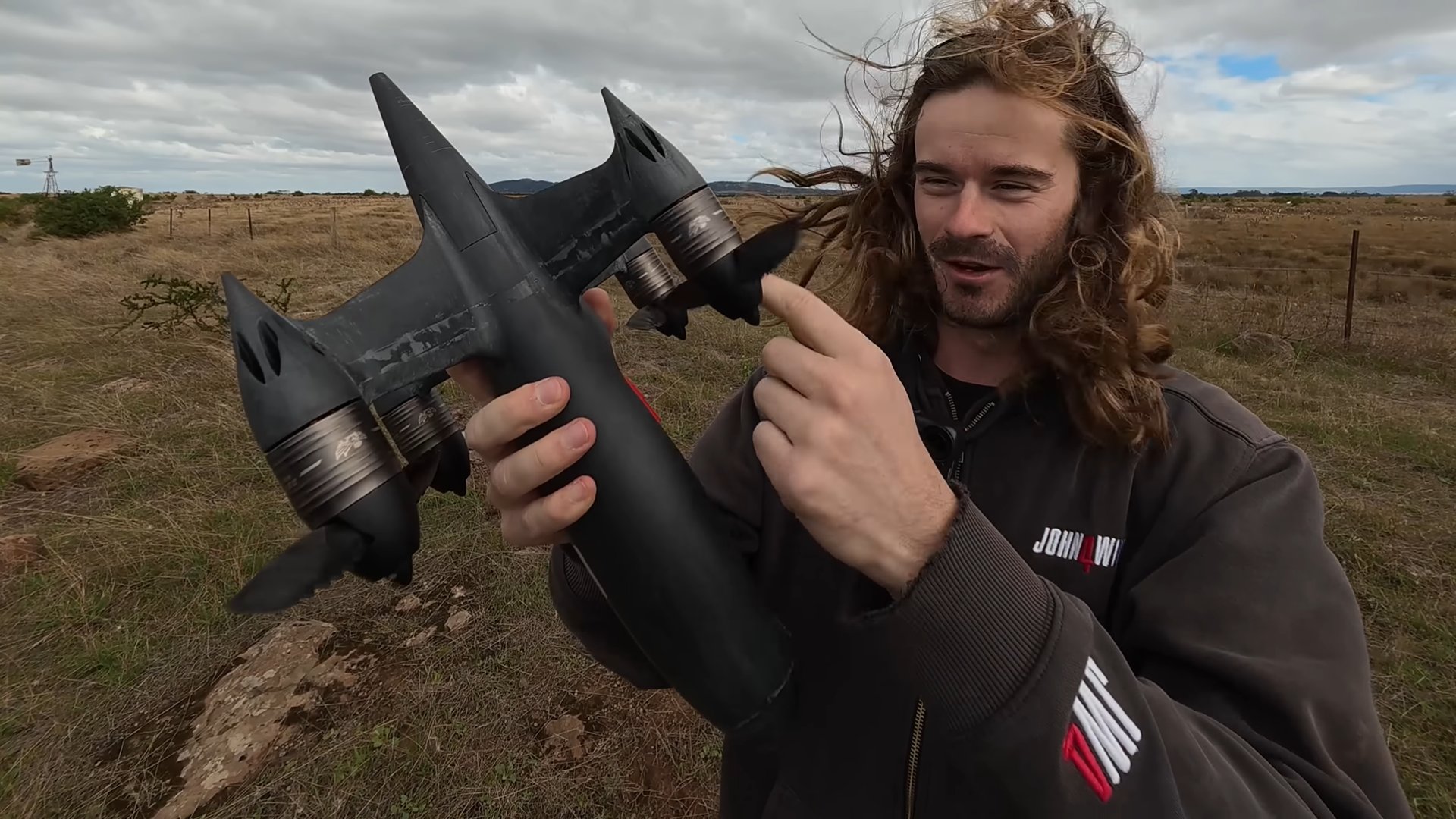
Aidan and Ben, the duo behind the Blackbird racing platform, posted a new unofficial world‑speed record of 453 mph (730 km/h, 394 kt) in a single test flight. The run was captured on their Drone Pro Hub YouTube channel – The Fastest Drone Ever Flown (And It Almost Didn’t Survive) – and it pushes the previous best of 408 mph set by the Bell team.
Technical specifications that made the jump possible
| Parameter | Value |
|---|---|
| Maximum speed (ground) | 453 mph (730 km/h) |
| Maximum speed (air) | 419 mph (674 km/h) – after subtracting 34 mph tailwind |
| Propeller material | Hand‑laminated carbon‑fiber, high‑modulus (≈ 250 GPa) |
| Blade pitch | Proprietary high‑pitch angle (exact value undisclosed) |
| Leading‑edge geometry | Sawtooth serrations, 1.2 mm depth, 4 mm spacing |
| Motor configuration | Twin 6‑S LiPo packs, 45 kW brushless outrunner per side |
| Battery capacity | 22 Ah per pack, 22.2 V nominal |
| Airframe weight | 2.3 kg (empty) |
| Flight time at full throttle | ~12 seconds |
Why the sawtooth carbon‑fiber prop matters
- Vortex generation – The serrated leading edge forces a series of small vortices to stay attached to the blade surface. Those vortices act like a thin “air‑lubricant”, delaying flow separation that would otherwise cause a sudden loss of lift at high angles of attack.
- Boundary‑layer stabilization – By keeping the boundary layer thin, the prop experiences lower skin‑friction drag. The effect is similar to the riblets used on high‑speed aircraft wings.
- Steeper pitch without stall – Traditional wooden or fiberglass props stall around 30° pitch at high RPM. The carbon‑fiber lay‑up, combined with the sawtooth edge, allows pitches approaching 45°, which translates directly into higher thrust per revolution at the cost of low‑speed performance.
Trade‑offs observed in the test runs
- Take‑off power demand – The high‑pitch blades produce less static thrust, forcing the motors to draw an extra 12 % current during the first 2 seconds of launch. The team mitigated this by using a pre‑spool sequence that brings the rotors up to 80 % speed before release.
- Battery depletion – At full throttle the packs delivered 1 kW per cell, draining the 22 Ah packs to 10 % in under 10 seconds. The final run ended with the drone landing hard after the voltage sag caused a loss of control authority.
- Signal loss at extreme speed – Doppler shift and antenna alignment issues caused a brief loss of telemetry at 393 mph, confirming that RF hardware must be rated for > 500 mph ground speed if an official record attempt is pursued.
Market and supply‑chain implications
The Blackbird’s performance hinges on a single‑source custom propeller supplier that fabricates carbon‑fiber blades in a small‑batch aerospace workshop. Lead times for a set of two 18‑inch high‑pitch props are currently 4‑6 weeks, with per‑unit cost around $1,200. This reflects the niche nature of the material: high‑modulus fibers, precision CNC‑molded cores, and hand‑applied lay‑up.
If the Blackbird team moves toward an official record, demand for such propellers could rise among the emerging “high‑speed UAV” segment, which includes military reconnaissance and atmospheric research platforms. Scaling production would require:
- Investment in automated filament winding – reduces labor cost by ~30 % while maintaining fiber orientation.
- Qualification of aerospace‑grade epoxy systems – to meet the thermal cycling requirements of > 200 °C motor exhaust.
- Supply‑chain diversification – sourcing high‑modulus fibers from multiple manufacturers (e.g., Toray, Mitsubishi) to avoid bottlenecks that have affected other high‑performance composites in the past two years.
The broader UAV market is already seeing a shift toward carbon‑fiber airframes for weight savings; the Blackbird’s propeller breakthrough adds a new variable to the performance equation. Companies that can offer ready‑to‑fly kits with certified high‑pitch props may capture a premium segment of hobbyists and research labs willing to pay a 2‑3× markup for speed‑critical missions.
Outlook for an official record
The team’s next steps will likely include:
- RF redesign – using a 5.8 GHz diversity link with circular polarization to mitigate Doppler‑induced fading.
- Battery chemistry upgrade – switching to Li‑S cells with 10 % higher energy density to extend the high‑thrust window.
- Telemetry‑grade GPS – sub‑meter accuracy to provide a verifiable speed log for the Fédération Aéronautique Internationale (FAI) certification process.
Assuming these upgrades, a clean airspeed above 440 mph appears within reach, which would finally surpass the 434 mph benchmark set by the Bell Peregreen V4. The record attempt will also serve as a live case study for how exotic composite propellers can be integrated into ultra‑fast UAV designs.
For a deeper look at the propeller geometry, see the open‑source CAD files released by the Blackbird team on their GitHub repository.
Comments
Please log in or register to join the discussion