Chinese manufacturers now control roughly 85% of Germany’s disposable e‑cigarette market, but a pending EU directive limiting tank size and packaging could slash revenues by up to 40% and force a strategic shift toward regulated nicotine‑salt products.
Business news
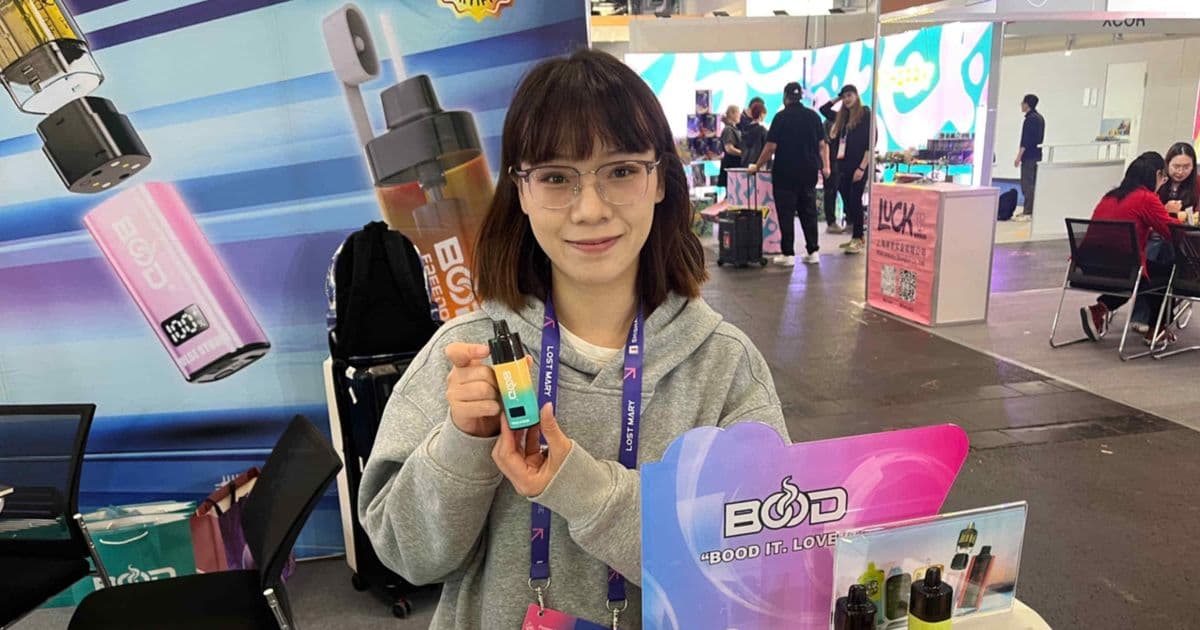
Chinese vape producers have seized a commanding share of Germany’s disposable e‑cigarette market. A recent customs sweep at the International E‑Cigarette Expo in Frankfurt uncovered dozens of non‑compliant units—tanks exceeding the 2 ml limit, cartoon‑styled packaging, and missing tax stamps. The sweep, which targeted booths from manufacturers such as Shenzhen VapoTech, Guangzhou CloudMist, and Zhejiang PuffCo, revealed that these firms collectively supply an estimated €1.2 billion in annual sales, representing about 85 % of Germany’s disposable‑vape segment.
Market context
The German market has been a gateway for Chinese firms after tighter regulations in China forced many producers to look abroad. Between 2023 and 2025, imports of disposable vapes into Germany rose from €650 million to €1.2 billion, while domestic brands fell from 15 % to 5 % of total sales. The surge coincided with a broader EU trend: disposable devices, especially those marketed to younger adults, have attracted scrutiny over nicotine delivery and appealing designs.
The European Commission is set to adopt a Directive on the reduction of nicotine‑containing products (DRNCP) in Q4 2026. Key provisions include:
- A hard cap of 2 ml on e‑liquid tank capacity for disposables.
- Mandatory health‑warning labels covering 30 % of the pack surface.
- Prohibition of cartoon or child‑appealing imagery.
- A tax stamp requirement for all nicotine‑containing products, similar to the existing system for tobacco.
If enacted, the regulation could trim the German disposable‑vape market by 30‑40 % within two years, according to a market‑research firm cited by Euromonitor.
What it means
Revenue pressure and product pivots
For the Chinese exporters, the immediate impact will be a potential loss of €400‑€500 million in annual revenue if they cannot adapt their product lines. Many of the affected SKUs are low‑cost, high‑volume items that rely on the 5 ml or larger tanks popular with price‑sensitive consumers. To stay viable, manufacturers are likely to:
- Re‑engineer disposables to meet the 2 ml limit while maintaining nicotine‑salt formulations that deliver a similar throat hit.
- Shift focus to closed‑system pod devices, which are already exempt from the tank‑size rule but will face the new packaging and tax‑stamp requirements.
- Invest in branding that distances products from youth‑oriented imagery, potentially targeting adult‑only retail channels such as specialized vape shops.
Supply‑chain implications
Customs officials reported that many of the seized devices lacked the EU tax stamp, a requirement introduced in 2024 to combat illicit trade. The absence suggests that a significant portion of the current stock entered the market through parallel imports. With stricter enforcement, manufacturers will need to establish EU‑based distribution hubs to ensure compliance, adding an estimated €15‑€20 million in annual logistics costs.
Competitive dynamics
Domestic German firms, although a minority today, could regain market share if they can certify compliance faster than their Chinese counterparts. Companies such as VaporWerk GmbH are already filing for EU‑type approvals and have begun a limited rollout of nicotine‑salt pod kits that meet the new standards. Their higher price points may appeal to adult vapers seeking premium experiences, creating a two‑tier market: low‑cost disposables (subject to regulation) and premium, compliant pod systems.
Regulatory risk beyond the EU
The EU move mirrors actions in other jurisdictions—Australia’s recent ban on flavored nicotine products and Singapore’s outright prohibition of vaping. Chinese manufacturers that diversify into markets with less stringent rules, such as Eastern Europe or the Middle East, may offset EU losses, but they will also face heightened scrutiny as global health agencies push for uniform standards.
Strategic takeaways for investors
- Short‑term volatility: Stocks of listed Chinese vape firms (e.g., Shenzhen VapoTech Co., Ltd. – 002857.SZ) are likely to experience price swings as earnings forecasts are revised.
- Long‑term consolidation: Expect M&A activity as larger players acquire compliant pod‑technology firms to accelerate market entry.
- Regulatory monitoring: Investors should track the EU’s legislative timeline and any interim guidance that could affect product certification.
The article draws on customs data released by German Federal Customs (Zoll) on May 20 2026, market estimates from Euromonitor International, and statements from the European Commission’s health‑policy directorate.
Comments
Please log in or register to join the discussion