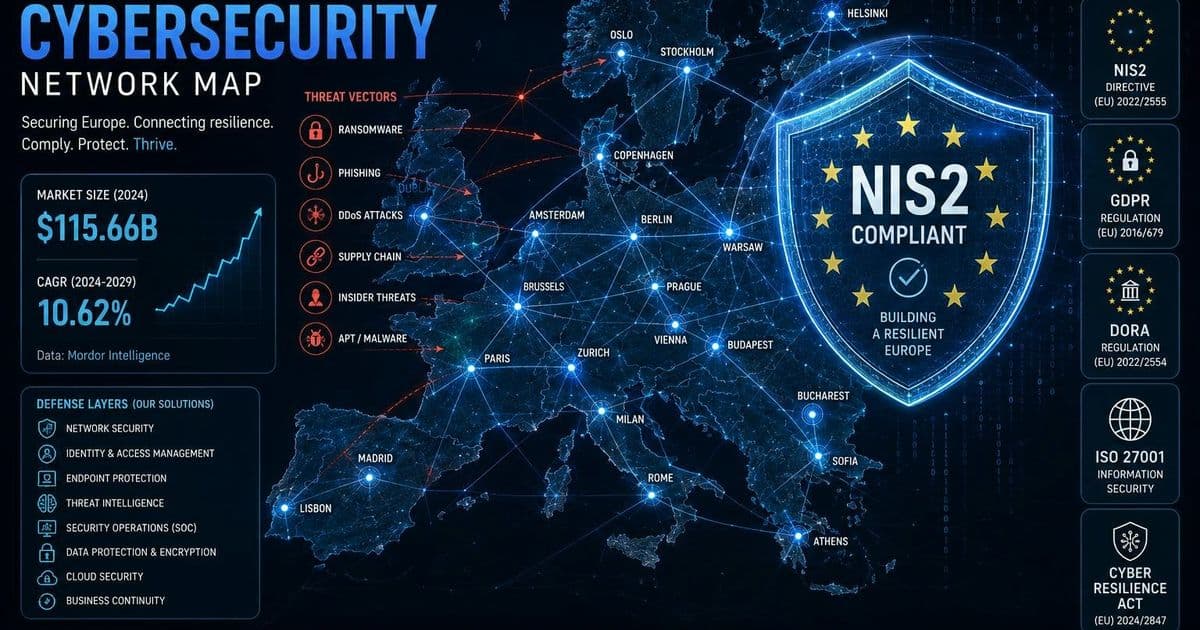
A cascade of EU directives—NIS2, DORA, and the Cyber Resilience Act—has turned compliance into a budget line for every sector, opening a fast‑growing market for security tools built for European rules rather than generic check‑boxes.
Europe’s Regulatory Push Is Creating New Cybersecurity Product Markets
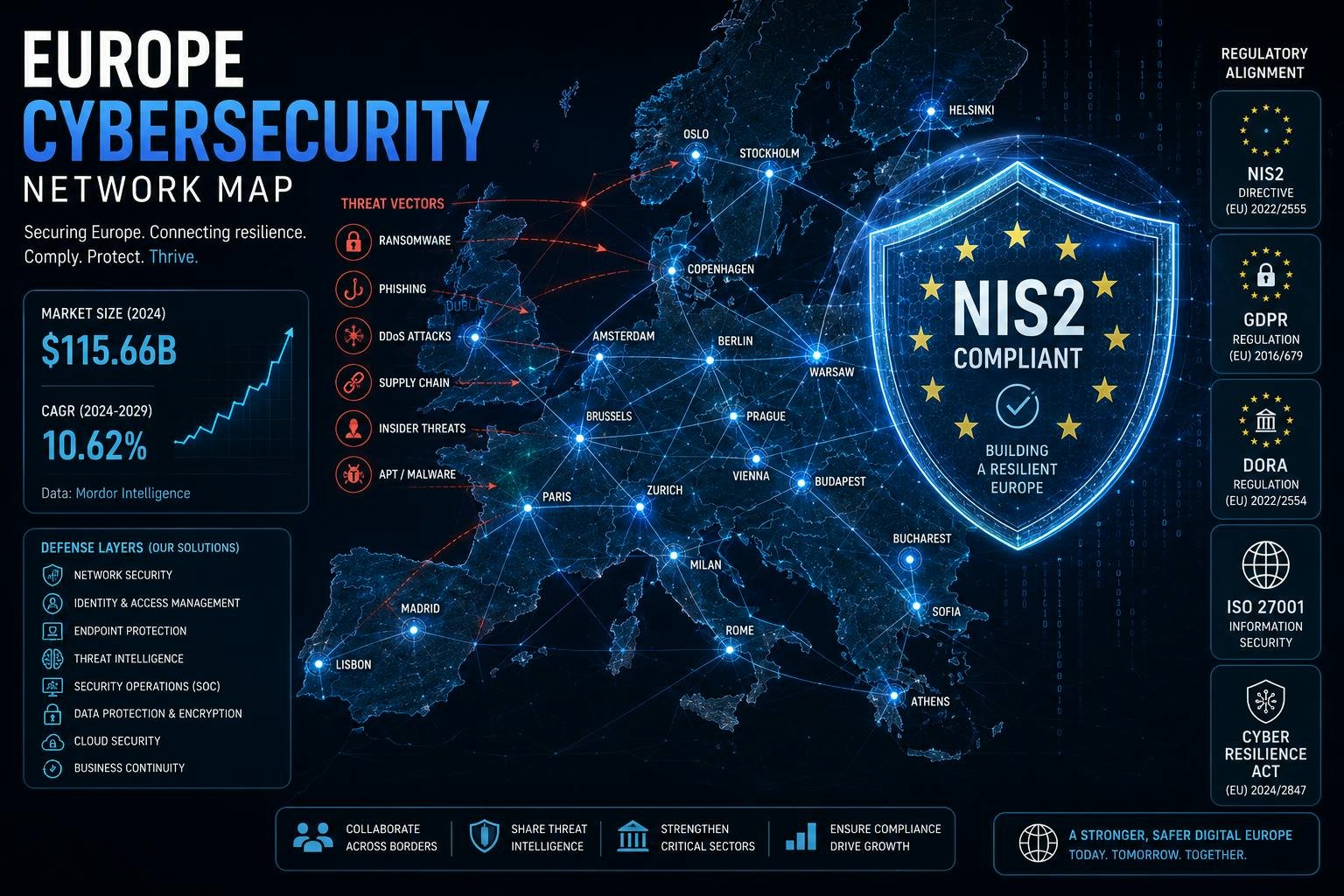
The problem Europe is trying to solve
European regulators have long been known for strict rules, but until recently those rules rarely forced companies to redesign their security architecture. Breaches still happened, fines were paid, and most firms treated compliance as a paperwork exercise. The continent now faces three intertwined challenges:
- Fragmented responsibility – traditional frameworks put liability on security officers, leaving senior leadership insulated.
- Rapidly expanding sector coverage – NIS2 (effective Oct 2024) adds 18 new sectors, from food logistics to waste management.
- Product‑level accountability – the EU Cyber Resilience Act (2025‑2027 rollout) makes hardware and software vendors answerable for security defects sold into the EU.
When the board, not just the CISO, can be held personally responsible, security budgets move from ad‑hoc spikes to steady, strategic spend.
Funding and market traction
- The European cybersecurity market was valued at $63.1 bn in 2025 and is projected to reach $115.7 bn by 2031, a compound annual growth rate of 10.6 % (Mordor Intelligence).
- About 60 % of CISOs report budget increases directly linked to the new regulations.
- Cloud‑native security solutions are capturing the majority of new spend because they can be updated to meet evolving technical guidelines without a full re‑procurement cycle.
- The SME segment is the fastest‑growing slice: a 50‑person logistics firm now faces the same reporting obligations that a midsize bank had five years ago, creating demand for managed detection, response, and automated compliance reporting.
What engineers should actually care about
1. Compliance‑observability gap
NIS2 and DORA require a 24‑hour initial incident notice and a 72‑hour detailed report. Most mid‑market firms lack an automated pipeline that can collect logs, enrich them with threat intelligence, and generate the required reports on time. Tools that embed observability directly into the compliance workflow—think “incident‑to‑report” pipelines—are scarce.
2. Supply‑chain attestation
The Cyber Resilience Act mandates a Software Bill of Materials (SBOM) and a security attestation for every product sold in the EU. Generating, signing, and continuously updating SBOMs at scale is still a manual, error‑prone process for many vendors. A service that automates provenance tracking and validates it against EU‑approved baselines would fill a clear gap.
3. Operational‑resilience testing
DORA introduces Threat‑Led Penetration Testing (TLPT) for major financial players. Unlike annual checkbox pentests, TLPT requires realistic, intelligence‑driven attack simulations (the TIBER‑EU methodology). The pool of qualified red‑team operators who understand this framework is tiny compared to the demand, opening space for platforms that can orchestrate TLPT as a managed service.
A realistic counterpoint
Regulation‑driven demand can produce compliance theatre: vendors that ship a dashboard that simply formats the right CSV file may win contracts, while the underlying security posture remains weak. The GDPR era showed how consent‑banner generators flourished without improving privacy. The same risk exists for NIS2‑driven dashboards that focus on audit artifacts rather than threat mitigation.
Why this matters for founders and investors
- Product‑market fit is now regulatory‑centric – building a security solution that emits the correct SBOM, auto‑generates incident reports, or runs TLPT on demand is no longer a nice‑to‑have; it is a prerequisite for selling to any EU‑based enterprise.
- European home‑field advantage – startups founded within the EU can embed the regulatory logic from day one, creating a moat that non‑EU competitors will struggle to replicate without costly re‑engineering.
- Strategic procurement – public‑sector and critical‑infrastructure buyers are adding data‑residency and ENISA‑centric incident‑reporting clauses to RFPs. Vendors that cannot meet those clauses will be disqualified regardless of technical merit.
The broader picture
Beyond the obvious budget numbers, the regulatory push is a geopolitical response to the reliance on non‑European cloud and hardware providers. By forcing product‑level liability and board‑level accountability, the EU is nudging the supply chain toward operational sovereignty. This creates a dual opportunity: European firms can capture market share from legacy vendors, and non‑European vendors must either set up EU‑based subsidiaries or partner with local players to stay relevant.
Closing thoughts
The next wave of successful cybersecurity companies in Europe will look like the cloud‑infrastructure firms that treated GDPR as a design principle rather than an afterthought. When compliance outputs are a natural side‑effect of solid engineering—automated SBOMs, real‑time incident‑to‑report pipelines, and built‑in TLPT frameworks—those products will sell themselves in a market that is set to double in size within six years.
Sources
- Mordor Intelligence – Europe Cybersecurity Market Report 2025‑2031
- European Commission – NIS2 Directive, Digital Operational Resilience Act, Cyber Resilience Act
- ENISA – Threat Landscape Reports
- European Central Bank – TIBER‑EU Framework
Anamika Prasad is a market‑research writer focused on emerging technology trends.
Comments
Please log in or register to join the discussion