
A U.S. district judge has refused to block Tennessee’s newly drawn congressional districts, which give Republicans a 9‑0 advantage in the House. The ruling comes amid heightened scrutiny of partisan redistricting and could shape the balance of power in the 2026 midterms.
A judge lets Tennessee’s GOP‑favored map move forward
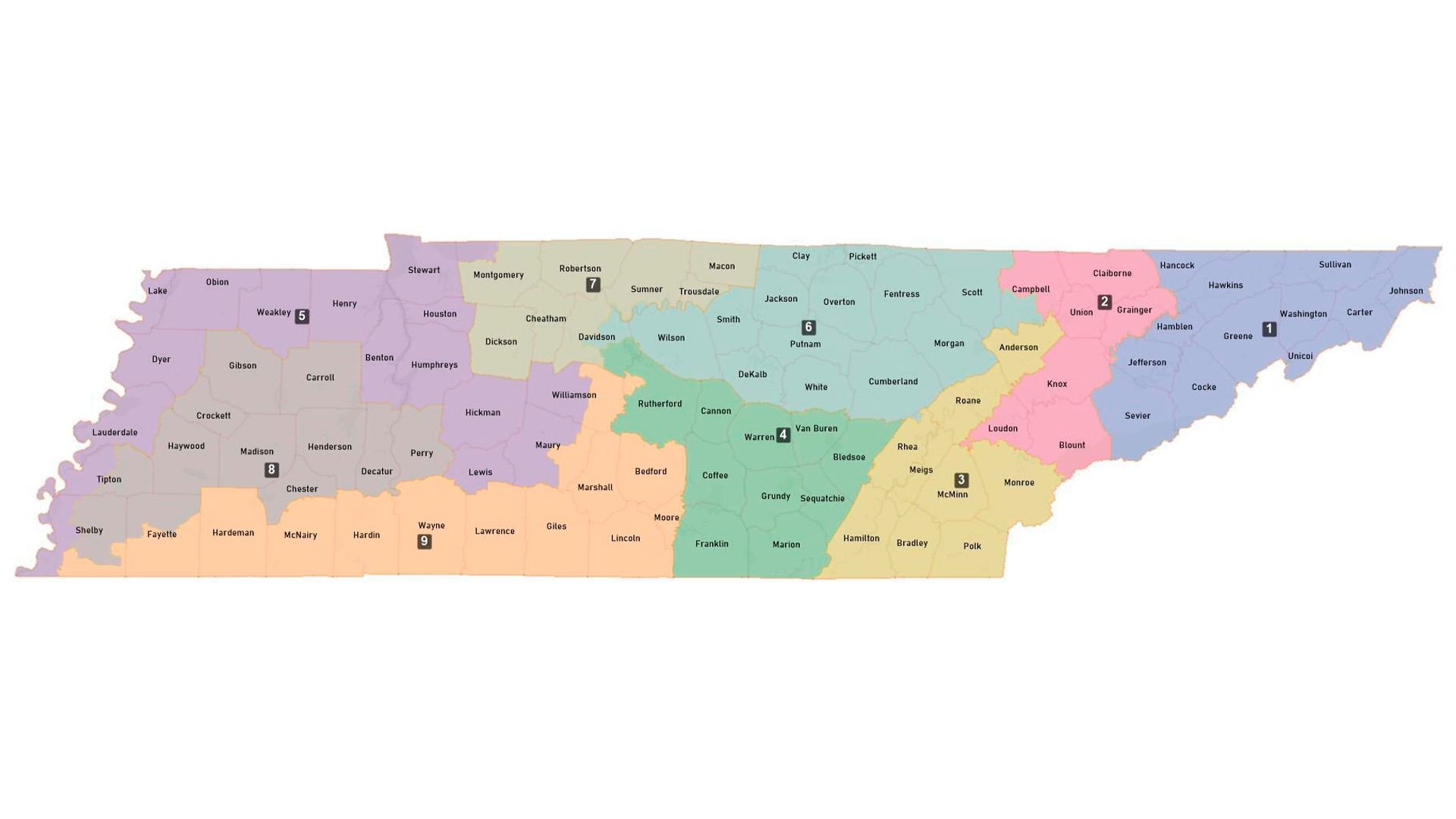
A federal judge in Nashville has denied a request to halt the implementation of Tennessee’s newly drawn congressional map, which allocates all nine U.S. House seats to Republican candidates. The decision, issued on Thursday, clears the way for the map to be used in the upcoming 2026 elections.
Market context: redistricting under fire
The ruling arrives at a moment when courts across the country are increasingly asked to evaluate whether state‑drawn maps violate the Voting Rights Act or the Constitution’s equal‑protection clause. In the past year, more than 30 states have faced legal challenges to district lines that appear to give one party a structural edge. According to the Brennan Center, partisan gerrymandering cases have risen by 42 % since 2022, reflecting growing political stakes.
Tennessee’s map was drawn after the 2020 Census and approved by the state legislature in early 2024. Critics argue that the design packs Democratic voters into a single district while spreading Republican voters across the remaining eight, effectively guaranteeing a Republican sweep. The plaintiffs—four Tennessee voters and two civil‑rights groups—sought a preliminary injunction, arguing that the map dilutes Black voting strength and violates Section 2 of the Voting Rights Act.
What the decision means for the 2026 midterms
By refusing to issue an injunction, the judge has left the map in place for the 2026 primaries, which are scheduled for March. If the map holds, Republicans are projected to win all nine seats, a scenario that would give the GOP a 100 % hold on Tennessee’s House delegation. The Cook Political Report estimates that under the current map, the Democratic Party’s chance of flipping any seat is below 5 %.
The ruling also signals to other states that courts may be reluctant to intervene unless plaintiffs can demonstrate a clear statutory violation. Legal analysts note that the judge’s opinion emphasized the plaintiffs’ failure to show “irreparable harm” that could not be remedied after the election cycle.
Strategic implications for parties and donors
For Republican strategists, the decision validates the state‑level redistricting effort and allows them to focus resources on competitive races elsewhere. The National Republican Congressional Committee has already earmarked $12 million for Tennessee‑related outreach, anticipating a clean sweep.
Democratic operatives, meanwhile, are likely to shift attention to voter‑registration drives and down‑ballot contests, hoping to mitigate the impact of a fully Republican House delegation. The Democratic Congressional Campaign Committee has pledged $3 million to support local NGOs that work on voter education in Tennessee’s urban districts.
Potential next steps
The plaintiffs have indicated they will appeal the decision to the Sixth Circuit Court of Appeals, where a panel is expected to hear arguments later this summer. If the appellate court overturns the ruling, the map could be redrawn before the primary filing deadline, potentially reshaping the electoral map.
In the meantime, the Tennessee General Assembly is expected to file a brief defending the map’s compliance with federal law, citing the state’s “compactness” and “communities of interest” criteria.
Bottom line: The judge’s refusal to block Tennessee’s all‑Republican map removes a major legal obstacle for the GOP ahead of the 2026 midterms, but an appeal could still alter the state’s congressional outlook before voters head to the polls.
Comments
Please log in or register to join the discussion