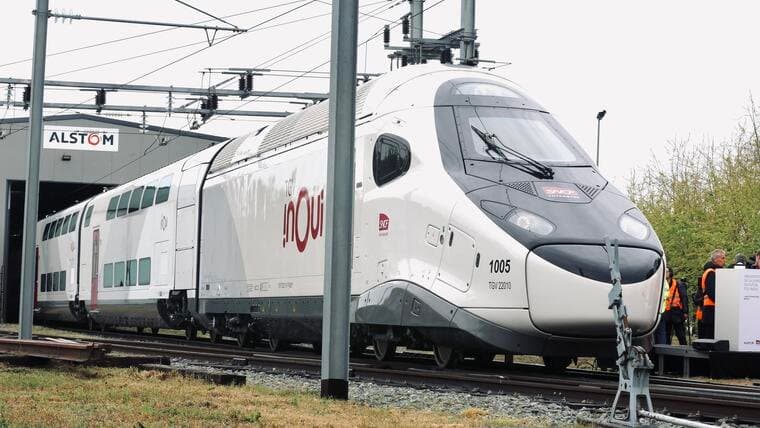
Alstom’s Avelia Horizon‑based TGV‑M has received EU railway approval, paving the way for passenger service as early as late 2026. The 200‑metre, dual‑voltage train offers 740 seats, 20 % lower energy use and up to 320 km/h on ETCS‑equipped lines.
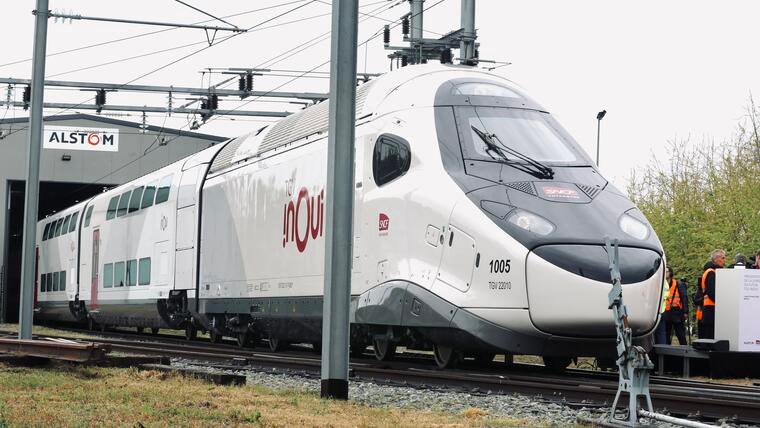
Alstom’s newest high‑speed train for France, the TGV‑M, has finally cleared the European Union Agency for Railways (ERA) safety certification. The approval confirms that the train can run at 320 km/h on lines equipped with ETCS or TVM signalling, and at lower speeds on legacy systems such as KVB (220 km/h) and the older Crocodile network (160 km/h).
What’s new?
- Platform: First series built on Alstom’s Avelia Horizon platform, a modular family that will also underpin the next generation of Eurostar units.
- Power: Dual‑voltage (1.5 kV DC / 25 kV AC) to match the French high‑speed network, with the same hardware used on the Eurostar version that must handle four different national voltages.
- Length & formation: Fixed 200 m trainset, but capable of multiple‑unit coupling for capacity spikes – a nod to the flexibility of older ICE‑1 sets.
- Capacity: 740 seats (up from 600 on the current TGV Réseau), achieved by a refined interior layout while retaining the classic two‑deck design.
- Energy efficiency: Targeted 20 % reduction in consumption versus the previous TGV‑R fleet; Alstom claims the broader Horizon platform can reach 30 % savings under optimal operation.
- Connectivity: Onboard 5G‑backed Wi‑Fi, a first for French high‑speed services.
How it compares to its predecessors and rivals
| Feature | TGV‑M (Avelia Horizon) | Current TGV Réseau | German ICE 3 | Japanese N700S |
|---|---|---|---|---|
| Max speed (ETCS/TVM) | 320 km/h | 300 km/h | 320 km/h | 360 km/h |
| Power cars | 2 (non‑distributed) | 2 | 2 | 2 |
| Bogies | Jacobs (shared) | Jacobs | Conventional | Conventional |
| Seats | 740 | 600 | 720 | 726 |
| Energy use (per seat‑km) | –20 % vs TGV‑R | baseline | –15 % vs ICE 2 | –10 % vs N700 |
| Signalling | ETCS, TVM, KVB, Crocodile | TVM, KVB | ETCS, LZB | ATC, D-ATC |
The TGV‑M’s speed matches the ICE 3, but its Jacobs‑type bogies give it a smoother ride and reduce weight, a design choice that also appears on the first ICE generation. Unlike the modular ICE‑1, the TGV‑M cannot be easily shortened, yet multiple‑unit operation lets SNCF add capacity without building longer sets.
From a passenger perspective, the extra 140 seats per train translate into roughly 10 % more revenue potential on busy corridors such as Paris‑Lyon or Paris‑Marseille, assuming similar load factors. The 5G Wi‑Fi will be a tangible upgrade over the current 4G‑based service, aligning the TGV offering with the connectivity expectations of business travellers.
Who will benefit?
- SNCF – The operator gains a modern fleet that meets future EU emissions targets while keeping the iconic two‑deck silhouette that fits existing platform lengths. The ability to run at 320 km/h on the LGV network shortens Paris‑Lyon travel time by a few minutes, improving timetable robustness.
- Passengers – More seats, better internet, and a quieter cabin thanks to the reduced power draw. The higher speed also means tighter connections for cross‑border services, especially once the Eurostar Horizon units enter service.
- Rail manufacturers – Alstom’s success with the Horizon platform validates its modular approach, positioning the company to win further contracts for cross‑border high‑speed projects that require multi‑voltage capability.
- Competitors – Siemens and Hitachi will need to respond with comparable modular platforms if they want a slice of the European high‑speed market that is increasingly focused on energy efficiency and multi‑system compatibility.
Timeline to service
The ERA decision aligns with earlier hints from Voyages d’Affaires that the first passenger runs could start August or September 2026. Assuming SNCF proceeds with the planned rollout, the initial units will likely serve the busiest Paris‑Lyon and Paris‑Marseille corridors, with later deployments to secondary routes and cross‑border services.
Bottom line
The TGV‑M’s approval removes the last regulatory hurdle for France’s next generation of high‑speed rail. By marrying the proven two‑deck TGV concept with a modern, energy‑savvy platform, Alstom delivers a train that can compete with Germany’s ICE 3 and Japan’s N700S on speed, while offering significantly higher capacity and lower operating costs. If the scheduled 2026 entry into service proceeds as expected, passengers will see a noticeable upgrade in comfort, connectivity, and journey times within the next two years.
Comments
Please log in or register to join the discussion