
MIT chemical engineering senior Akorfa Dagadu turned an initial app idea into a blockchain‑enabled buy‑back platform that links informal waste pickers to formal markets, illustrating how community‑engaged research and systems thinking can transform technical solutions into lasting social impact.
From a Mobile App to Systemic Change: How an MIT Student Redefined Plastic Recycling in Ghana

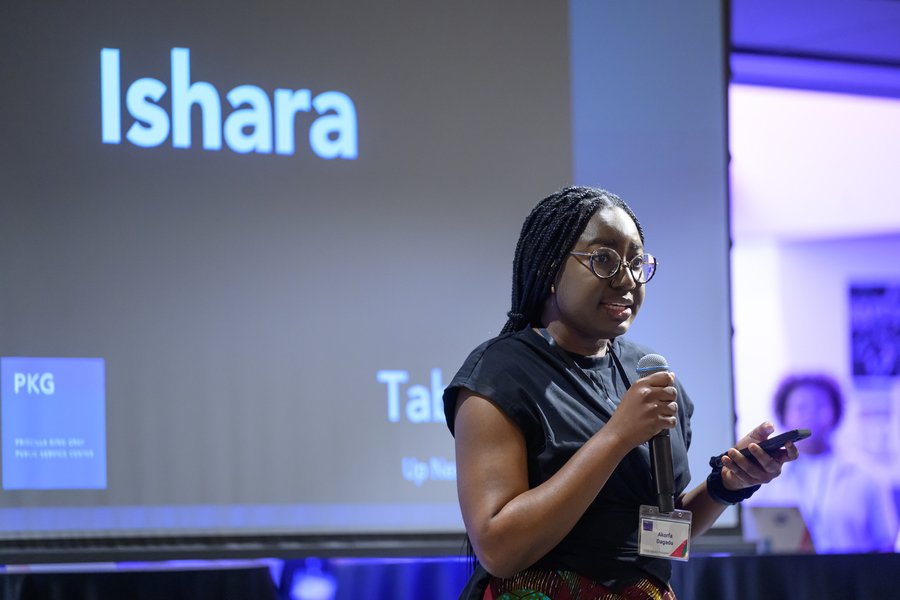
When Akorfa Dagadu arrived on campus in 2024, she carried a clear technical vision: a mobile app called Ishara that would streamline recycling in Accra, Ghana’s bustling capital often dubbed the “trash capital.” The prototype was built in a library, user‑testing was reduced to a handful of surveys, and the early pitch at the 2025 IDEAS Social Innovation Incubator was full of enthusiasm.
The First Technical Attempt
Ishara’s original design mirrored many campus‑born startups—a sleek interface, push notifications, and a points‑for‑recycling gamification layer. The idea was to give residents a way to log collected plastics and earn micro‑rewards. In theory, the app would create data streams that could be sold to larger recyclers, closing the loop.
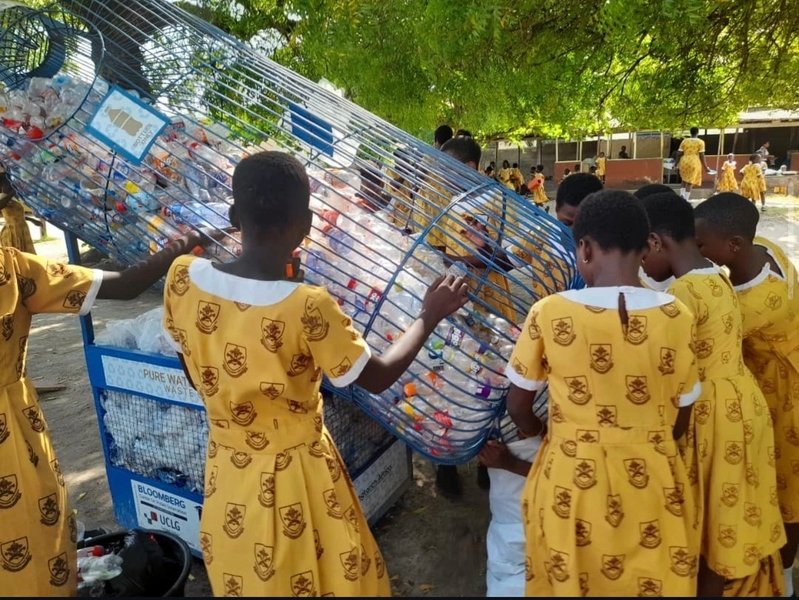
However, field visits in Accra quickly exposed a mismatch between the digital solution and the on‑the‑ground reality. Informal networks of waste pickers, known locally as kwashi, already operated a decentralized collection system that was invisible to formal waste managers. These pickers aggregated plastics in informal markets, negotiated prices, and even performed rudimentary sorting. Their knowledge of where different polymer streams could be sold was encoded in personal relationships, not in a database.
“We were asking people what they thought about our idea instead of asking how things actually worked,” Dagadu recalls.
The experience humbled the team and highlighted a classic pitfall: designing for a problem that already has a solution, but one that is socially embedded and undervalued.
Pivoting with the PKG Center for Social Impact
Enter the PKG Center for Social Impact. As a first‑year PKG Fellow, Dagadu received mentorship that encouraged her to step back from the app and examine the broader ecosystem. The Center’s IDEAS Social Innovation Incubator focuses on systems change—a mindset that treats technology, policy, and community as interlocking pieces.
During the incubator, Dagadu worked with faculty advisors and local partners to map the plastic value chain in Ghana. The resulting systems diagram revealed three critical friction points:
- Visibility Gap – Informal collectors lacked a mechanism to showcase the volume and quality of their material to larger processors.
- Trust Deficit – Buyers were wary of inconsistent supply and potential contamination.
- Economic Leakage – A significant portion of revenue never reached the collectors, eroding incentives.
A New Technical Approach: Blockchain‑Enabled Buy‑Back
Armed with this insight, Dagadu re‑engineered Ishara from a consumer‑facing app into a blockchain‑enabled buy‑back platform. The core components are:
- Smart‑contract ledger that records each kilogram of plastic submitted by a collector, generating an immutable proof of contribution.
- Dynamic pricing algorithm that adjusts rewards based on market demand, material purity, and regional price fluctuations.
- Transparent payout system that routes payments directly to collectors’ mobile money accounts, eliminating middle‑man leakage.
The blockchain layer is deliberately lightweight, using a permissioned network hosted on the Hyperledger Fabric framework. This choice balances scalability (the network can handle thousands of daily transactions) with low transaction fees, crucial for low‑margin recycling operations.
Technical note: The smart contract includes a hash‑based verification step where a photo of the sorted batch is uploaded, hashed, and stored on‑chain. This provides auditors with a tamper‑proof record without exposing raw images, addressing privacy concerns.
Real‑World Applicability and Early Results
In a pilot with Chanja Datti, a Nigerian recycling firm expanding into Ghana, Ishara has already processed 12 tonnes of mixed‑layer plastics over three months. Key outcomes include:
- Collector earnings up 38 % compared to pre‑pilot averages, as measured by mobile‑money transaction logs.
- Material purity improved by 22 %, verified through lab analysis at the Alexander‑Katz Lab, where Dagadu’s chemical‑engineering research on enzyme‑stabilizing heteropolymers informs downstream degradation pathways.
- Data transparency: The blockchain ledger provides real‑time dashboards for both collectors and buyers, fostering trust and enabling better forecasting.
These results demonstrate that a well‑designed technical layer, when anchored in community‑driven processes, can amplify existing informal systems rather than replace them.
Limitations and Ongoing Challenges
While promising, the platform faces several hurdles:
- Internet connectivity in rural collection points remains spotty, necessitating offline‑first mobile clients that sync when a network is available.
- Regulatory uncertainty around blockchain‑based financial transactions in Ghana could affect scaling; engagement with the Ghana Investment Promotion Centre is ongoing.
- Scalability of enzyme‑based degradation: Dagadu’s parallel research on heteropolymers aims to create biologically‑compatible pretreatment steps, but moving from lab‑scale to industrial throughput will require significant engineering.
The Broader Impact of Systems Thinking
Dagadu’s journey illustrates a broader lesson for engineers: technical solutions must be evaluated within the social, economic, and policy contexts they inhabit. By shifting from a “build‑first” mentality to a systems‑first approach, she turned a modest app into a platform that respects and enhances existing livelihoods.
The PKG Center’s model—providing fellowships, mentorship, and incubator space—has proven effective in nurturing such mindsets. As Dagadu prepares for her Schwarzman Scholar year at Tsinghua University, she plans to study material‑flow policies in China, aiming to apply the same systems lens to the world’s largest plastic producer.
Related Resources
- PKG Center for Social Impact – Funding and mentorship for community‑engaged research.
- IDEAS Social Innovation Incubator – Program that trains technical founders in systems change.
- Hyperledger Fabric Documentation – Technical guide for the blockchain platform used in Ishara.
- Alexander‑Katz Lab – Research on polymer‑enzyme interactions for plastic degradation.
Image credits: Akorfa Dagadu (MIT)

Comments
Please log in or register to join the discussion