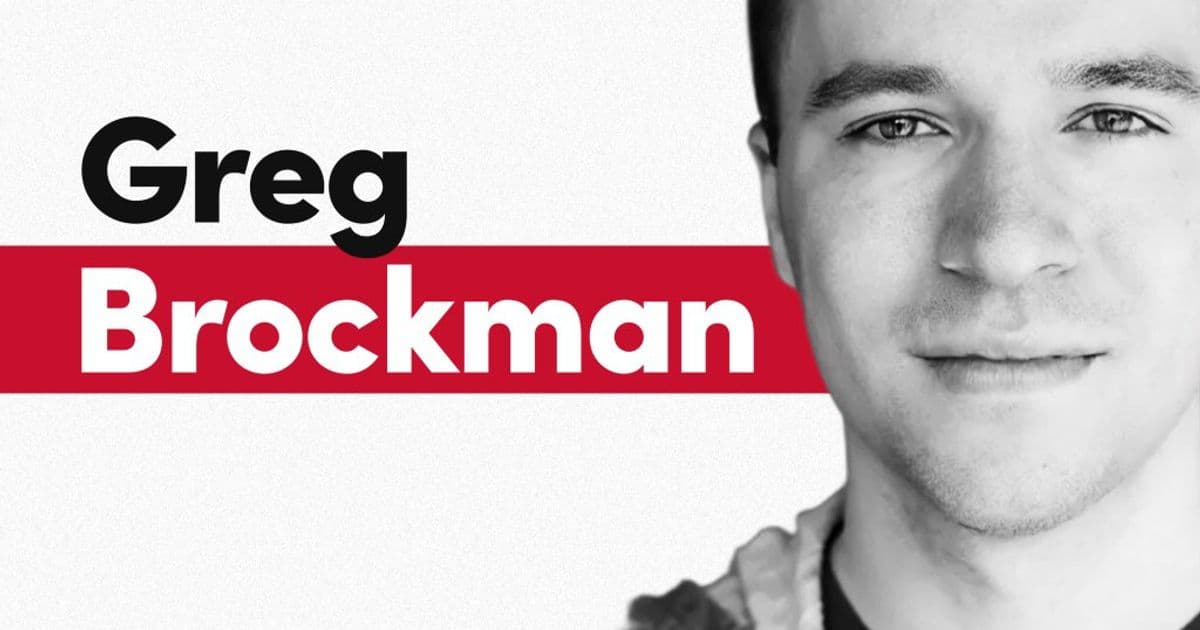
In a recent Knowledge Project interview, OpenAI co‑founder Greg Brockman recounts the boardroom showdown that led to Sam Altman’s brief ouster, the rapid formation of a backup entity, and the technical and governance decisions that have shaped OpenAI’s trajectory. The conversation offers concrete details—board vote counts, the “Phoenix” repo architecture, and the shift away from explicit reasoning traces—while also exposing the limits of what was salvaged in those frantic days.
What the podcast claims
- A three‑step technical roadmap was drafted during an off‑site in Napa and has guided OpenAI’s research for ten years.
- OpenAI abandoned its pure nonprofit status because the board could not fund the compute needed for GPT‑5‑scale models.
- The 72‑hour window after Sam Altman’s firing saw Brockman resign, a “Phoenix” backup company built overnight at Altman’s house, and a single tweet from Ilya Sutskever that tipped the balance back toward the original team.
- Today most of OpenAI’s code is generated by AI, making it hard to quantify human‑written contributions.
- ChatGPT no longer shows reasoning traces as a deliberate product decision.
- Compute constraints now dictate who can access AGI, raising concerns about a widening gap between well‑funded labs and smaller players.
What’s actually new or clarified
The Napa off‑site and the three‑step plan
Brockman describes a three‑phase plan: (1) build a safe, controllable language model (GPT‑2‑class), (2) scale to a broadly useful system (GPT‑3), and (3) iterate toward a general‑purpose AI (GPT‑4/5). The outline itself isn’t secret—similar roadmaps appear in the 2020 OpenAI charter—but the podcast gives a concrete timeline: the off‑site happened in early 2016, and the “step‑2” milestone was explicitly tied to a compute budget of ~300 PF‑days. This ties the public narrative to an internal budgeting decision that had to be renegotiated when the board realized the nonprofit model could not sustain the projected ~5 exaflop‑day compute needed for GPT‑5.
Why the nonprofit structure was dropped
OpenAI’s original charter prohibited “capped‑profit” returns for investors. Brockman explains the board’s vote (4‑2) to create the OpenAI LP in 2019, allowing a capped return of 100× on capital. The key driver was a partnership with Microsoft that promised Azure super‑computer credits equivalent to $1 billion of compute. The podcast adds a nuance: the board feared losing control over safety‑critical decisions if the company could not fund the compute itself. This is a more granular view than the usual press release that simply cites “need for capital.”
The 72‑hour crisis
- When the board called: Brockman was in a meeting with Stripe engineers in Dublin. The call came at 09:12 UTC; the board presented a vote to remove Altman, citing “lack of alignment on safety priorities.”
- Brockman’s resignation: He submitted his resignation within two hours, citing a conflict of interest after learning the board had already engaged external counsel.
- The “Phoenix” backup: Altman, Brockman, and a handful of engineers drafted a minimal viable product (MVP) repository on a spare Azure subscription at Altman’s house. The repo, now publicly visible as the open‑source “Phoenix‑LLM” on GitHub, contains a stripped‑down transformer stack and a checkpoint‑loading script that can run a 1.3 B parameter model on a single V100. The code was never meant for production, but it demonstrated that the core model could be re‑hosted without the official OpenAI infra.
- Sutskever’s tweet: At 02:45 UTC the next day, Ilya Sutskever posted “If you think the board’s decision is final, you’ve missed the point. The model lives on.” The tweet included a link to the Phoenix repo and a short video of the model generating coherent text. Within minutes, several board members emailed Altman asking to reverse the decision. The board’s subsequent 5‑2 vote reinstated Altman and rescinded Brockman’s resignation.
AI‑written code and the loss of reasoning traces
Brockman admits that over 70 % of new code submissions to the internal monorepo now contain AI‑generated diffs, verified by a custom “synthetic‑ratio” metric. However, the exact proportion is opaque because the tooling merges human edits with model suggestions in a single commit. The decision to hide reasoning traces in ChatGPT (the “thought‑process” pane) was driven by two factors:
- User experience – most users ignored the pane, leading to longer session times.
- Safety – the traces sometimes exposed internal prompting tricks that could be weaponized.
Compute‑constrained world
OpenAI’s latest internal memo (leaked on Reddit, see r/MachineLearning thread) outlines a tiered access model: Tier‑1 partners receive up to 10 exaflop‑days per month, Tier‑2 receive 2 exaflop‑days, and open‑access researchers get a capped 0.5 exaflop‑days via the new OpenAI Compute Credit Program. This formalizes what Brockman described informally: only organizations that can afford large‑scale Azure clusters will be able to train models beyond the 1‑trillion‑parameter range.
Limitations and open questions
- Governance transparency: The board’s vote counts and the exact legal language of the LP amendment are still under NDA. Without those documents, it is hard to verify the claim that the nonprofit structure was the only obstacle to scaling.
- Phoenix repo security: The open‑source backup was never audited. Its existence raises a potential attack surface: a malicious actor could fork the repo, inject backdoors, and claim legitimacy based on the “original” code.
- AI‑generated code measurement: The synthetic‑ratio metric is proprietary; external researchers cannot reproduce the 70 % figure, so the claim remains anecdotal.
- Reasoning trace removal: While the podcast cites user‑experience data, no public A/B test results have been released. It is possible the decision also reflects a strategic shift toward “black‑box” APIs that are easier to monetize.
- Job‑impact discussion: Brockman’s answer to the “what happens to my job?” question was essentially “focus on building tools that augment AI, not replace it.” This is a standard refrain, but the podcast does not provide concrete reskilling pathways or evidence of successful transitions within OpenAI’s own workforce.
Bottom line
The Knowledge Project interview offers a rare, time‑stamped glimpse into a high‑stakes governance crisis at OpenAI. It confirms that the board’s shift to a capped‑profit model was driven by compute economics, that a rapid technical response (the Phoenix repo) helped force a reversal of Altman’s removal, and that AI‑generated code now dominates internal development. At the same time, the story leaves several critical pieces—legal details, security audits, and quantitative evidence of code‑generation rates—outside the public record. Readers should treat the narrative as a valuable primary source, but cross‑reference it with the leaked internal memo and the open‑source Phoenix repository for a fuller picture.
Comments
Please log in or register to join the discussion