
Grothendieck’s introduction of schemes, sheaves, and related categorical tools turned algebraic geometry from a fragmented collection of techniques into a unified language that now underpins modern number theory, topology, and representation theory. While his ideas are abstract, they provide concrete machinery—such as étale cohomology—that resolved the Weil conjectures and continue to drive research in arithmetic geometry.
How Alexander Grothendieck Reshaped 20th‑Century Mathematics

What the press claims
The popular narrative equates Grothendieck with Einstein: a solitary genius whose “revolutionary” ideas rewrote an entire field. Headlines stress his hermit lifestyle and the sheer volume of his notes, implying that his fame rests more on myth than on mathematics.
What is actually new
Grothendieck’s lasting contribution is a new structural framework for algebraic geometry. He introduced three tightly linked concepts that remain active research tools:
- Schemes – a way to view any commutative ring as a geometric space. By gluing together affine schemes (prime‑ideal spectra equipped with a sheaf of rings), one can treat solutions of polynomial equations uniformly, regardless of whether the coefficients live in (\mathbb Z), (\mathbb C), or a finite field.
- Sheaves and cohomology – Grothendieck refined the sheaf‑theoretic language, allowing local algebraic data to be assembled into global invariants. His development of étale cohomology gave a cohomology theory that works over arbitrary fields, a key ingredient in the proof of the Weil conjectures.
- Topoi, stacks, motives – higher‑level categorical structures that capture how geometric objects behave under change of base, descent, and deformation. These ideas now appear in derived algebraic geometry, homotopy type theory, and even quantum field theory.
The impact is not merely philosophical. The concrete outcomes include:
- Proof of the first three Weil conjectures (Grothendieck, 1960s) using étale cohomology.
- Deligne’s proof of the final Weil conjecture (1974) built on Grothendieck’s formalism.
- Modern modularity results (e.g., proof of the Taniyama–Shimura conjecture) that rely on the language of schemes and stacks.
- Computational tools such as the Macaulay2 and SageMath libraries, which implement scheme‑theoretic algorithms for researchers.
How the framework works (a brief technical sketch)
- From rings to spaces – Given a commutative ring (R), define (\operatorname{Spec} R) as the set of its prime ideals. Equip this set with the Zariski topology (closed sets correspond to vanishing of ideals) and a structure sheaf (\mathcal O_{\operatorname{Spec} R}) that records localizations of (R). This pair ((\operatorname{Spec} R, \mathcal O_{\operatorname{Spec} R})) is an affine scheme.
- Gluing – More complicated varieties are obtained by covering them with affine patches and identifying overlapping regions via compatible ring homomorphisms. The resulting global object is a scheme.
- Sheaves – A sheaf (\mathcal F) on a scheme assigns to each open set (U) a set (often a module) of sections, with restriction maps satisfying locality and gluing axioms. Cohomology groups (H^i(X, \mathcal F)) measure the failure of local data to patch together globally.
- Étale cohomology – By restricting to étale morphisms (those that look locally like a smooth covering), Grothendieck defined a cohomology theory that behaves like singular cohomology over (\mathbb C) but works over any field. This theory provides the “Weil cohomology” needed for the conjectures.
Limitations and open problems
- Technical overhead – The machinery is heavy. Learning the language of schemes, derived categories, and topoi can take years, and many elementary results in algebraic geometry are still proved by hand in the classical language.
- Computational complexity – While software exists, explicit calculations with high‑dimensional schemes can be infeasible; algorithms often suffer from exponential blow‑up.
- Foundational questions – Grothendieck’s motives aim to provide a universal cohomology theory, but a fully satisfactory theory (the “standard conjectures”) remains unproven.
- Accessibility – The abstract viewpoint can obscure intuition for students and researchers outside pure mathematics, limiting cross‑disciplinary adoption.
Why it matters for practitioners
For anyone building on modern number theory, cryptography, or even string theory, Grothendieck’s framework is the default language. When a cryptographer talks about elliptic curves over finite fields, the underlying scheme‑theoretic perspective guarantees that the same theorems apply whether the curve is defined over (\mathbb F_p) or (\mathbb C). In derived algebraic geometry, the notion of a derived scheme extends Grothendieck’s ideas to incorporate homological information, enabling recent advances in deformation quantization and topological modular forms.
A quick visual recap
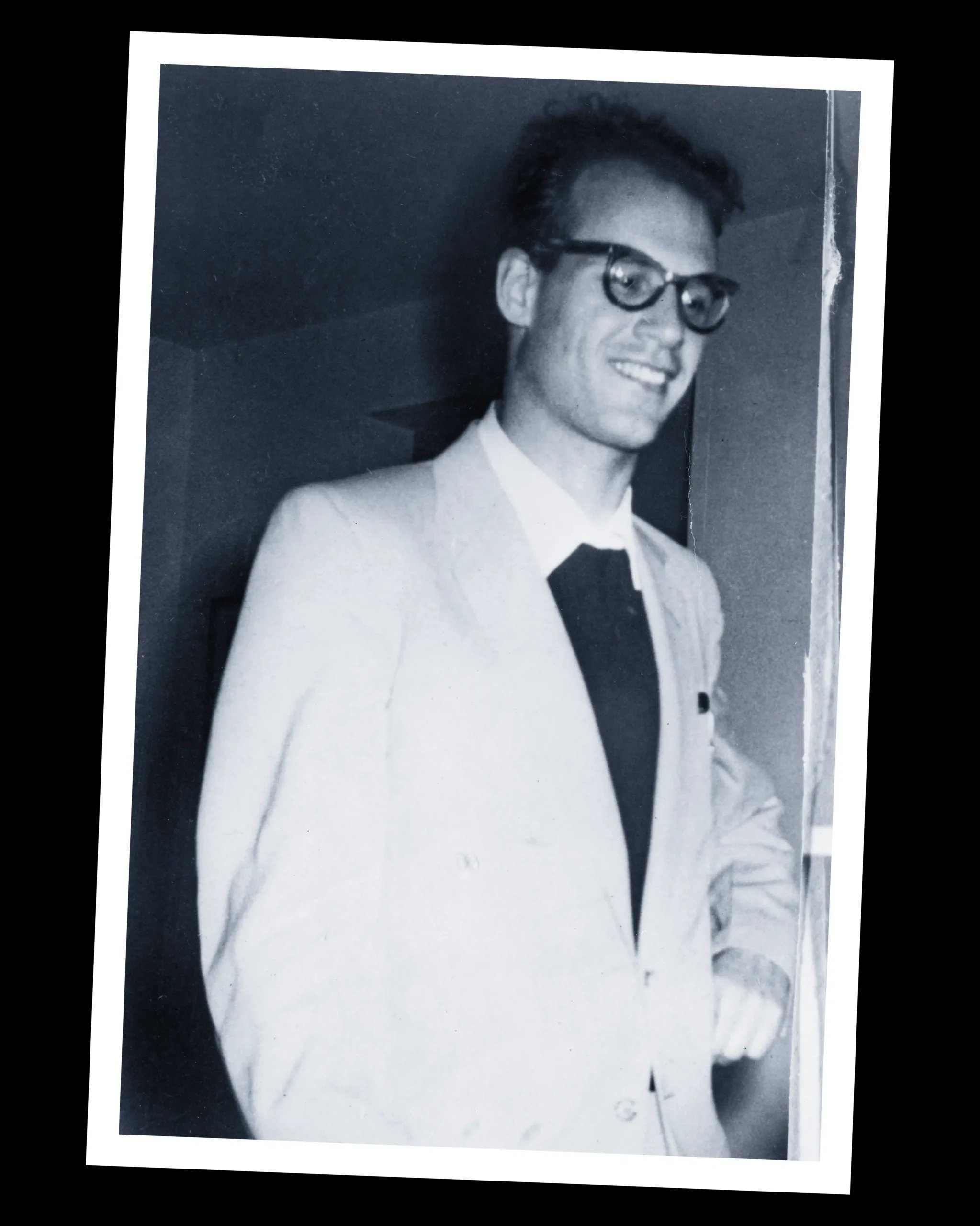
Figure: Grothendieck (1954) – his work turned the study of polynomial equations into a geometry of spaces built from rings.
Further reading
- Grothendieck, A. Éléments de géométrie algébrique (EGA) – the original twelve‑volume treatise (available on the SGA archive).
- Hartshorne, R. Algebraic Geometry – a concise introduction to schemes for graduate students.
- Stacks Project – an open‑source reference for all technical details on schemes, sheaves, and cohomology (link).
Grothendieck’s ideas are not a flash‑in‑the‑pan; they are the scaffolding on which much of 21st‑century mathematics is built. Understanding the concrete constructions—prime‑ideal spectra, sheaves, and étale cohomology—reveals why his work continues to shape research decades after he withdrew from public life.
Comments
Please log in or register to join the discussion