
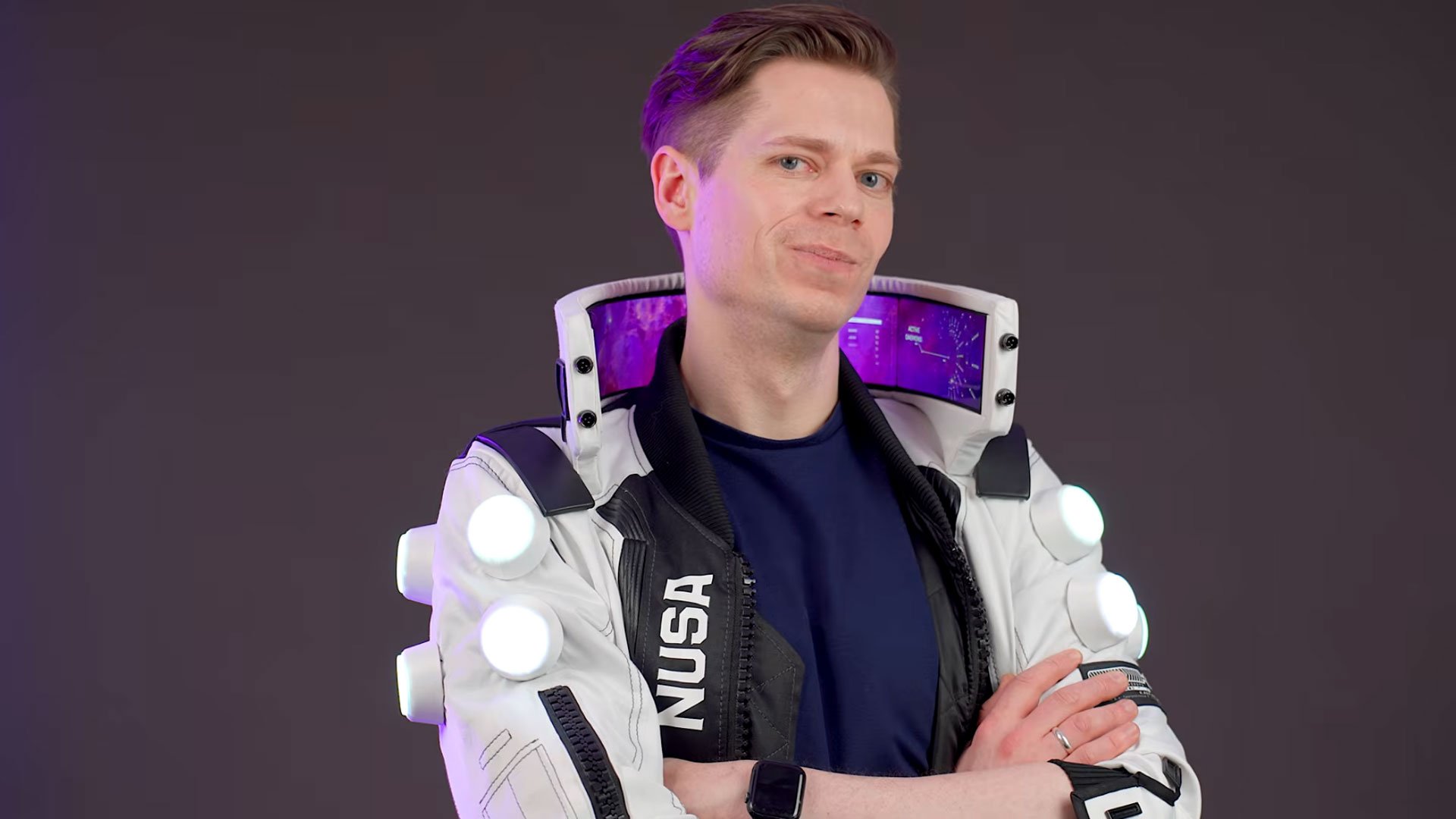
Cosplay creator Zibartas combines four 6‑inch flexible OLED panels, two Raspberry Pi 4 computers and custom‑made EVA housing to build a functional collar that can stream game video from a Steam Controller, illustrating how hobbyist projects push the limits of consumer‑grade silicon and supply‑chain pricing.
Announcement
Zibartas, a robotics‑focused cosplay builder, has finished a working replica of the NUSA Infiltrator jacket from Cyberpunk 2077. The most eye‑catching element is a tall collar fitted with four flexible OLED panels that together cost about $1,200. Two Raspberry Pi 4 single‑board computers drive the displays, while hidden power banks supply roughly three hours of operation. A short video shows the maker gaming on the collar with a Steam Controller, turning a piece of costume fabric into a functional secondary screen.
Technical specifications
| Component | Quantity | Approx. cost | Key specs |
|---|---|---|---|
| Flexible OLED panel (6‑inch, 720p) | 4 | $300 each | 0.3 mm thickness, 60 Hz refresh, HDMI input, 5 V power |
| Raspberry Pi 4 Model B (4 GB) | 2 | $55 each | Quad‑core Cortex‑A72, VideoCore VI GPU, 4 K HDMI output, 1 Gbps Ethernet |
| Power bank (20 Wh Li‑ion) | 2 | $30 each | 5 V/2 A output, USB‑C input |
| EVA foam housing + 3‑D‑printed radar‑jammer mount | – | $40 total | Custom‑cut to hold panels, adds rigidity |
| Additional LEDs, wiring, connectors | – | $25 total | WS2812B strip, GPIO level shifters |
Display driving approach
Initially Zibartas tried Raspberry Pi 5 boards because of their higher clock speed (2.4 GHz vs 1.8 GHz on the Pi 4). However, the Pi 5’s hardware video decoder did not handle the 720p HDMI stream as cleanly when the output was split across four panels. The Pi 4’s dedicated H.264/HEVC decoder, accessed via the omxplayer pipeline, delivered smoother frame timing with lower CPU load.
To avoid the latency of a gigabit Ethernet link between the two Pi 4s, the maker switched to a GPIO‑based pulse‑width modulation (PWM) protocol. A lightweight Python script toggles a pair of GPIO pins at 30 kHz, encoding 8‑bit pixel data for each panel. The receiving Pi reads the pulses with pigpio in DMA mode, reconstructs the frame buffer, and pushes it to the HDMI‑compatible OLED via a simple ffmpeg conversion.
Mechanical integration
The flexible OLED panels are extremely thin but fragile; a single bend beyond a 5 mm radius caused a cracked display during the first fitting attempt. Zibartas responded by designing a semi‑rigid EVA core with side tracks that constrain twisting. The tracks are laser‑cut to a 2 mm tolerance, providing a repeatable curvature that matches the jacket’s silhouette while protecting the screens.
A 3‑D‑printed “radar jammer” mount, printed in flexible resin (approximately 30 % Shore A), holds four WS2812B LEDs. The LEDs are programmed with a micro‑Python script that cycles through cyan, magenta and yellow to echo the game’s neon aesthetic.
Market implications
Component pricing pressure
The $300 price tag per OLED panel reflects the current scarcity of flexible display panels outside of large‑volume OEM contracts. Suppliers such as LG Display and Samsung have announced 2025 roadmaps that include 6‑inch panels for wearables, but the unit cost remains high for low‑volume orders. Hobbyists who need a handful of units must purchase from specialized distributors that add a 30‑40 % markup.
Raspberry Pi supply chain trends
The project uses two Pi 4 boards, a model that has been in steady production since 2019. Recent quarterly reports from the Raspberry Pi Foundation show a 12 % increase in board shipments after the 2024 supply‑chain stabilization, driven by education and maker‑community demand. The Pi 5, despite its higher performance, still suffers from component shortages (especially LPDDR4X memory chips), which explains why the builder reverted to the older but more readily available Pi 4.
Feasibility of consumer‑grade wearables
By integrating off‑the‑shelf SBCs and flexible OLEDs, the jacket demonstrates a viable path for low‑volume, high‑visibility wearables. The three‑hour runtime is limited by the 20 Wh power banks; scaling to a full‑day operation would require either higher‑capacity batteries or a more efficient display driver (e.g., using a dedicated MIPI‑DSI bridge chip). Nonetheless, the prototype proves that a Linux‑based system can drive HDMI‑compatible flexible screens without proprietary firmware, opening the door for custom UI overlays, real‑time telemetry or AR‑style heads‑up displays on clothing.
Potential commercial spin‑offs
If a small batch of such jackets were produced for conventions, the bill‑of‑materials would sit near $1,500 per unit, leaving a margin for artisan labor and branding. Larger manufacturers could drive the cost down by negotiating volume discounts on OLED panels and by integrating a single System‑on‑Chip (SoC) that combines GPU, video decoder and power‑management, eliminating the need for two separate Pi 4 boards.
Conclusion
Zibartas’ flexible OLED collar blends mainstream maker hardware with custom mechanical design to recreate a sci‑fi garment that is both visually faithful and functionally interactive. The project highlights current bottlenecks—high OLED panel prices and uneven SBC availability—while also showcasing how open‑source software stacks can be repurposed for wearable displays. As flexible display production scales and integrated SoCs become more power‑efficient, similar cosplay projects could transition from hobbyist curiosities to marketable accessories.
Further reading
- Raspberry Pi 4 specifications: https://www.raspberrypi.org/products/raspberry-pi-4-model-b/
- Flexible OLED panel data sheet (example): https://www.lgdisplay.com/eng/product/oled/flexible
- Supply‑chain update from the Raspberry Pi Foundation (2024): https://www.raspberrypi.org/blog/2024-supply-chain-report/
Comments
Please log in or register to join the discussion