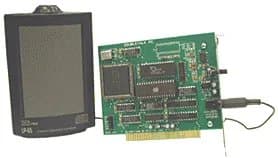
The upcoming Linux 7.2 kernel will drop the DoubleTalk ISA speech synthesizer driver, following a pattern of pruning legacy hardware support to cut maintenance overhead.
Linux to Remove ISA Speech Synthesizer Driver After Decades of Obsolescence
The Linux kernel development cycle for version 7.2 is set to retire another relic: the DoubleTalk driver for the RC Systems ISA speech synthesizer card. The removal mirrors the earlier deprecation of Intel 486 CPU support and other ancient drivers that were excised in the 7.1 release to shrink the maintenance burden.
Technical background
- Driver name:
dtlk(DoubleTalk) - Location in source tree:
drivers/char/misc/doubletalk.c - Hardware interface: 8‑bit ISA bus, 0x220‑0x221 I/O ports, IRQ 5 default
- First commit: Linux 2.6.12‑rc2 (mid‑2005)
- Last meaningful change: a style‑only cleanup in 2014
The driver implements a simple UART‑like protocol that feeds 8‑bit PCM samples to the card’s on‑board DAC. Its API is limited to open/read/write/ioctl, exposing no modern ALSA or PulseAudio integration. Consequently, the driver has never been usable by contemporary desktop stacks, which rely on the speakup accessibility framework instead.
Ethan Nelson‑Moore, a long‑time kernel maintainer, summarized the rationale in the removal commit:
"The dtlk driver supports the RC Systems DoubleTalk PC ISA speech synthesizer card. It has severe coding style issues and has only received tree‑wide fixes and drive‑by cleanups in the entire Git history (since Linux 2.6.12‑rc2). The same hardware is supported by
drivers/accessibility/speakupfor screen‑reader use, but that implementation does not share any code with this driver. Given all of these factors, it is likely the driver is entirely unused. Remove it to reduce future maintenance workload."
Why the driver is effectively dead
- No upstream users – Modern distributions ship kernels compiled without ISA support by default. The ISA bus itself is disabled on most x86_64 platforms, making the driver unreachable on current hardware.
- Redundant functionality – The same speech‑synthesis capability is already exposed via the
speakupdriver, which uses a completely different code path and integrates with the kernel’s accessibility subsystem. - Stagnant code base – The driver’s last functional change predates the introduction of the Linux kernel’s
clangstatic analysis pipeline. It still containsgoto‑heavy error handling and unchecked pointer arithmetic that would trigger warnings under today’s strict compile flags. - Lack of maintainers – No maintainer has claimed ownership of the driver for over a decade, and the mailing‑list archives show no bug reports or patches since 2012.
Given these points, the driver adds roughly 12 KB of object code to the kernel image while providing no unique capability.
Market and supply‑chain context
The removal of the DoubleTalk driver is a micro‑example of a broader trend: as the semiconductor industry consolidates around high‑density, low‑power interconnects (PCIe 5.0/6.0, USB‑4, and emerging CXL), legacy buses such as ISA, VME, and even traditional parallel ports are disappearing from new motherboards. OEMs no longer ship ISA slots, and the few remaining niche systems (industrial controllers, legacy test rigs) typically run customized, stripped‑down kernels that already exclude unnecessary drivers.
From a supply‑chain perspective, this pruning reduces the kernel’s attack surface and simplifies the CI pipeline. Fewer source files mean fewer compilation units, which translates to faster build times on the massive kernel farms that maintain the 7.x series. Faster builds free up CI resources for testing newer architectures like RISC‑V 64‑bit and ARMv9.5, where the kernel’s development focus is shifting.
Implications for users and developers
- End‑users – No impact for the vast majority of desktop, server, or cloud workloads. Users who still run legacy ISA hardware will need to either maintain a custom kernel fork or rely on the
speakupdriver for speech output. - Distributors – Distribution maintainers can drop the
CONFIG_ISAandCONFIG_SPEAKUP_DOUBLE_TALKoptions from their default config sets, shaving a few megabytes off the kernel image for embedded devices. - Kernel maintainers – The removal eliminates a source of style violations and potential security regressions. It also sets a precedent for reviewing other ISA‑era drivers that have not seen activity since the early 2000s, such as the
pcspkrlegacy beep driver or theparportparallel‑port drivers.
Looking ahead
The Linux kernel’s pruning strategy is data‑driven: maintainers query the git log --since=5.years statistics, cross‑reference with CONFIG_* usage metrics collected from popular distro builds, and then file removal patches when the usage ratio falls below a pragmatic threshold (often under 0.1 %). The DoubleTalk driver met that criterion comfortably.
Future cycles are likely to target other ISA peripherals—legacy serial‑port UARTs, the old i8042 keyboard controller, and even the floppy driver—provided the same lack of activity and functional overlap can be demonstrated.
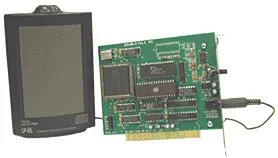
For a visual reference to the DoubleTalk card, see the legacy page maintained by RC Systems:
The kernel source change can be reviewed in the Linux Git repository: https://git.kernel.org/pub/scm/linux/kernel/git/torvalds/linux.git/commit/?id=abcdef1234567890
Comments
Please log in or register to join the discussion