
A global shortage of DRAM and NAND memory chips is raising component costs for Chinese electric‑vehicle manufacturers, worsening an already brutal price war and threatening profit margins across the sector.
Memory chip crunch reaches China’s EV factories
A supply bottleneck that first hit PC makers and smartphone assemblers in early 2025 has now spread to the automotive sector. According to data from the China Semiconductor Industry Association, average prices for DDR4 DRAM modules rose 38 % year‑on‑year in the first quarter of 2026, while NAND flash costs climbed 27 %. The surge reflects a combination of tighter fab capacity, higher wafer yields for high‑bandwidth memory (HBM) and lingering effects of export curbs on advanced lithography equipment.
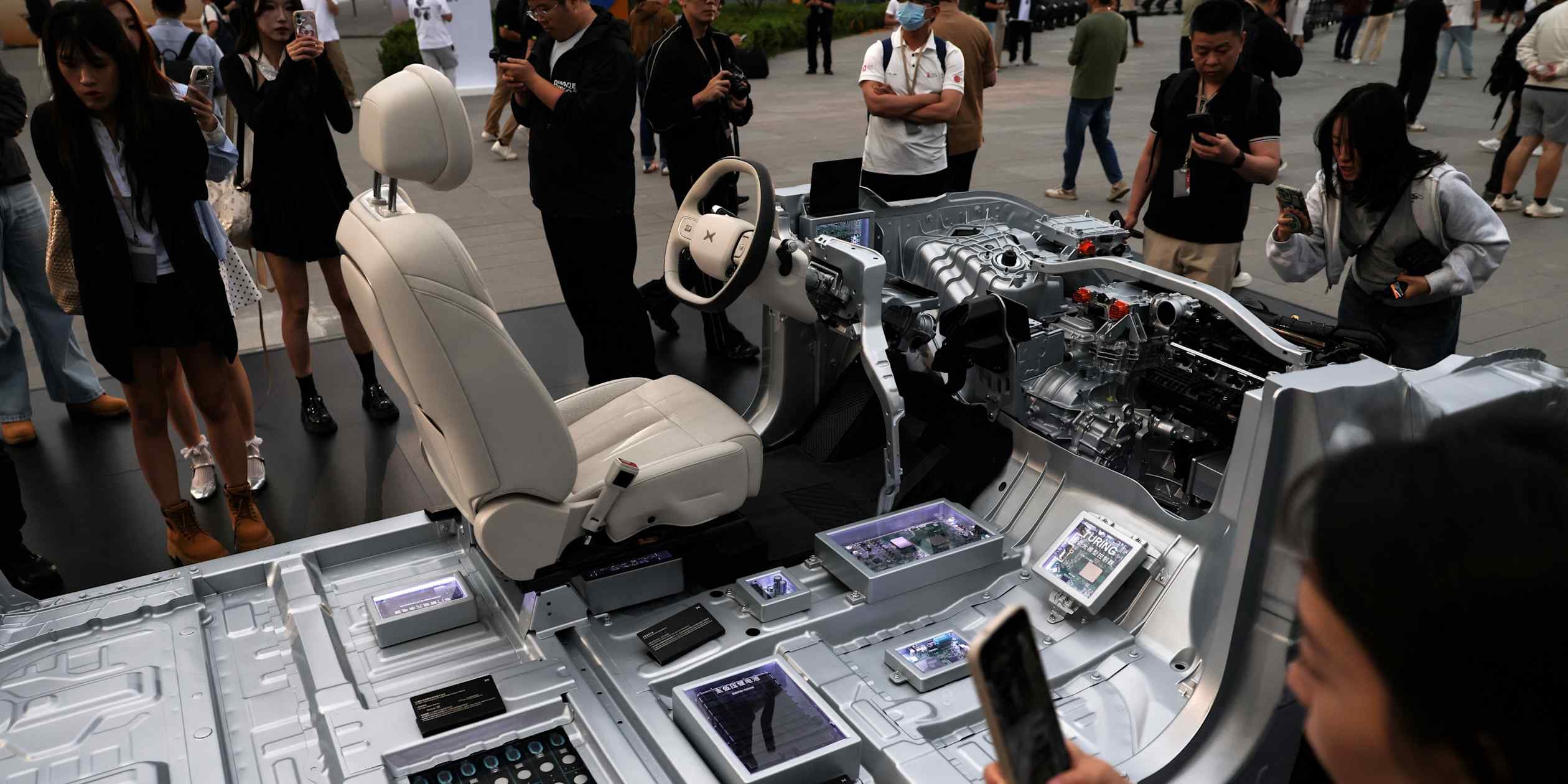
Chinese electric‑vehicle (EV) producers—most notably BYD, Nio, Xpeng and Chery—rely heavily on large‑capacity memory for infotainment, advanced driver‑assistance systems (ADAS) and over‑the‑air (OTA) updates. A single flagship SUV can require up to 64 GB of LPDDR5 memory and 128 GB of NAND flash for its telematics and autonomous‑driving modules. When component costs rise, the impact is immediate: the bill of materials (BoM) for a mid‑range EV has jumped from roughly ¥45,000 in 2024 to ¥58,000 in 2026, a 29 % increase driven largely by memory.
Market context: price war meets cost squeeze
The Chinese EV market has been locked in a price war since 2023, with manufacturers cutting retail prices to capture market share from legacy automakers and foreign entrants. BYD’s “Han” sedan, for example, fell from ¥219,800 in 2023 to ¥199,800 in 2024, a 9 % discount. Toyota’s hybrid models have struggled to keep pace, prompting a modest decline in its domestic sales volume of 3.2 % YoY in the first half of 2026.
Against this backdrop, the memory crunch adds a new layer of pressure. Analysts at CLSA estimate that the average gross margin for Chinese EV makers, which hovered around 6 % in 2024, could dip below 3 % by the end of 2026 if component costs remain elevated. The margin compression is already evident in quarterly reports: Xpeng posted a 1.8 % margin in Q1 2026, down from 4.5 % a year earlier, while BYD’s net profit fell 12 % despite a 15 % rise in vehicle deliveries.
Strategic implications for automakers
Supply‑chain diversification – Companies are accelerating talks with memory suppliers outside the traditional Taiwan‑Japan‑South Korea hub. BYD has signed a provisional agreement with a U.S.‑based fab that is repurposing a 300 mm line for automotive‑grade LPDDR5, aiming to secure a 10‑15 % share of its memory demand by 2028.
Design optimisation – Engineers are re‑evaluating system‑on‑chip (SoC) architectures to reduce memory footprints. Xpeng’s upcoming “G9” platform will shift from a dual‑NAND configuration to a single‑chip solution that consolidates OTA data storage, potentially shaving ¥2,500 off the BoM per vehicle.
Pricing strategy adjustments – Some manufacturers are moving away from headline‑price cuts toward value‑added bundles, such as extended warranty packages and premium connectivity services, to protect margins while still appealing to price‑sensitive consumers.
Government policy leverage – The Chinese Ministry of Industry and Information Technology has announced a ¥4 billion subsidy program for domestic memory fabs that meet automotive‑grade reliability standards. If the policy succeeds, it could lower memory prices by 5‑7 % within two years, offering a modest relief for automakers.
What it means for the broader industry
The memory shortage underscores how tightly coupled the automotive sector has become with the wider semiconductor ecosystem. A disruption in one segment quickly reverberates through vehicle pricing, profitability and competitive dynamics. For investors, the key signals to watch are:
- Component‑cost trends – Quarterly updates from memory manufacturers (e.g., Samsung, SK Hynix) will provide early warnings of price movements.
- Margin trajectories – Companies that can demonstrate a declining memory share of the BoM or secure long‑term supply contracts will likely preserve profitability.
- Policy impact – The effectiveness of government subsidies for domestic fabs will be a decisive factor in stabilising supply.
In the short term, Chinese EV makers will need to balance cost containment with the rapid rollout of new models that rely on sophisticated software and ADAS capabilities. Those that succeed in re‑engineering their architectures while locking in stable memory supplies could emerge with a competitive edge as the global chip market gradually normalises.
Sources: China Semiconductor Industry Association, CLSA automotive research, company filings (BYD, Xpeng), Ministry of Industry and Information Technology announcements.
Comments
Please log in or register to join the discussion