Microsoft has released the original 6502 BASIC source under an open‑source licence, giving hobbyists, educators, and historians a legal way to study, modify, and redistribute the code that powered the PET, VIC‑20 and Commodore 64. The move sparks renewed interest in 8‑bit software archaeology while prompting a debate about the relevance of legacy languages in today’s tooling ecosystem.
Microsoft Opens the 6502 BASIC Vault – What It Means for Retro‑Computing and Modern Development
A pattern of heritage code going public
Over the past few years, several foundational Microsoft projects have been placed in the open. From the early release of GW‑BASIC to the recent publication of the original Windows 1.0 source, the company appears to be acknowledging the cultural value of its early work. The 6502 BASIC release fits that trajectory and arrives at a moment when the retro‑computing community is experiencing a surge of activity: FPGA recreations of classic machines, emulator improvements, and a new, officially‑backed Commodore 64 hardware project announced for 2025.
Evidence of community appetite
- Preservation efforts are already mature. Michael Steil’s reconstruction of the build chain, documented on his blog, shows that enthusiasts can produce byte‑exact ROM images from the original sources. His work with the cc65 toolchain makes the code compile on modern hosts without needing a vintage assembler.
- Educational programs cite 6502 BASIC. Courses on computer architecture at universities such as MIT and Stanford still use the 6502 instruction set as a teaching vehicle, and the BASIC interpreter provides a readable, high‑level example of how a language runtime was built on limited hardware.
- Commercial interest is resurfacing. The FPGA‑based Commodore 64 announced by Commodore USA this year lists “authentic BASIC ROM” as a key selling point, and the project’s GitHub page links directly to the newly released Microsoft repository.
You can explore the official release on GitHub here: Microsoft/6502‑BASIC.
Counter‑perspectives: Is this a novelty or a practical asset?
While many celebrate the historical significance, some developers question the practical impact:
- Legacy language relevance. Critics argue that BASIC’s syntax and runtime model are too far removed from the languages that dominate modern stacks, making the codebase a curiosity rather than a reusable component.
- Maintenance overhead. Opening a 45‑year‑old codebase invites expectations of bug fixes and feature requests. Maintaining a repository that compiles only with niche toolchains could stretch Microsoft’s open‑source stewardship resources.
- Licensing complexities. The release uses the MIT licence, which is permissive, but the original code contains comments referencing third‑party components (e.g., the 6502 assembler from MOS Technology). Some community members worry about hidden IP constraints that could surface later.
Why the release still matters
Even if the code will not be directly incorporated into new products, it serves several concrete purposes:
- Historical research. Scholars can now trace the evolution from the Altair 8080 BASIC to the PET’s BASIC V2, observing design decisions such as the garbage‑collector fix co‑authored by John Feagans and Bill Gates.
- Tooling experiments. Modern compiler writers often prototype language front‑ends on small, well‑understood runtimes. The 6502 BASIC source offers a compact test case for exploring code‑size optimisation techniques.
- Community engagement. By providing an official source, Microsoft reduces legal uncertainty for hobbyists who want to embed the interpreter in custom hardware or create derivative educational tools.
Looking ahead
If the community embraces the repository, we may see a new wave of projects:
- Embedded teaching kits that pair a low‑cost 6502 board with the open‑sourced interpreter, allowing students to write and run BASIC programs on real silicon.
- Cross‑platform ports that compile the interpreter to WebAssembly, enabling a browser‑based BASIC playground that runs alongside modern JavaScript tutorials.
- Historical visualisations that map code changes from the 1975 Altair version through the 1978 PET release, illustrating how early software engineering practices evolved.
The release does not signal a revival of BASIC as a mainstream development language, but it does reinforce a broader trend: companies are increasingly treating their early software artifacts as cultural assets worth preserving and sharing.
Scott Hanselman – VP, Member of Technical Staff, Microsoft/GitHub – writes about open source, developer tools and the human side of technology.
Stacey Haffner – Director, Microsoft OSPO – focuses on open‑source strategy, AI and the future of developer tooling.
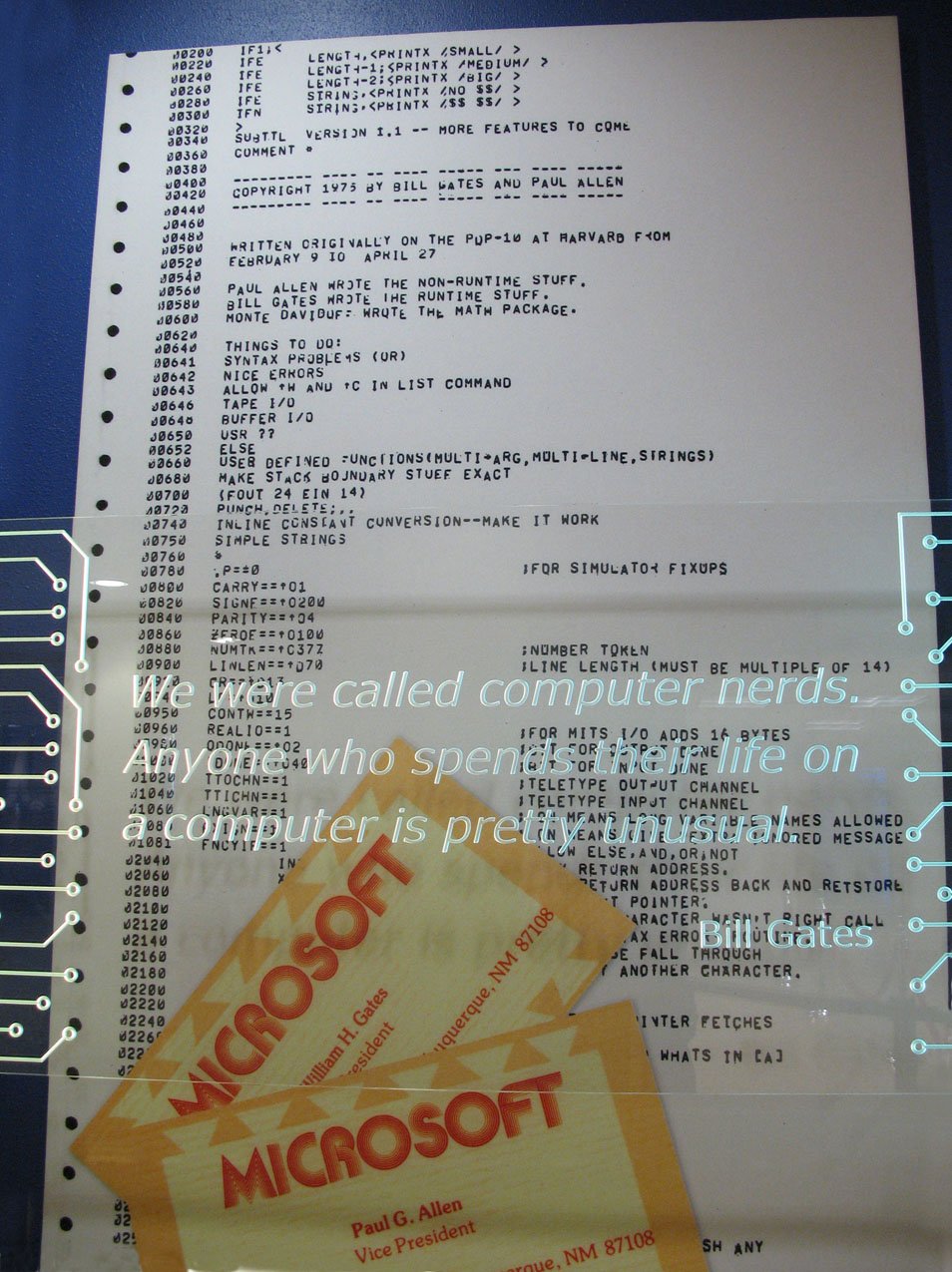
For more on the history of Microsoft BASIC, see the History of Microsoft video series.
Comments
Please log in or register to join the discussion