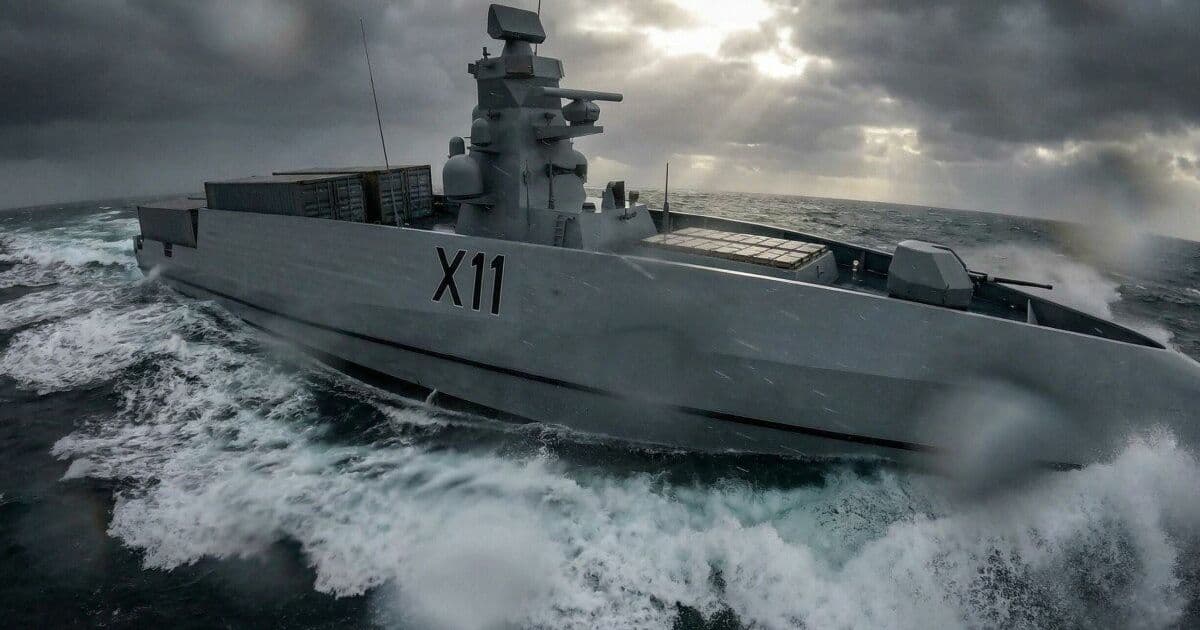
Spanish shipbuilder Navantia has released detailed specifications for the Large Autonomous Surface Vessel (LASV75), a 1,000‑tonne, fully electric, modular drone ship designed to operate alongside crewed warships. The article explains the vessel’s design, intended roles, and the compliance steps navies must take to integrate such autonomous platforms into existing fleets.
Regulatory action → What it requires → Compliance timeline
1. Introduction – the LASV75 design
Navantia’s UK arm has published the technical brief for the Large Autonomous Surface Vessel (LASV75). At 75 m long and roughly 1,000 t displacement, the vessel is half the length of a Royal Navy Type 45 destroyer but comparable to a River‑class patrol ship. Its defining characteristic is the complete absence of a bridge or crew spaces; all control functions are housed in a hardened combat information centre on shore or aboard a parent ship.
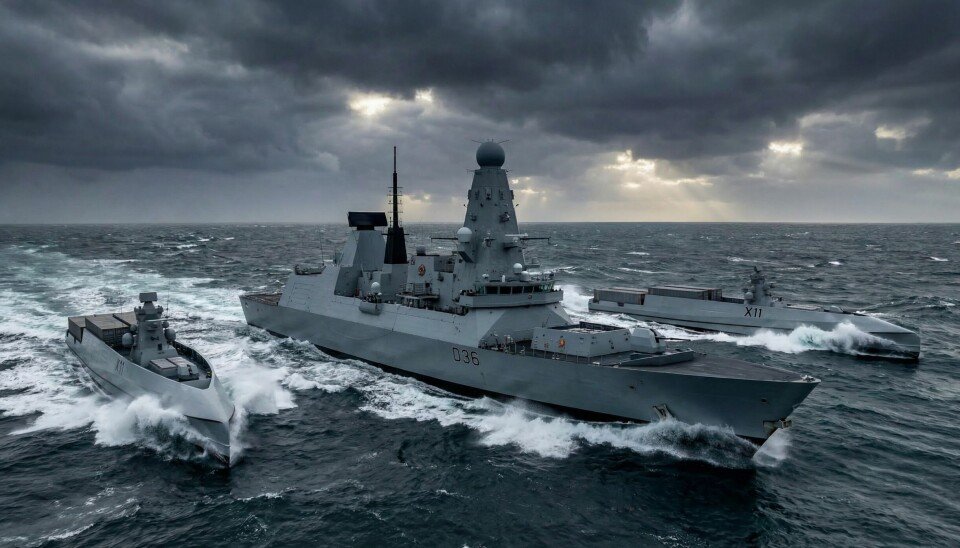 Two LASV75 uncrewed surface vessels accompanying a Royal Navy Type 45 destroyer at sea
Key features include:
- Integrated Full Electric Power and Propulsion (IFEP) – diesel generators feed electric motors and ship‑board systems via waterline exhausts, eliminating traditional funnels.
- Modular payload bays – standard 20‑ft containers can be swapped for weapons, sensors, or logistics modules.
- Scalable sensor mast – supports a range of radar, sonar, and electronic‑surveillance packages.
- Open‑architecture combat system – designed to interoperate with the Royal Navy’s existing command and control (C2) networks.
Navantia claims the design enables rapid, low‑cost production, though exact build‑time and unit cost figures have not been disclosed.
2. Why the LASV75 matters to regulators and defence ministries
The UK’s Hybrid Navy concept, outlined in the 2024 Maritime Autonomous Systems Strategy (MASS), calls for a mixed fleet of crewed warships and uncrewed escorts. Introducing a vessel of this size raises several regulatory considerations:
- Maritime Safety and Classification – the LASV75 must be classed by a recognised society (e.g., Lloyd’s Register, DNV‑GL) under the International Convention for the Safety of Life at Sea (SOLAS), with specific amendments for autonomous operation (SOLAS Chapter III‑A).
- Cyber‑Security Compliance – under the UK National Cyber Security Centre (NCSC) Guidance for Autonomous Naval Platforms (2025), any remote‑control link and on‑board network must meet ISO/IEC 27001 and the Defence Cyber‑Protection Standard (DCPS‑2). A formal Cyber‑Risk Assessment is required before the vessel can join a task group.
- Rules of Engagement (ROE) and Autonomous Weapon Systems (AWS) Law – the LASV75’s ability to carry lethal payloads triggers the UK Ministry of Defence (MoD) Autonomous Weapons Policy (2023), which mandates a human‑in‑the‑loop decision point for any kinetic action.
- Environmental Regulations – the vessel’s electric propulsion must comply with the IMO MARPOL Annex VI emissions standards, even though exhaust is routed through waterline outlets.
3. Compliance requirements for navies planning to acquire the LASV75
| Requirement | What it entails | Deadline for compliance |
|---|---|---|
| Classification & Survey | Submit design data to a recognised classification society for SOLAS‑A certification. | 30 days after contract award |
| Cyber‑Security Accreditation | Conduct a NCSC‑approved penetration test, implement DCPS‑2 controls, and obtain a Cyber‑Assurance Certificate. | 90 days before first sea trial |
| Human‑in‑the‑Loop (HITL) Integration | Install a secure, redundant command link that allows a qualified officer to approve weapon release. Document HITL procedures in the vessel’s Operational Handbook. | 60 days before operational deployment |
| MARPOL Emissions Verification | Verify that waterline exhausts meet NOx and SOx limits; submit an Emission Compliance Report to the IMO. | 45 days after first deployment |
| Training & Doctrine Update | Update fleet doctrine to include autonomous escort tactics; certify crew on the Remote Vessel Control System (RVCS). | 120 days after delivery |
4. Timeline for integration into the Royal Navy
- Q3 2026 – Contract finalisation – Navantia and the MoD sign a memorandum of understanding. Classification society begins design review.
- Q4 2026 – Prototype construction – First hull laid at Navantia’s Ferrol yard. Cyber‑security baseline established.
- Q2 2027 – Sea‑trial phase – Vessel conducts autonomous navigation trials in the Bay of Biscay. HITL procedures are exercised with a Royal Navy command ship.
- Q3 2027 – Certification – SOLAS‑A and DCPS‑2 certificates issued. Emission report submitted to the IMO.
- Q4 2027 – Operational entry – LASV75 joins a Type 45 destroyer task group for Atlantic Bastion patrols, providing continuous under‑sea cable monitoring and anti‑submarine escort duties.
5. Practical steps for shipyards and defence contractors
- Document all software versions used in the control stack and store them in a tamper‑evident repository (e.g., GitLab with signed commits). This satisfies the Software Bill of Materials (SBOM) requirement of the UK Defence Procurement Regulation.
- Implement redundant communication paths – satellite link, line‑of‑sight radio, and a hardened mesh network. Redundancy is a core condition of the NATO Allied Command Transformation (ACT) Autonomous Systems Guidance.
- Conduct a Human Factors Review – even though the vessel is uncrewed, operators on the control ship must be trained to recognise system failures and execute safe‑mode shutdowns.
- Engage with the International Maritime Organization (IMO) early to align the waterline exhaust design with upcoming IMO 2028 Emission Control Areas (ECA) rules.
6. Conclusion
The LASV75 represents a concrete step toward the hybrid fleet model the UK has been planning for several years. Its modular architecture and electric propulsion promise lower acquisition costs, but successful fielding hinges on meeting a suite of safety, cyber, and weapons‑control regulations. By following the compliance timeline outlined above, the Royal Navy can integrate the vessel into its Atlantic Bastion strategy without compromising legal or operational standards.
For further technical details, see Navantia’s official LASV75 brochure Navantia LASV75 Overview and the UK MoD’s Autonomous Weapons Policy MoD AWS Policy 2023.
Comments
Please log in or register to join the discussion