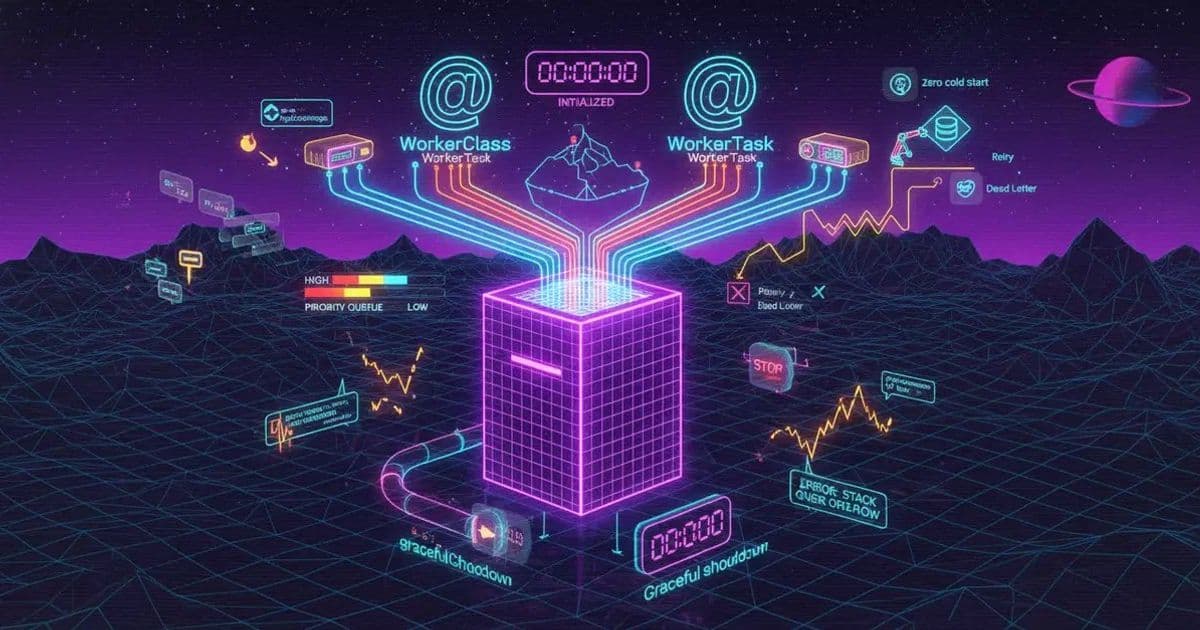
NestWorker (aka Dev Signal) uses a fleet of coordinated agents to turn noisy community data into actionable guidance. This article breaks down its architecture, consistency choices, API design, and the trade‑offs that keep the system responsive at scale.
NestWorker – A Scalable Multi‑Agent Engine for Community‑Driven Guidance
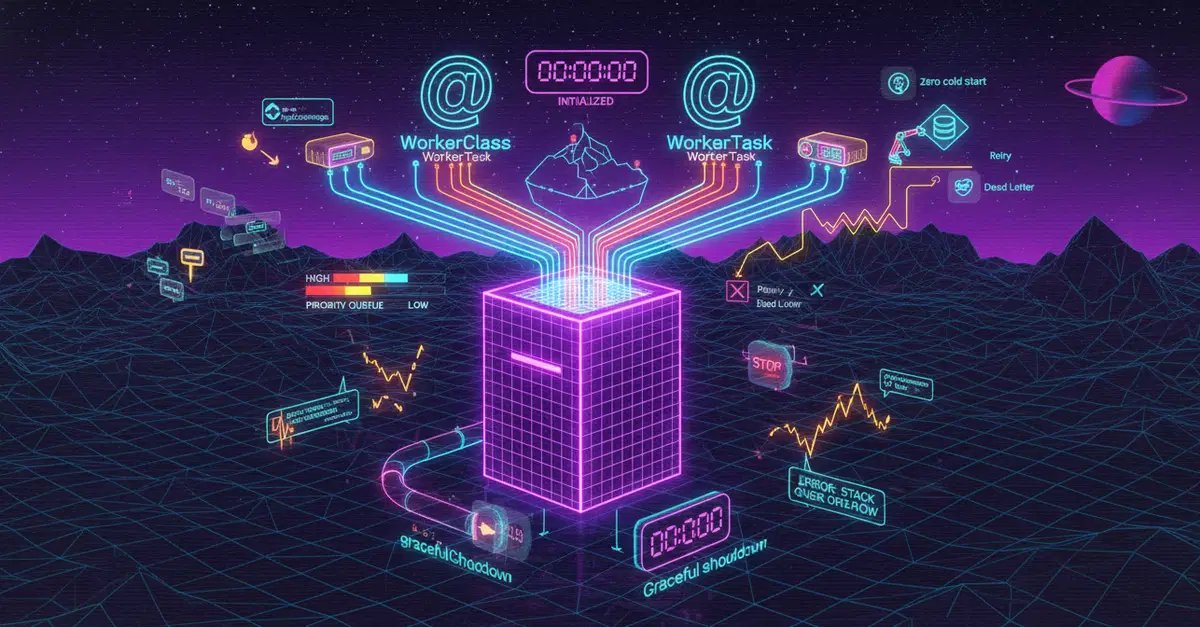
When a developer asks a question on a forum, the signal is buried under votes, timestamps, and unrelated chatter. NestWorker, the engine behind Google Cloud’s Dev Signal, extracts the useful parts, enriches them with long‑term memory, and surfaces concise, trustworthy advice.
The problem: noisy community data at web‑scale
- Volume – Hundreds of thousands of posts, comments, and reactions flow in daily across multiple DEV Community sites.
- Variability – Content ranges from short snippets to long tutorials, with differing markup, language, and quality.
- Latency expectations – Users expect a response in seconds, not minutes, even when the system must consult historical context.
Traditional pipelines that batch‑process logs or run heavyweight NLP models on a single server cannot meet these constraints. The challenge is to coordinate many lightweight agents, each responsible for a slice of the workload, while preserving a coherent view of the knowledge base.
Solution approach: a hierarchical, event‑driven architecture
1. Agent fleet (NestWorker workers)
- Stateless front‑line agents receive raw events from Pub/Sub topics (new post, comment edit, vote). They perform fast pre‑filtering: language detection, profanity check, and basic tokenization.
- Specialized downstream agents run heavier models (topic classification, similarity search, citation extraction). They are triggered only when the front‑line flags a payload as “high‑value”.
- Workers are deployed as Google Cloud Run services, allowing automatic scaling to zero when idle and rapid scaling up during traffic spikes.
2. Long‑term memory store
- A vector database (e.g., Pinecone or Weaviate) holds embeddings of every processed article. Embeddings are generated once by the downstream agents and persisted.
- For fast key‑value lookups (post ID → metadata, revision history), a distributed cache like Redis Enterprise is used. It provides strong consistency for reads‑after‑writes within a single region.
3. Consistency model
- Eventual consistency is acceptable for the global knowledge graph: a newly published tutorial may take a few seconds to appear in similarity results, which does not break user expectations.
- Read‑your‑writes is enforced for the user‑specific view (e.g., a developer’s own draft). This is achieved by routing the user’s subsequent requests to the same regional cache instance, using sticky sessions via a load balancer.
4. API surface
| Endpoint | Pattern | Payload | Guarantees |
|---|---|---|---|
POST /events |
Fire‑and‑forget (HTTP 202) | Raw event JSON | Delivered to Pub/Sub; at‑least‑once delivery |
GET /advice/{questionId} |
Read‑through cache | Question ID | Returns latest advice; falls back to background recompute if stale |
POST /retrain |
Command (admin only) | Model version | Triggers rolling update of downstream agents; uses blue‑green deployment |
All public endpoints are versioned (/v1/…) and documented with OpenAPI 3. Rate limiting is enforced per API key using Google Cloud Armor, protecting downstream workers from burst traffic.
Trade‑offs and why they matter
Scalability vs. latency
- Stateless front‑line agents keep the cold‑start latency low (< 100 ms) because they run on a minimal container image. The cost is that they cannot hold large model weights, so the heavy lifting is deferred.
- Vector search introduces a few extra milliseconds per query, but it enables semantic similarity across the entire corpus. If latency becomes a bottleneck, the vector store can be sharded by embedding hash prefixes.
Consistency vs. availability
- Opting for eventual consistency on the global graph means the system stays available even when a region experiences a network partition. Users may see slightly outdated suggestions, which is acceptable for a recommendation engine.
- For user‑specific drafts, we sacrifice a bit of global availability by pinning the request to a region that holds the authoritative cache entry. This ensures the developer sees their own edits immediately.
Operational complexity
- Managing two separate stores (vector DB + Redis) adds deployment overhead. However, separating concerns lets us tune each store independently: the vector DB can be tuned for high‑dimensional reads, while Redis can be tuned for low‑latency key‑value ops.
- Using Cloud Run simplifies scaling but introduces a limit of 1 GiB memory per instance. If a downstream agent needs more memory (e.g., a transformer model), we fall back to AI Platform Prediction as a managed service.
Lessons from the field
- Fail fast, retry later – Front‑line agents should never block on downstream failures. Instead, they publish a “retry” event with exponential back‑off. This keeps the pipeline fluid.
- Versioned embeddings – When the embedding model is upgraded, store the version alongside each vector. During a rollout, query both old and new vectors and merge results to avoid a sudden dip in relevance.
- Observability is non‑negotiable – Correlate Pub/Sub message IDs with request IDs in Cloud Trace. Dashboards that show “time from event ingestion → advice ready” help spot bottlenecks before they affect users.
What’s next for NestWorker
- Hybrid memory: combine short‑term in‑memory caches with a persistent knowledge graph (e.g., Neo4j) to support richer reasoning over relationships.
- Policy‑driven routing: use Google Cloud’s Traffic Director to steer requests from high‑latency regions to the nearest healthy worker pool, reducing cross‑region hops.
- Open‑source SDK: expose a lightweight client library that lets external services submit events and fetch advice without dealing with Pub/Sub directly.
NestWorker demonstrates that a carefully layered set of stateless agents, backed by purpose‑built stores, can turn chaotic community chatter into reliable, low‑latency guidance. The design choices—eventual consistency for the global graph, read‑your‑writes for personal data, and a mix of serverless compute with specialized vector search—provide a pragmatic roadmap for anyone building large‑scale, multi‑agent systems on the cloud.
Comments
Please log in or register to join the discussion