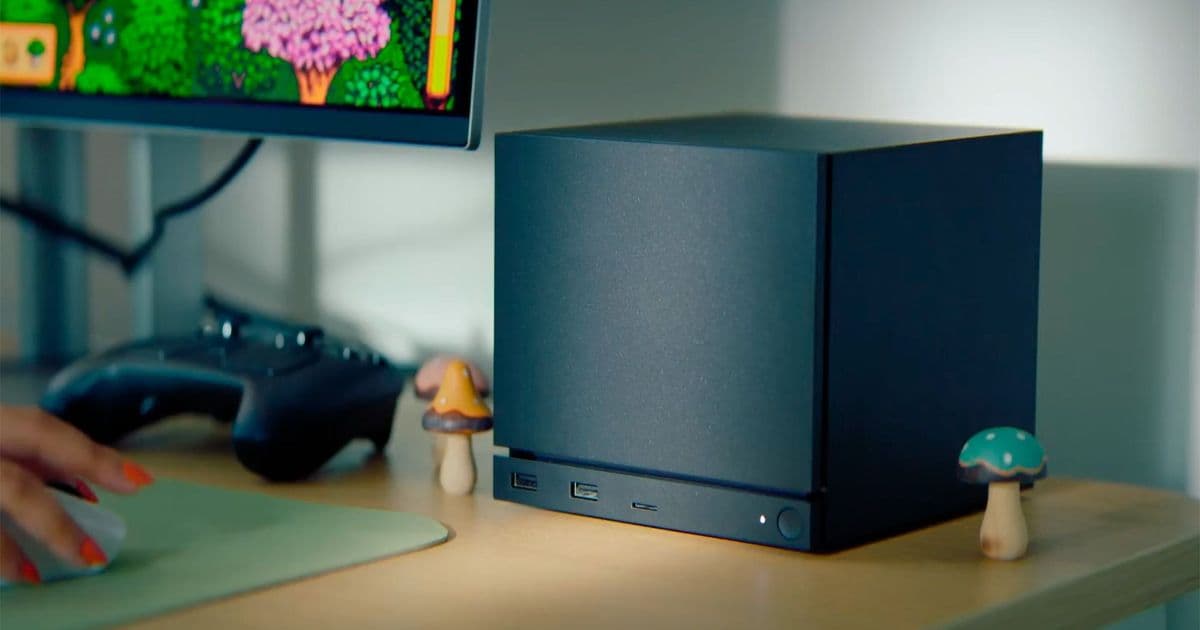
The Khronos Group has added Valve’s upcoming Steam Machine to its Vulkan conformant product list, confirming the hardware, OS, and drivers meet the API’s standards. While this doesn’t guarantee performance or a launch date, it shows development is still active despite component cost challenges.
Steam Machine Gains Vulkan Conformance – Valve’s Console Passes Khronos Certification
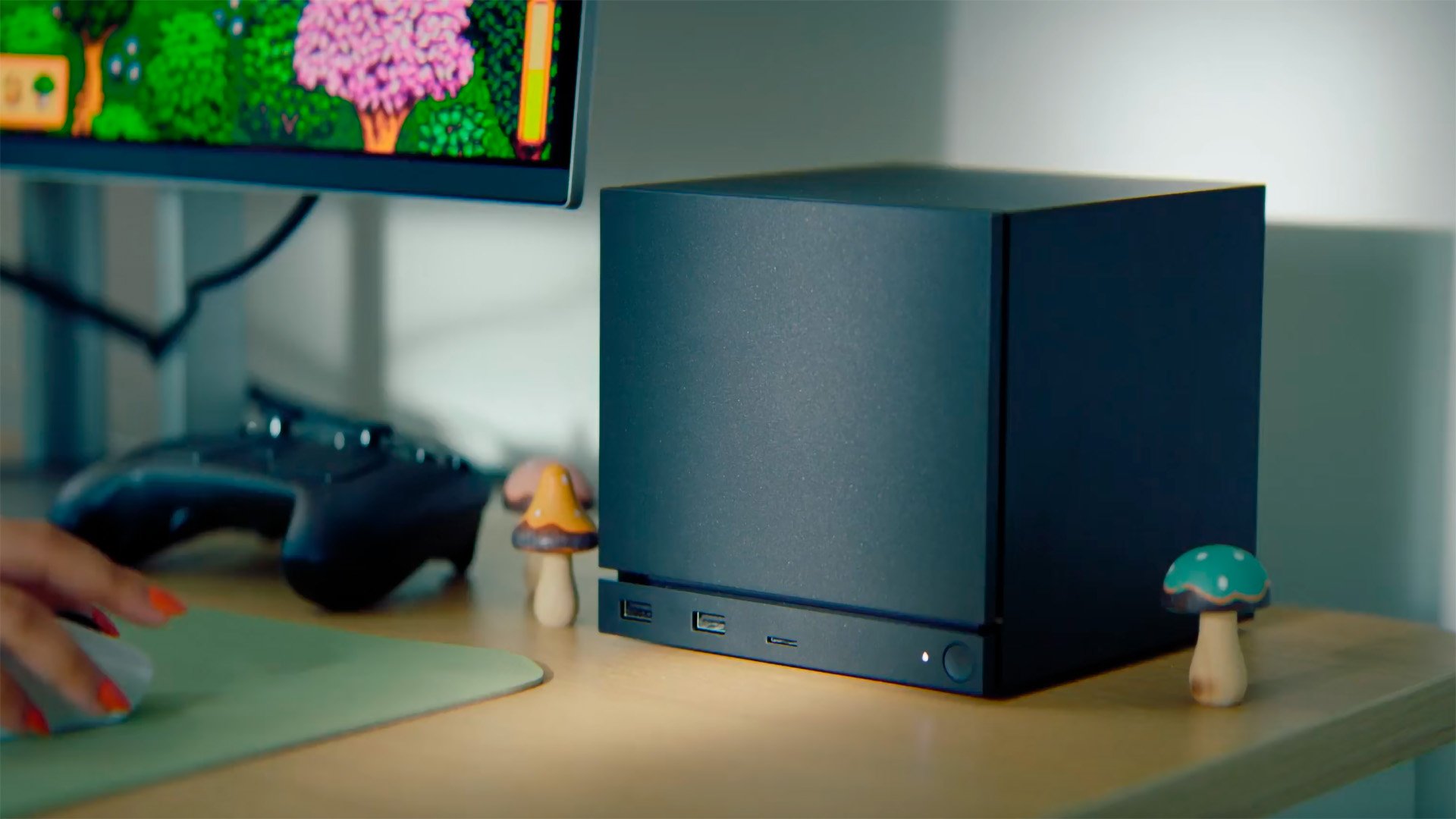 Image credit: Valve
Valve’s long‑awaited Steam Machine has taken a concrete step forward: the Khronos Group, steward of the Vulkan graphics API, now lists the device as a conformant product. This entry confirms that the console’s hardware, operating system, and driver stack behave as expected under Vulkan, giving developers confidence that the API will function consistently across the platform.
What Vulkan conformance means for the Steam Machine
Khronos defines a set of tests that verify an implementation follows the Vulkan specification to the letter. Passing those tests does not imply any particular performance level, nor does it guarantee that every Vulkan title will run smoothly on the console. Instead, it certifies that:
- The GPU exposes the required Vulkan features and extensions.
- The operating system correctly handles Vulkan’s synchronization and memory management calls.
- The driver layer translates Vulkan commands without violating the spec.
For developers, this reduces the risk of platform‑specific bugs. They can write against Vulkan’s API and expect the same behavior on the Steam Machine as on a PC that also passes conformance.
Where the Steam Machine stands now
Valve announced the Steam Machine, Steam Controller, and Steam Frame in November 2025. The handheld Steam Deck has already proven that a Linux‑based SteamOS can deliver a large portion of the Steam library with respectable performance. The console, however, has faced a different set of hurdles:
- Component pricing – The surge in DRAM and SSD costs in 2024–2025 has pushed the bill of materials higher than Valve originally budgeted. Unlike the Deck, which benefited from bulk‑order discounts, the Steam Machine targets a higher‑end market and Valve has publicly stated it will not subsidize the hardware.
- Supply chain volatility – Global semiconductor shortages have forced many manufacturers to redesign around available parts, potentially delaying final hardware revisions.
- Ecosystem readiness – While the Deck runs a polished version of SteamOS, the console will need to integrate a full‑size GPU, more robust cooling, and TV‑oriented I/O, all of which must be validated against Vulkan.
The recent conformance listing tells us that Valve has at least completed the low‑level software stack needed for Vulkan. It also suggests that the hardware design has stabilized enough for the Khronos testing team to run their suite, which is a non‑trivial milestone.
Comparison to the Steam Deck and competitors
| Feature | Steam Deck (2022) | Steam Machine (upcoming) | Xbox Series S (2020) |
|---|---|---|---|
| CPU | AMD Zen 2, 4 cores | Expected Zen 3‑class, 8 cores | Custom Zen 2, 8 cores |
| GPU | RDNA 2, 1.6 TFLOPs | Likely RDNA 3, 4–5 TFLOPs | RDNA 2, 4 TFLOPs |
| RAM | 16 GB LPDDR5 | 32 GB DDR5 (target) | 10 GB GDDR6 |
| Storage | 512 GB NVMe SSD | 1 TB NVMe SSD (target) | 512 GB NVMe SSD |
| OS | SteamOS 3 (Arch‑based) | SteamOS 4 (Linux with Vulkan focus) | Custom Xbox OS |
| Vulkan conformance | Yes (via driver updates) | Now certified | Yes |
The Steam Machine’s spec sheet, while still speculative, aims to sit above the Deck and roughly on par with the Xbox Series S in raw GPU power, but with a larger memory pool and a more PC‑like architecture. The Vulkan certification aligns it with the same development expectations that the Deck now enjoys.
Who should care?
- Game developers targeting multiple platforms can now add the Steam Machine to their Vulkan testing matrix with confidence that the API layer will behave predictably.
- Enthusiasts who have been waiting for a living‑room Valve console can take this as a sign that development is still active, even if a launch date remains unannounced.
- Hardware analysts will watch component pricing closely; the console’s feasibility hinges on securing affordable DRAM and SSDs before the end of the year.
Outlook
The certification does not set a release timetable, but it does remove a major technical unknown. Valve still needs to finalize the final hardware SKU, negotiate component pricing, and complete the software integration that will make the console user‑friendly for a broad audience.
If the company can lock down a cost‑effective supply chain, a launch before the holiday season is plausible. Until then, the Vulkan conformant status serves as a checkpoint: the foundation is solid, and the next steps will be about performance tuning, UI polish, and price positioning.
Stay tuned for further updates as Valve reveals more details about the Steam Machine’s specifications and launch plans.
Comments
Please log in or register to join the discussion