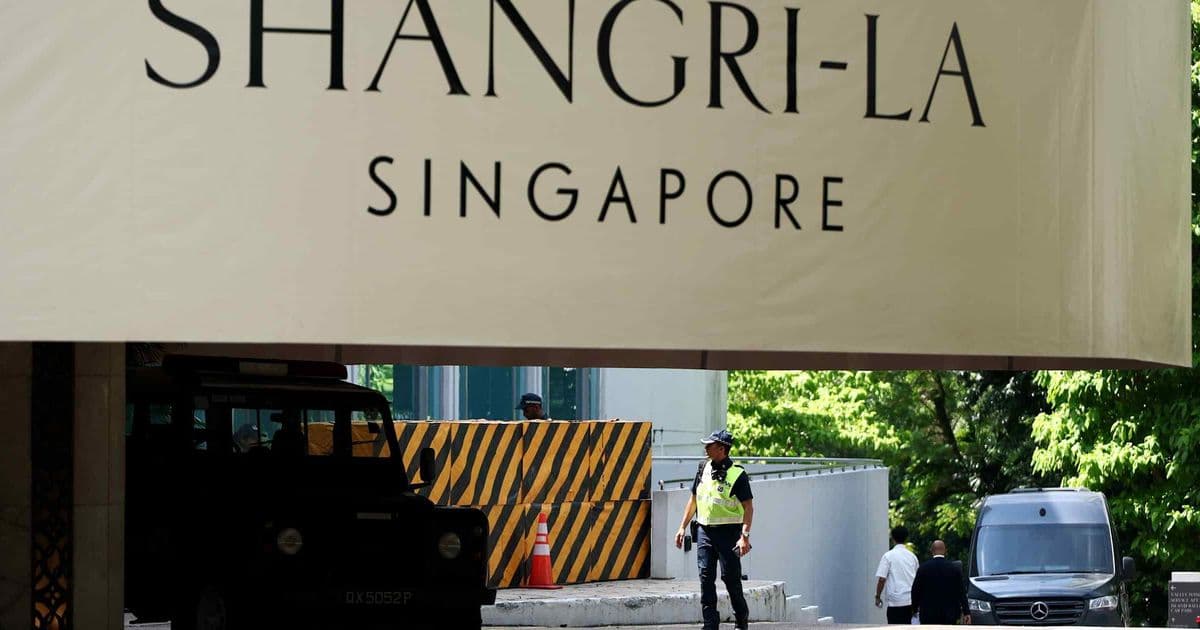
As Asia navigates complex geopolitical tensions, key diplomatic meetings and high-level visits are reshaping regional security and economic alliances, with significant implications for global markets and supply chains.
The coming week marks a critical juncture in Asian geopolitics as three major events converge to potentially reshape the region's strategic landscape. The Shangri-La Dialogue defense conference in Singapore, the Quad meeting in India, and Philippine President Ferdinand Marcos Jr.'s visit to Japan collectively signal a significant realignment of security and economic partnerships in the Indo-Pacific.
Shangri-La Dialogue: Defense Posturing in Singapore
Vietnamese President To Lam is set to deliver the keynote address at the Shangri-La Dialogue on May 29, a platform that has increasingly become a stage for nations to articulate their security postures amid rising tensions in the region. The conference, now in its 20th year, brings together defense ministers and military leaders from across the Asia-Pacific to discuss pressing security challenges.
Vietnam's participation as keynote speaker underscores the country's growing diplomatic significance in Southeast Asia. As a nation sharing maritime boundaries with China in the disputed South China Sea, Vietnam's security perspective carries particular weight. The country has pursued a delicate balancing act, maintaining economic ties with China while strengthening defense relationships with Western powers and regional neighbors.
The Shangri-La Dialogue occurs at a time when regional defense spending continues to rise. According to the Stockholm International Peace Research Institute (SIPRI), Asia-Pacific military expenditures increased by 4.2% in 2025 to reach $575 billion, accounting for 29% of global military spending. This sustained investment reflects the region's security concerns and the growing emphasis on defense modernization.
Quad Meeting: Strategic Alignment in India
Simultaneously, the Quadrilateral Security Dialogue (Quad) meeting in India brings together the United States, Japan, Australia, and India to coordinate on regional security and economic initiatives. The Quad has evolved from a conceptual framework to a substantive partnership with concrete deliverables across multiple domains.
Economically, the Quad represents a significant market with a combined GDP of approximately $30 trillion and a population of over 1.5 billion. The partnership has increasingly focused on supply chain resilience, particularly in critical sectors like semiconductors, rare earth minerals, and pharmaceuticals. The Quad's Indo-Pacific Economic Framework (IPEF) has established working groups on supply chains, clean energy, and infrastructure development, with the potential to create alternative economic pathways that reduce dependency on any single nation.
Security cooperation has expanded through joint military exercises, information sharing mechanisms, and technology collaboration. The recent establishment of a Quad working group on critical and emerging technologies demonstrates the partnership's focus on maintaining technological advantage in areas like artificial intelligence, quantum computing, and biotechnology.
Marcos in Japan: Economic and Security Implications
Philippine President Ferdinand Marcos Jr.'s visit to Japan represents deepening bilateral ties between the two nations, with significant implications for regional security architecture. The Philippines has been strengthening its security partnerships with Japan, the United States, and Australia amid ongoing maritime disputes in the South China Sea.
Economically, the Philippines-Japan relationship has grown substantially, with Japan ranking as the Philippines' largest source of official development assistance and a major investor in infrastructure projects. In 2025, Japanese direct investment in the Philippines reached approximately $4.5 billion, concentrated in manufacturing, electronics, and automotive sectors. The visit is expected to further enhance trade relations, with discussions underway on a potential bilateral trade agreement that could complement the broader Regional Comprehensive Economic Partnership (RCEP).
Security cooperation has expanded through the acquisition of defense equipment and technology from Japan, including patrol vessels and surveillance systems. The Philippines has positioned itself as a key strategic partner in the first island chain, controlling vital sea lanes in the Western Pacific. Enhanced security cooperation with Japan provides the Philippines with additional capabilities to assert its maritime claims and maintain freedom of navigation in contested waters.
Market Implications and Strategic Realignment
These concurrent diplomatic developments carry significant market implications across several sectors:
Defense and Aerospace: Increased defense spending and security cooperation create opportunities for defense contractors and aerospace companies. Regional defense budgets are projected to maintain their upward trajectory, with particular growth expected in naval capabilities, surveillance systems, and missile defense technologies.
Technology Supply Chains: The Quad's focus on supply chain resilience is driving investment in alternative sourcing and manufacturing capabilities. Companies specializing in semiconductor manufacturing, rare earth processing, and critical minerals extraction are positioned to benefit from this strategic shift.
Infrastructure Development: The emphasis on infrastructure connectivity through frameworks like IPEF creates opportunities for construction firms, engineering companies, and material suppliers. Projects focusing on digital infrastructure, clean energy, and resilient transportation networks are likely to receive increased funding.
Energy Security: Southeast Asia's pivot toward crop-based fuels, while potentially reducing food availability for export, creates opportunities for agricultural technology companies and biofuel producers. The region's energy transition strategy is balancing economic development with environmental considerations, creating complex market dynamics.
Regional Dynamics and Future Trajectories
The convergence of these diplomatic events reflects broader strategic realignments in the Indo-Pacific. Nations across the region are increasingly diversifying their partnerships, reducing over-reliance on any single power while maintaining economic relationships across multiple axes.
The Shangri-La Dialogue provides a venue for direct communication between defense establishments, potentially reducing miscommunication and miscalculation in an environment of heightened tensions. The Quad meeting demonstrates the growing institutionalization of security cooperation among like-minded democracies, while Marcos' visit to Japan highlights the deepening bilateral ties that form the building blocks of a broader regional security architecture.
As these events unfold, the coming weeks may mark a significant inflection point in the region's strategic landscape, with implications for global markets, security arrangements, and economic governance structures that will likely extend well beyond 2026.
Comments
Please log in or register to join the discussion