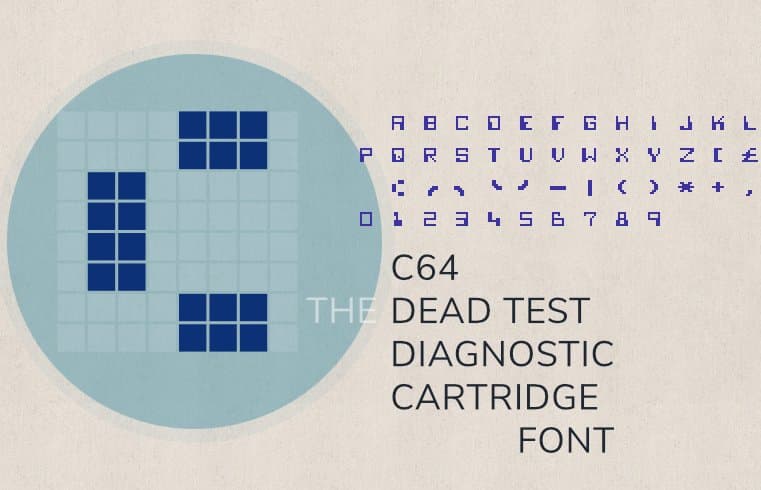
A deep dive into the obscure yet iconic font of the Commodore 64 Dead Test diagnostic cartridge, revealing hidden design choices and technical implementations that reflect the intersection of retro computing and modern preservation efforts.
The retro computing community continues to uncover fascinating technical artifacts from the early days of personal computing, with recent attention turning to a particularly obscure element: the font used in the Commodore 64 Dead Test diagnostic cartridge. This specialized font, long undocumented and rarely discussed outside of hardware enthusiast circles, has become a subject of renewed interest as preservationists work to document every aspect of computing history.
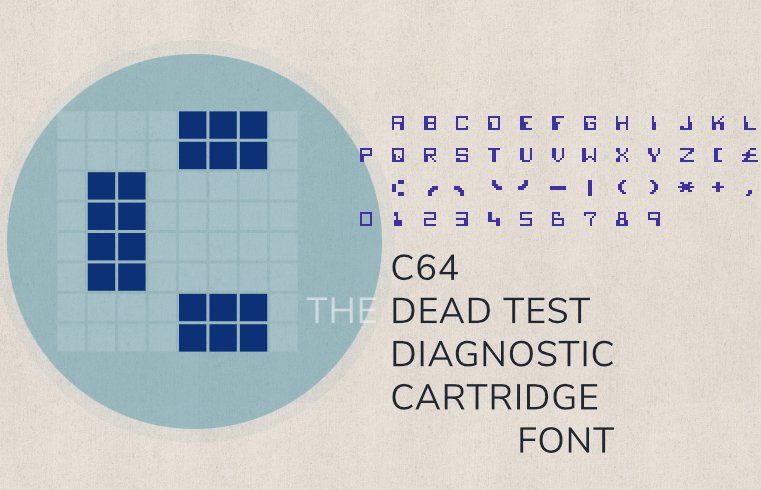
The C64 Dead Test cartridge, originally released as a service tool for technicians, represents a fascinating case study in specialized software design. Unlike typical software that relied on the Commodore 64's built-in ROMs, the Dead Test cartridge operated as a completely standalone diagnostic tool, implementing its own font and system routines. This self-contained approach allowed technicians to test a C64 even when its internal ROMs were malfunctioning or missing.
What makes this font particularly interesting is its distinctive aesthetic that differs significantly from the standard PETSCII character set used by most C64 software. The font features boxy character shapes with rectangular lumps, creating a technical appearance that clearly communicates its diagnostic purpose. This design choice reflects a practical approach to readability on professional monitors while maintaining visual consistency.
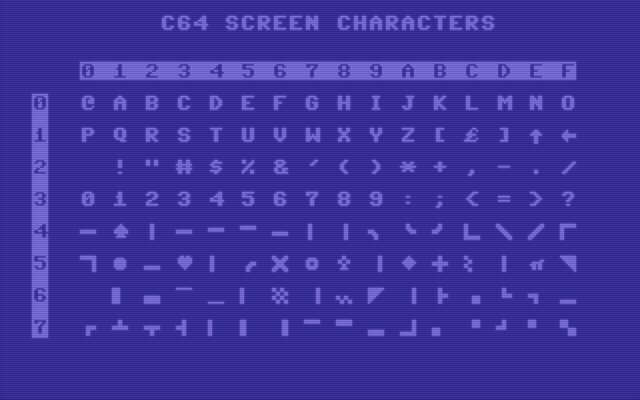
Recent examination of the cartridge's ROM has revealed several intriguing aspects of its implementation. The font includes only 58 characters (screen codes $00-$39), focusing on uppercase letters, digits, and essential punctuation. Notably, it replaces the standard "at" symbol (@) with a blank character at screen code $00—a practical choice for a diagnostic tool that would never display email addresses.
Perhaps most fascinating is the discovery of an undocumented character at screen code $21 that appears nowhere in the cartridge's code. This character, resembling a stylized "C," has been identified as the "transit" symbol from the MICR (Magnetic Ink Character Recognition) E-13B font set, traditionally used in banking for routing codes. This represents a subtle design Easter egg, acknowledging the font's inspiration from specialized character sets used in professional environments.


The technical implementation behind this standalone cartridge demonstrates clever engineering. By operating in "Ultimax mode"—a configuration originally designed for the short-lived Commodore Max machine—the cartridge bypasses the C64's standard ROMs and implements its own character matrices at $EAD8. This approach allows the cartridge to function completely independently of the C64's built-in firmware.
"The Dead Test cartridge represents a fascinating example of specialized software design," notes retro computing historian Dr. Eleanor Vance. "It's not just a diagnostic tool, but a complete self-contained system that demonstrates the flexibility of the C64 architecture. The font choices reflect both practical considerations and subtle design touches that show the developers' attention to detail."
Despite its technical significance, the Dead Test font has seen limited practical application beyond its original diagnostic purpose. Some argue that its specialized nature limits its usefulness for general computing, while others appreciate its distinctive aesthetic as an authentic piece of computing history.
"While the font is certainly distinctive, I'm not convinced it offers significant advantages over standard PETSCII for most applications," comments software developer Marcus Chen. "However, from a preservation standpoint, documenting these specialized character sets is invaluable for understanding the full scope of Commodore's design philosophy."
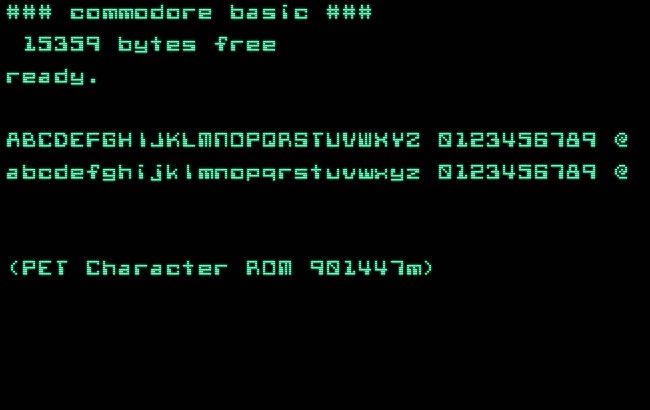
In response to growing interest, preservationist Norbert Landsteiner has created adaptations of the Dead Test font for other Commodore systems, including the PET and VIC-20. These implementations include both uppercase and lowercase variants, making the font more practical for general use while maintaining its distinctive character.
The availability of these font ROMs has sparked renewed discussion about the role of specialized fonts in retro computing. Some community members have begun experimenting with the Dead Test font in new projects, while others focus on its historical significance as a piece of Commodore's service infrastructure.
As retro computing continues to evolve beyond mere nostalgia into serious technical preservation, artifacts like the Dead Test font serve as important reminders of the ingenuity and creativity that characterized early personal computing. Each discovery adds another layer to our understanding of how these machines were designed, maintained, and appreciated in their heyday.
For those interested in exploring the Dead Test font firsthand, Landsteiner has made the font ROMs available for download, allowing enthusiasts to experience this unique piece of computing history on original hardware or modern emulators. The implementation details and character mappings provide valuable insights into the technical constraints and design choices that shaped the early computing landscape.
The resurgence of interest in specialized software like the Dead Test cartridge suggests a maturing of the retro computing community, moving beyond simple nostalgia to a deeper appreciation of the technical innovations and design decisions that defined an era of computing history.
Comments
Please log in or register to join the discussion