An exploration of the description list element in HTML and its significant impact on web accessibility and semantic structure.
The humble description list element,
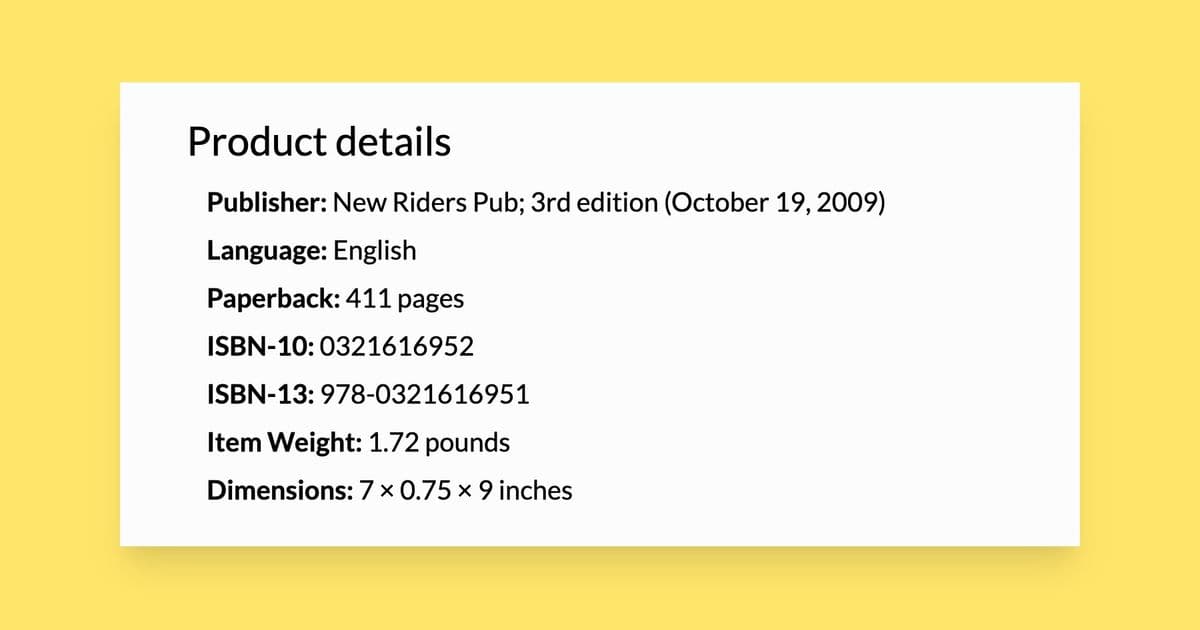
, represents one of HTML's most underappreciated semantic treasures. As Ben Myers eloquently demonstrates in his article, this element provides a structured way to represent name-value pairs that permeates countless interfaces across the web. From product details to contact information to game statistics, the element offers a semantic foundation that transcends mere presentation, enabling more meaningful interactions between users and content.At its core, the description list anatomy consists of three essential components: the
container itself, the (description term) for names, and the (description detail) for values. This structure creates a clear relationship between terms and their corresponding details, establishing a hierarchy that goes beyond what nested divs can provide. The beauty of this approach lies in its flexibility—a single term can have multiple details, and multiple term-detail groups can be wrapped in div elements for styling purposes without breaking the semantic structure.The distinction between semantic markup and generic div-based layouts may seem subtle, but the implications for accessibility are profound. When screen readers encounter a properly structured
element, they can provide users with contextual information about the nature of the content—how many items are in the list, their position within that list, and the ability to navigate or skip over sections as needed. This transforms what would otherwise be a series of disconnected text nodes into a coherent, navigable unit of information.Myers illustrates this power through his Dungeons & Dragons statblock example, which demonstrates how a single content type can leverage multiple description lists to organize complex information. The ability to mark up ability scores, traits, and actions using the same semantic pattern showcases the remarkable versatility of the
element. This example also highlights the importance of proper labeling, as evidenced by the use of aria-label and aria-labelledby attributes to provide context for screen reader users.The article raises an important question about the purpose of semantic markup: "What benefits—even theoretical—could we get if computers could recognize this pattern?" This question cuts to the heart of why semantic HTML matters. While the visual presentation might be achievable through various means, the semantic layer provides meaning that extends beyond the visual realm. It enables assistive technologies to interpret content more effectively, allows search engines to understand relationships between pieces of information, and provides a foundation for future technologies that may rely on structural understanding of web content.
Despite these benefits, the article rightly notes that support for the
element is not universal across all screen readers and browsers. This reality highlights an ongoing challenge in web accessibility: the tension between implementing best practices and ensuring compatibility across the diverse landscape of user agents. In some cases, developers may need to make pragmatic decisions, potentially using a- as a fallback until support improves, while still advocating for better implementation of these semantic elements.
The broader implication of Myers' analysis extends beyond the
element itself. It speaks to the fundamental importance of semantic thinking in web development. In an era where frameworks and libraries often abstract away the underlying HTML, it's easy to lose sight of the semantic value that native elements provide. Yet, as this article demonstrates, these elements exist for a reason—they provide meaning that cannot be replicated through classes and divs alone.As we continue to develop increasingly complex web applications, the principles highlighted in this article become even more relevant. The description list pattern, with its clear separation of concerns between structure and presentation, offers a model for how we might approach other common UI patterns. By identifying these patterns, assigning appropriate semantics, and ensuring proper accessibility support, we can create web experiences that are not only visually appealing but also inclusive and meaningful to all users.
For developers looking to deepen their understanding of semantic HTML, the resources mentioned in the article—particularly the MDN documentation on the
element—provide valuable starting points. Additionally, exploring other semantic elements and their appropriate use cases can further enhance the accessibility and semantic richness of web content.In conclusion, Ben Myers' article serves as a reminder that the most powerful tools in web development are often the most fundamental ones. The
element, with its simple yet powerful structure for representing name-value pairs, exemplifies how thoughtful semantic choices can create more accessible, meaningful, and ultimately more useful web experiences. As we continue to push the boundaries of what's possible on the web, returning to these semantic foundations will remain essential to creating content that serves all users effectively.
Comments
Please log in or register to join the discussion