
Scott Werner’s allegory about a wizard guarding a tiny data pond illustrates how the allure of large‑language‑model black boxes can erode the perceived value of niche, domain‑specific datasets. The story shows that raw data alone is insufficient without clear objectives, governance, and an understanding of what “optimization” really means.
When Proprietary Pond Data Meets LLMs – A Cautionary Tale
What the piece claims
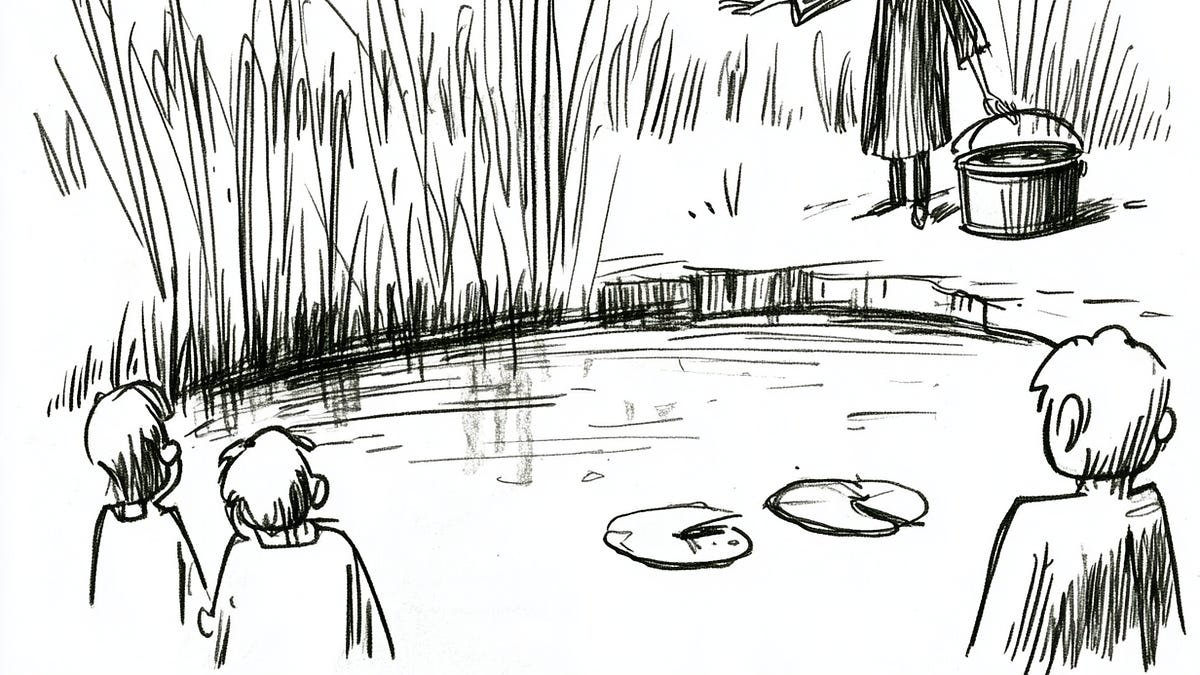
Werner frames the narrative as a fable: a wizard hoards a small, seemingly unique data set about frogs, reeds, and lily‑pad migrations. A traveling sorcerer arrives with a black box (a large‑language‑model service) that can instantly count frogs and answer finance‑related questions for free. The wizard worries that his “proprietary pond intelligence” is being devalued.
What’s actually new
The story mirrors real‑world trends that have become concrete over the past year:
- LLM APIs as zero‑cost data consumers – Services such as OpenAI’s GPT‑4, Anthropic’s Claude, and Cohere’s command models can ingest user‑provided data and return answers without the user needing to host a model. This lowers the barrier to entry for anyone with a modest data set.
- Domain‑specific fine‑tuning vs. prompting – Companies like Mistral AI and Llama 2 adapters let you adapt a base model to a niche corpus (e.g., financial reports). The “Goblin of Gloomburg” in the story is an analogue for such fine‑tuned systems that outperform generic models on a narrow task.
- Data leakage concerns – When a black‑box model processes proprietary data, the provider may unintentionally expose patterns to the model’s broader training set. This is the technical backbone of the wizard’s fear that his “unique” pond data will become public knowledge.
- Outcome‑centric analytics – Werner distinguishes between raw usage metrics (frog counts) and outcome metrics (frog contracts, referrals). Modern analytics platforms—Monte Carlo, Databand—are shifting from volume‑based monitoring to causal, outcome‑driven monitoring.
Limitations exposed by the fable
- Black‑box opacity – The sorcerer’s box can tell the wizard the number of frogs, but it cannot explain why that number matters for the wizard’s business goal. In practice, LLMs give plausible answers but often lack traceability, making it hard to audit decisions.
- Assumed data uniqueness – The wizard believes his pond data is a moat. In reality, many “unique” datasets are noisy reflections of broader trends. A model trained on millions of similar time‑series can reproduce comparable insights with far less effort.
- Missing decision framework – The wizard has a decade of frog counts but no definition of an optimal frog population. This mirrors organizations that collect telemetry without a clear KPI hierarchy; the data never translates into actionable strategy.
- Human judgment remains essential – The apprentice’s role—questioning assumptions, catching inconsistencies (the three spellings of fly)—highlights that domain experts must still curate prompts, validate outputs, and decide which questions are worth asking. LLMs amplify the ask side, not the decide side.
- Economic reality of “free” services – The sorcerer’s box is free at the point of use, but the cost is hidden in API usage fees, data retention policies, and potential vendor lock‑in. Companies often underestimate these downstream expenses.
Takeaways for practitioners
- Treat LLMs as augmentations, not replacements. Use them to prototype queries on proprietary data, but keep a separate validation pipeline that checks model outputs against known baselines.
- Invest in outcome‑driven metrics. Define what success looks like (e.g., frog retention rate, contract renewal probability) before feeding data into an LLM.
- Document prompt engineering decisions. The apprentice’s parchment is a reminder that prompt iterations should be version‑controlled, just like code.
- Plan for data governance. If you send proprietary data to a third‑party model, ensure the provider offers data deletion guarantees and does not retain the data for future training.
- Maintain a “human‑in‑the‑loop” policy. The sorcerer’s box can count frogs; the wizard must still decide whether a frog’s presence aligns with strategic goals.
Bottom line
Werner’s allegory is not a warning against LLMs per se, but a reminder that data value is not inherent—it emerges from clear objectives, rigorous governance, and human judgment. The pond may be small, but the lessons scale to any organization contemplating the integration of large‑language‑model services into its analytics stack.
*For a deeper dive into how to safely integrate LLMs with proprietary datasets, see the recent OpenAI Cookbook on data privacy and Meta’s Llama 2 fine‑tuning guide.*
Comments
Please log in or register to join the discussion