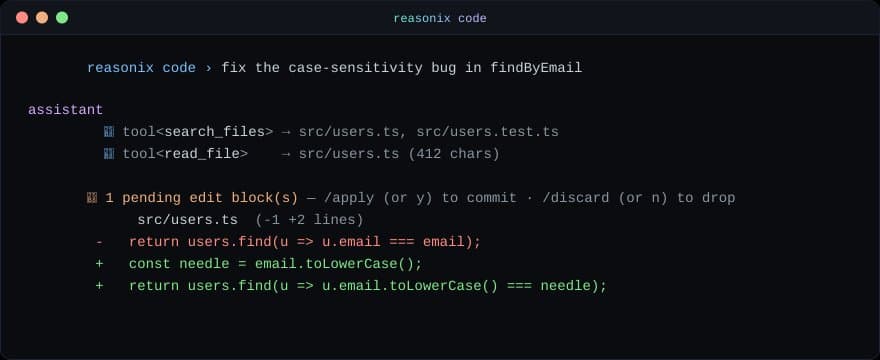
Reasonix, an open‑source DeepSeek‑native coding assistant built for the terminal, showcases a growing preference for lightweight, cache‑aware AI tools that stay out of heavyweight IDEs. The article examines the engineering choices behind Reasonix, community response, adoption signals, and the objections raised by developers who favor more integrated environments.
Why Terminal‑First AI Coding Agents Are Gaining Traction – A Look at Reasonix
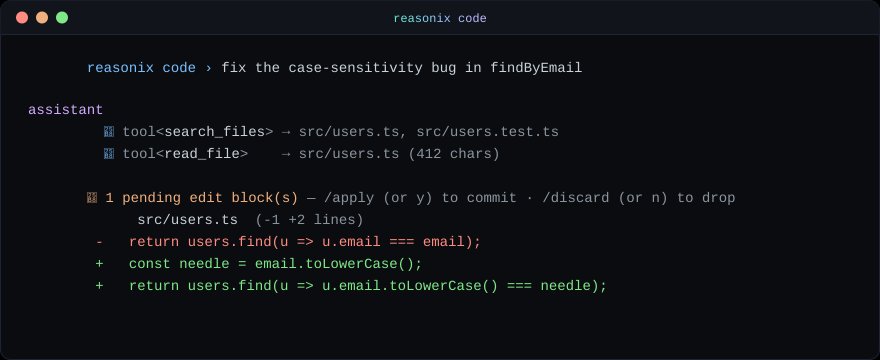
The observation: developers are gravitating toward terminal‑native AI assistants
Over the past year, a noticeable shift has emerged in developer forums and GitHub stars: projects that run entirely inside the shell are attracting more attention than their IDE‑plugin counterparts. The Reasonix project (v0.50.0) is a concrete example. Built around DeepSeek’s API and a byte‑stable prefix cache, Reasonix promises over 90 % cache hit rates for long sessions and a token‑cost reduction to roughly one‑fifth of uncached usage.
The trend is not limited to a single language or platform. Reasonix works on macOS, Linux, and Windows, requires only Node ≥ 22, and can be launched with a single npx reasonix code command. Its popularity is reflected in the GitHub metrics at the time of writing:
- 6,474 stars
- 367 forks
- 163 open issues
These numbers place Reasonix among the most watched AI‑coding agents that are not tied to a specific editor.
Evidence of adoption and community sentiment
1. Low friction installation and immediate feedback
Reasonix’s installation flow mirrors the “run‑once” pattern that many developers love: no global install, no complex configuration files, and a wizard that walks the user through pasting a DeepSeek API key. The first launch shows live statistics—cache hit percentage, cost per token, and test counts—giving users a tangible sense of savings.
2. Open‑source contributions and roadmap transparency
The project’s roadmap lives in GitHub Discussions, where voting on issues directly influences the next milestone. Recent community‑driven additions include:
- Markdown‑based skill scripts that let users drop a file in
.reasonix/skills/and expose custom commands without writing code. - MCP (Model Context Protocol) integration for external tool servers, supporting stdio, SSE, and streamable HTTP transports.
- Sandboxed tool execution with a
/plangate that prevents accidental writes until the user explicitly approves a plan.
These features have been merged largely because contributors could see the immediate benefit in their own workflows.
3. Cost‑effectiveness highlighted by early adopters
DeepSeek’s pricing model charges $0.07 per million tokens uncached and $0.014 per million tokens when the prefix cache hits. Users report that a typical 2‑hour coding session with Reasonix ends up costing about a third of what a comparable session with generic agents (e.g., Claude or GPT‑4) would.
4. Positive chatter on niche channels
Threads on the r/ProgrammingTools subreddit and the #dev‑ai Slack workspace frequently cite Reasonix as a “quick‑to‑run” alternative when a full IDE feels heavyweight. The sentiment is that the terminal remains the most reliable “workspace” for many developers, especially those working on remote servers or in containerized environments.
Counter‑perspectives: why some developers remain skeptical
1. Lack of visual debugging aids
IDE plugins such as GitHub Copilot or Cursor offer inline suggestions, hover documentation, and visual diff panels. Reasonix deliberately avoids these, which can be a deal‑breaker for developers who rely on visual cues for complex refactors. The project's desktop companion (a Tauri app) adds a side panel with file listings and cost meters, but it still requires a separate window and does not integrate with the editor’s UI.
2. Vendor lock‑in to DeepSeek
Reasonix’s engineering hinges on DeepSeek’s byte‑stable prefix cache. The documentation explicitly states that swapping to Claude, GPT‑4, or any other model would break the cache‑first loop, leading to higher token usage and slower response times. Critics argue that this creates a single‑point dependency; if DeepSeek’s pricing or service level changes, Reasonix users may need to rewrite large parts of their tooling.
3. Learning curve for custom extensions
While the skill system is markdown‑based, creating a new skill still involves writing front‑matter, understanding the MCP configuration, and possibly dealing with sandbox permissions. For teams accustomed to installing pre‑built plugins from a marketplace, this extra step can feel burdensome.
4. Limited support for collaborative workflows
Reasonix stores session events on disk for replay, which is great for audit trails, but it does not yet provide real‑time multi‑user syncing. Projects that require pair programming or remote code reviews may find the lack of built‑in collaboration features a drawback compared to cloud‑based assistants that expose shared sessions.
Balancing the trade‑offs
The core appeal of Reasonix lies in its cache‑first loop. By appending messages without reordering and avoiding marker‑based compaction, the system preserves the original prompt prefix, allowing DeepSeek’s cache to serve the majority of tokens. This design yields two measurable benefits:
- Cost reduction – long sessions achieve ~94 % cache hit, collapsing the effective token price to ~1/5 of the uncached rate.
- Predictable latency – cached responses are returned in milliseconds, while uncached calls incur the typical network delay.
Developers who prioritize deterministic costs and low‑overhead tooling tend to favor this model. Conversely, teams that need rich UI interactions, multi‑user editing, or flexibility to switch LLM providers may continue to lean on IDE‑centric solutions.
Looking ahead: what the next wave might bring
Reasonix’s roadmap hints at several directions that could address current criticisms:
- Cross‑provider orchestration – combining DeepSeek with other models for specialized tasks while preserving cache benefits where possible.
- Plugin compatibility layer – exposing a
.claude-plugin/‑style interface so existing community plugins could be reused with minimal changes. - Collaborative session sync – a lightweight sync protocol that merges event logs across machines, enabling pair programming without sacrificing the append‑only guarantee.
If these features materialize, the terminal‑first approach could become a viable alternative not just for solo developers but also for distributed teams that value reproducibility and cost transparency.
Takeaway
Reasonix illustrates a broader pattern: developers are experimenting with minimalist, cache‑aware AI agents that live in the terminal. The project’s open‑source nature, clear cost advantages, and strong community involvement have driven early adoption. At the same time, the lack of visual tooling, dependence on a single LLM vendor, and limited collaborative features keep the solution niche.
Whether the terminal‑first model will evolve into a mainstream workflow depends on how quickly projects like Reasonix can bridge the gap between raw efficiency and the ergonomic expectations set by modern IDE assistants.
Comments
Please log in or register to join the discussion