The Rust-based Wild Linker reaches version 0.9 with improved platform coverage, new Linker Plugin API support, and enhanced cross-platform architecture.
Wild Linker 0.9 Expands Platform Support and Adds Linker Plugin API
The linker landscape is evolving rapidly with the emergence of modern alternatives to traditional tools like GNU LD. Wild Linker, a high-performance linker written in the Rust programming language, has just released version 0.9, bringing significant improvements to platform coverage and introducing support for the Linker Plugin API. This release represents an important step forward for the project, which aims to provide faster, more reliable linking capabilities for developers and system builders.
Understanding the Importance of Linkers
Before diving into the specifics of Wild Linker 0.9, it's worth understanding why linkers matter in the software development ecosystem. Linkers are fundamental tools that combine object files and libraries into executables or shared libraries. They resolve symbols, relocate code and data, and apply various optimizations. The performance of a linker directly impacts build times, which is especially critical in large codebases and continuous integration environments.
Traditional linkers like GNU LD have been around for decades but often struggle with performance as project sizes grow. This has led to the development of modern alternatives like Mold (written in C++) and now Wild Linker (written in Rust), both focusing on significantly faster linking times.
Wild Linker 0.9: Platform Coverage Improvements
One of the most significant aspects of Wild Linker 0.9 is the expanded platform coverage. The development team has worked on porting the linker to various platforms, resulting in substantial code refactoring around ELF-specific behavior and other platform-specific bits. This architectural improvement makes the codebase more maintainable and easier to extend to new platforms in the future.
While Wild Linker currently focuses on Linux systems, the 0.9 version lays important groundwork for future platform support. The team has drafted code for supporting Mac-O and WebAssembly targets, though these implementations are not yet ready for production use. This forward-looking approach demonstrates the project's commitment to cross-platform compatibility and its potential future beyond Linux-only environments.
The refactoring work in Wild Linker 0.9 addresses a common challenge in system software: balancing platform-specific optimizations with maintainable code. By isolating ELF-specific behavior and other platform dependencies, the team has created a more modular architecture that should make it easier to add support for additional binary formats in future releases.
Linker Plugin API Support
Perhaps the most significant new feature in Wild Linker 0.9 is the implementation of the Linker Plugin API, which is also supported by GNU LD and Mold. This API provides a standardized way for linkers to support plugins that can perform various tasks during the linking process, most notably link time optimization (LTO).
Linker plugins enable several important capabilities:
- Link Time Optimization (LTO): Allows for cross-module optimizations that aren't possible at the individual compilation level
- Custom symbol resolution: Provides flexibility in how symbols are resolved across different object files
- Custom section handling: Enables special processing of specific sections in the output binary
- Dependency analysis: Allows plugins to analyze and potentially modify the dependency graph
The addition of Linker Plugin API support in Wild Linker 0.9 is a significant milestone for the project. It brings feature parity with more established linkers while maintaining the performance advantages that Rust provides. This API support opens the door for various optimization passes and custom linking workflows that can further improve build performance and output quality.
Performance Considerations
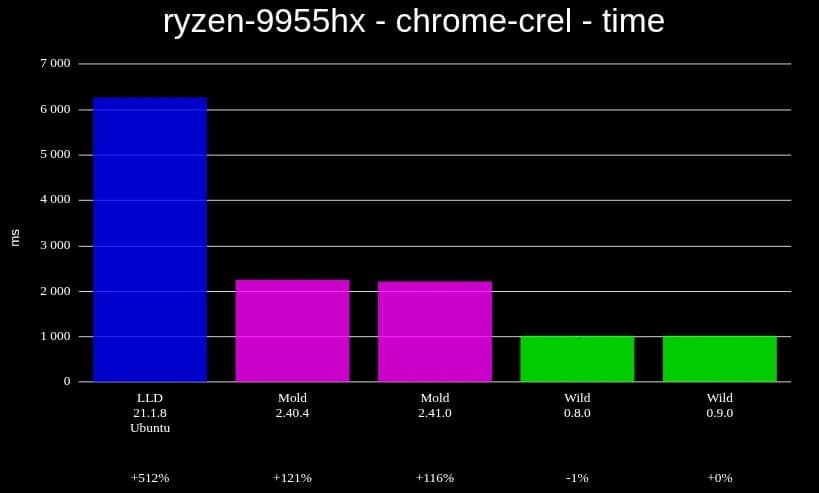
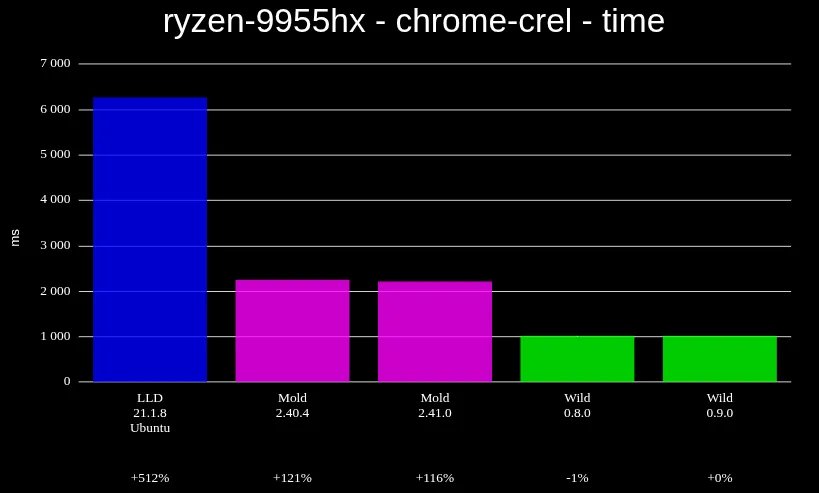
While Wild Linker 0.9 introduces several new features, the development team notes that no major performance changes are expected with this release. This suggests that the focus has been on expanding functionality and improving the architecture rather than optimizing linking speeds further.
However, Wild Linker already demonstrated impressive performance in previous versions. Benchmarks have shown it to be significantly faster than GNU LD in many scenarios, often approaching or exceeding the performance of Mold in certain workloads. The Rust implementation provides memory safety guarantees without the overhead typically associated with safe languages, contributing to its high performance.
For developers and build system administrators, the performance characteristics of Wild Linker can translate to substantial time savings in build processes, especially in large projects with many dependencies or frequent builds. The addition of Linker Plugin API support in version 0.9 enables even more optimization opportunities that could further improve performance in specific scenarios.
Cross-Platform Support and Future Roadmap
Wild Linker 0.9 represents a step toward broader platform support, though the project remains primarily focused on Linux systems at this stage. The drafted support for Mac-O and WebAssembly targets indicates the team's vision for a more versatile linker that can work across different platforms and binary formats.
WebAssembly support is particularly interesting given the growing importance of WASM as a compilation target for various programming languages. A linker with native WebAssembly support could play an important role in the WebAssembly ecosystem, enabling faster builds and more sophisticated optimization for WASM modules.
The Mac-O support, while still in development, would expand Wild Linker's potential user base to macOS developers who are increasingly looking for performance improvements in their build tools. This aligns with the broader trend of modernizing development toolchains across different platforms.
Build Recommendations
For developers considering adopting Wild Linker 0.9, here are some recommendations based on different use cases:
For Linux Desktop and Server Applications
Wild Linker 0.9 is an excellent choice for Linux-based development, particularly for:
- C/C++ projects with many object files and libraries
- Build systems where linking time is a bottleneck
- Projects that benefit from LTO and other linker optimizations
The installation is straightforward for most Linux distributions, and the tool integrates well with common build systems like CMake and Make.
For Cross-Platform Development Teams
While Wild Linker currently focuses on Linux, the architectural improvements in version 0.9 make it a good candidate for future cross-platform workflows. Teams planning to support multiple platforms might consider:
- Monitoring the Mac-O and WebAssembly support progress
- Experimenting with Wild Linker for Linux builds while maintaining existing linkers for other platforms
- Planning for a potential transition once broader platform support stabilizes
For Performance-Critical Projects
Projects where every millisecond of build time counts can benefit from Wild Linker's performance characteristics. The Linker Plugin API support in version 0.9 adds additional optimization opportunities through:
- LTO for better runtime performance
- Custom plugins for domain-specific optimizations
- Improved symbol resolution for complex dependency graphs
For Rust Development Teams
Given that Wild Linker is written in Rust, Rust development teams may find particular value in:
- Using a toolchain with consistent language across components
- Benefiting from Rust's memory safety guarantees in the linking process
- Contributing to the project's development if they have expertise in both Rust and low-level systems programming
Conclusion
Wild Linker 0.9 represents a significant evolution in the project, expanding its capabilities while maintaining the performance advantages that made it notable in the first place. The addition of Linker Plugin API support brings important functionality that was previously only available in more established linkers, while the platform coverage improvements lay groundwork for future cross-platform support.
For Linux developers, Wild Linker 0.9 offers a compelling alternative to traditional linkers, with the potential for faster builds and more sophisticated optimization opportunities. The project's direction toward broader platform support suggests it could become an increasingly important tool in the developer's toolbox as it matures.
The Rust implementation provides a unique combination of performance and safety that's difficult to achieve with languages like C++, which is commonly used for system tools. As the linker ecosystem continues to evolve, Wild Linker is positioning itself as a serious contender that could eventually challenge the dominance of more established tools.
For more information about Wild Linker 0.9, including downloads and detailed documentation, you can visit the project's GitHub repository. The milestone for version 0.9 provides additional details about the specific changes and improvements included in this release.
The continued development of modern linkers like Wild Linker reflects the broader trend of innovation in developer tooling, with a focus on performance, safety, and extensibility. As software projects grow increasingly complex, the efficiency of build tools becomes ever more critical, making advancements like those in Wild Linker 0.9 important for the entire development ecosystem.
Comments
Please log in or register to join the discussion