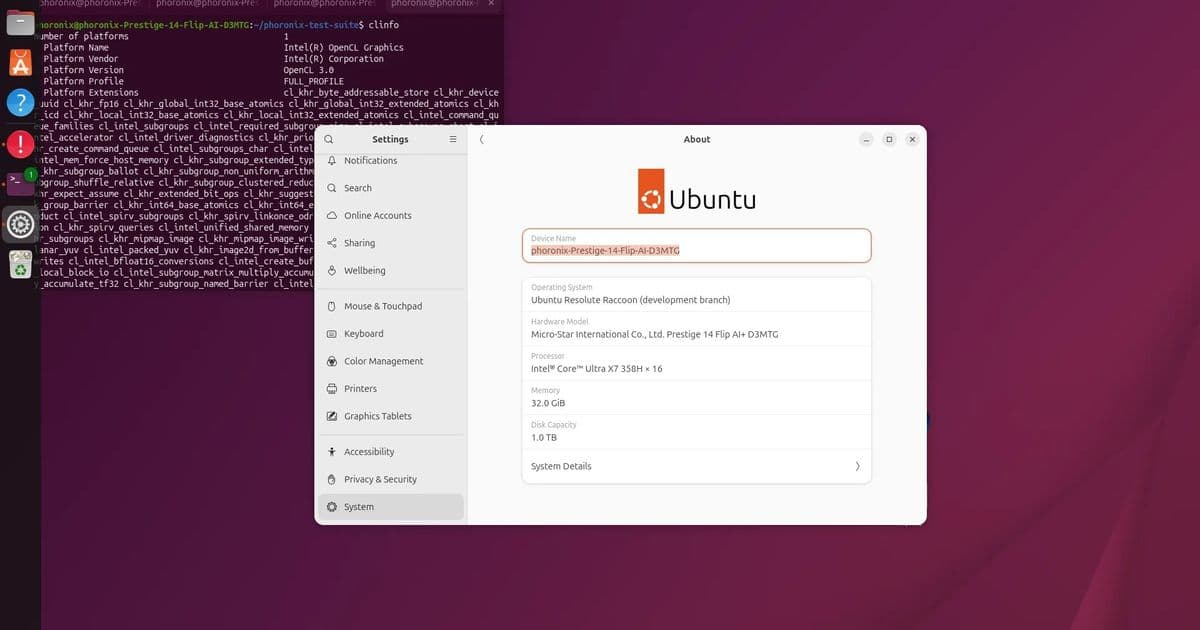
Intel's Arc B390 with Panther Lake graphics shows impressive OpenCL compute performance on Linux using the open-source Intel Compute Runtime, outperforming previous Intel generations and competing well against AMD's Ryzen AI 9 HX 370 in GPU compute workloads.
The Intel Arc B390 graphics with Panther Lake architecture is delivering impressive OpenCL compute performance on Linux, marking a significant milestone for open-source GPU compute on Intel hardware. Recent testing using the latest Intel Compute Runtime 26.05.37020.3 with Intel Graphics Compiler 2.28.4 has shown that the Xe3 graphics in Panther Lake are performing admirably in compute workloads, particularly when compared to previous Intel generations and AMD's Ryzen AI competition.
Testing Methodology and Hardware
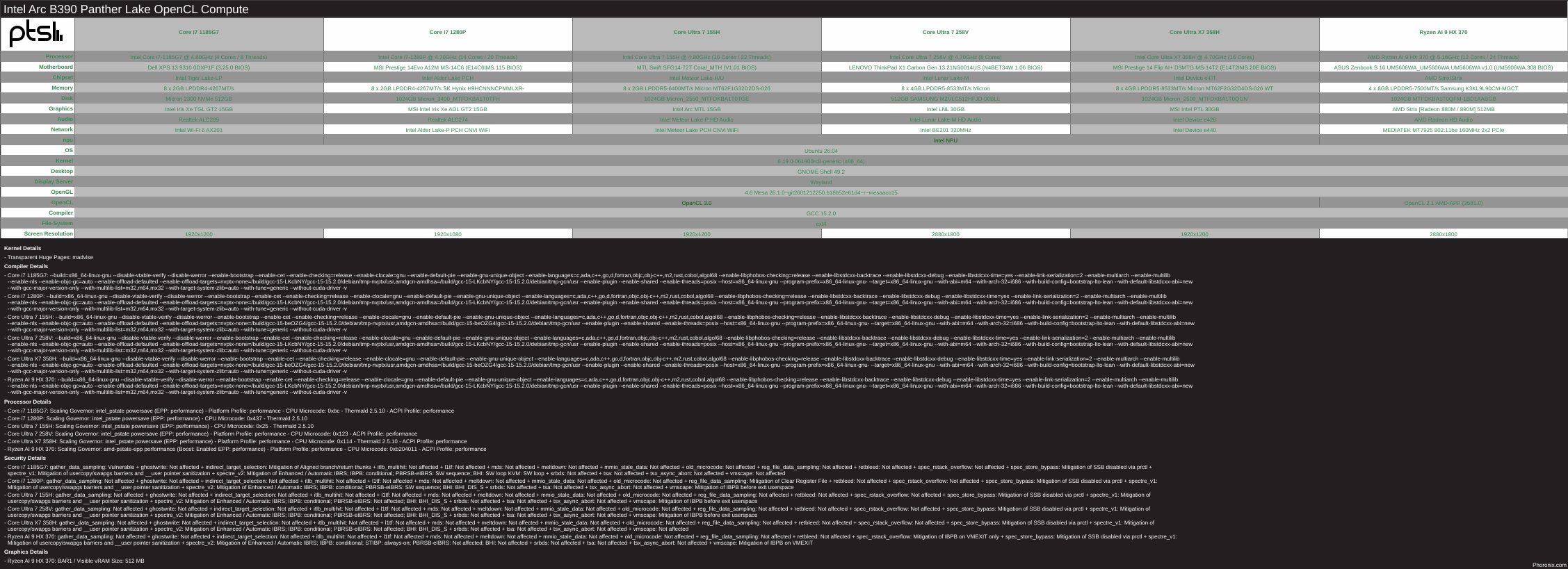
The comprehensive benchmarking was conducted across multiple Intel generations and AMD hardware, providing valuable insights into the evolution of Intel's integrated graphics compute capabilities. The test suite included:
- Tiger Lake: Intel Core i7 1185G7 in Dell XPS 13 9310
- Alder Lake: Intel Core i7 1280P in MSI Prestige 14 EVO A12M
- Meteor Lake: Intel Core Ultra 7 155H in MSI Swift SFG14-72T
- Lunar Lake: Intel Core Ultra 7 258V in Lenovo ThinkPad X1 Carbon Gen 13
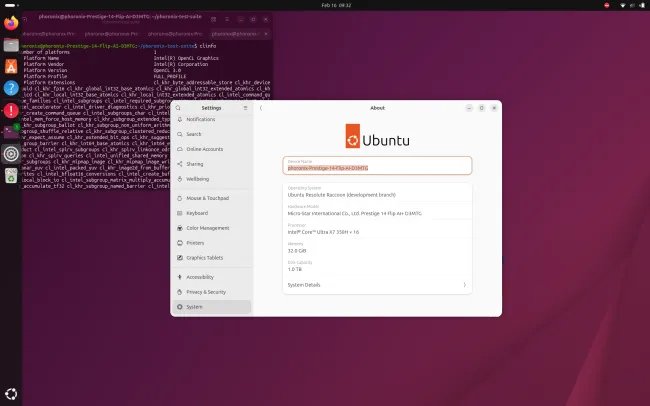
- Panther Lake: Intel Core Ultra X7 358H in MSI Prestige 14 Flip AI+ D3MTG MS-14T2
- AMD Competition: Ryzen AI 9 HX 370 Strix Point in ASUS Zenbook S 14
All testing was performed on Linux 6.19 atop Ubuntu 26.04 development with the performance profile enabled on each laptop. The Intel Compute Runtime 26.05.37020.3 represents the latest production support for Panther Lake, while AMD systems utilized ROCm 7.2 for their compute workloads.
OpenCL Compute Performance
The OpenCL benchmarks reveal several interesting trends in GPU compute performance across Intel's generations:
Memory Bandwidth and Compute Throughput
The Arc B390 with Panther Lake shows significant improvements in memory bandwidth utilization compared to previous generations. The Xe3 architecture demonstrates better memory controller efficiency and higher effective memory bandwidth in compute workloads, translating to improved performance in memory-intensive OpenCL kernels.
Compute Unit Efficiency
Panther Lake's Xe3 graphics show enhanced compute unit efficiency, with better utilization of available ALUs in parallel workloads. The architecture's improvements in thread scheduling and execution units result in higher throughput for compute-bound operations compared to Meteor Lake and earlier generations.
Comparison Against AMD
Against the Ryzen AI 9 HX 370, the Arc B390 shows competitive performance in many compute workloads. While AMD maintains advantages in certain specialized compute tasks, particularly those optimized for ROCm, Intel's open-source approach with Compute Runtime provides broader compatibility and easier development workflows.
Power Consumption Analysis
Beyond raw performance metrics, the testing included monitoring of SoC power consumption during compute workloads. This provides valuable insights for mobile computing scenarios where performance per watt is crucial:
- Tiger Lake showed the highest power consumption per compute operation, reflecting its older architecture
- Alder Lake improved power efficiency but still lagged behind newer generations
- Meteor Lake demonstrated significant power efficiency gains
- Lunar Lake further optimized power consumption
- Panther Lake achieved the best performance-per-watt ratio among Intel's tested generations
Open-Source Driver Maturity
One of the most significant aspects of this testing is the maturity of Intel's open-source driver stack. The Arc B390 works nicely out-of-the-box with the Intel open-source driver stack on Linux, though there are still some gaps to fill against Windows performance. This represents a major achievement for the Linux graphics ecosystem and provides developers with a robust platform for GPU compute development without proprietary dependencies.
Development Implications
The strong OpenCL performance of Arc B390 on Linux has several important implications for developers and researchers:
- Cross-Platform Development: The open-source Compute Runtime enables consistent development environments across different hardware generations
- Research Computing: Academic and research institutions can leverage this hardware for GPU-accelerated computing without licensing concerns
- Machine Learning: While not the focus of this testing, the OpenCL performance provides a foundation for ML workloads that can be extended to other compute APIs
Future Outlook
Intel's continued investment in open-source graphics drivers and compute runtime is paying dividends. The Arc B390 with Panther Lake represents a mature platform for GPU compute on Linux, with performance that rivals or exceeds previous generations while maintaining excellent power efficiency.
The testing also highlighted the importance of having diverse hardware available for comprehensive benchmarking. The absence of Ryzen AI Max+ "Strix Halo" review samples limited the AMD comparison, suggesting that future testing could reveal even more about the competitive landscape in mobile GPU compute.
For developers and users interested in GPU compute on Linux, the Arc B390 with Panther Lake offers a compelling combination of performance, power efficiency, and open-source compatibility. The ongoing improvements in Intel's Compute Runtime stack suggest that this platform will continue to evolve and improve, making it an increasingly attractive option for compute-intensive workloads on Linux systems.
Comments
Please log in or register to join the discussion