Irene Coslet's controversial book proposing Emilia Bassano as Shakespeare's true author exemplifies recurring patterns in alternative authorship theories – ambitious claims with evidentiary gaps that reveal more about modern biases than Elizabethan history.
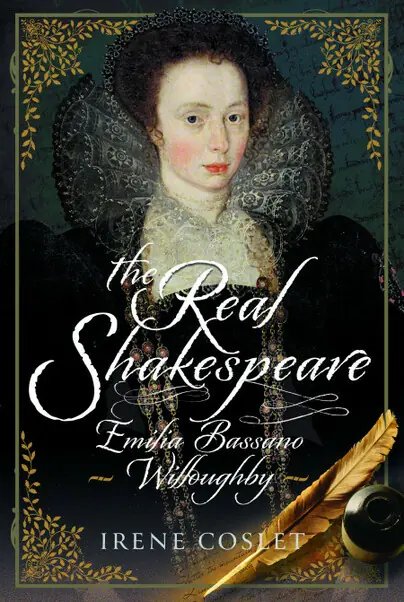
The perpetual fascination with Shakespeare's identity has birthed another contender: Irene Coslet's The Real Shakespeare nominates Emilia Bassano, a Venetian-Jewish poet and court musician, as the true Bard. This theory joins centuries of speculation questioning the Stratford man's authorship, but reveals contemporary patterns in how such theories emerge, gain traction, and withstand scrutiny.
The Modern Conspiracy Blueprint
Coslet's argument follows a recognizable template:
- Demographic disqualification: Questioning whether a "low-born man" could produce such works
- Cryptographic clues: Finding hidden messages through anagrams ("A-She-Speaker"), name similarities (Ophelia rhyming with Emilia), and alleged portrait resemblances
- Biographical parallels: Linking plays to the candidate's life (Bassano's Denmark trip mirroring Hamlet's setting)
- Ideological alignment: Framing the plays' feminist themes as evidence of female authorship
Evidentiary Shortcomings
The theory stumbles where most alternatives do:
Circumstantial correlations: Many "connections" rely on selective interpretation. Finding "Bassano" and "Emilia" in plays proves little – these weren't uncommon names. Similarly, thematic links to gender or Jewish heritage reflect Elizabethan society's complexities rather than authorial identity.
The portrait paradox: Coslet claims folding the Droeshout engraving reveals Bassano's likeness but provides no visual evidence, echoing problematic historical practices of subjective image manipulation. When comparing Thomas Dicksee's Anne Paige (1862) to William Larkin's Lady Anne Clifford (1618) as "proof" of Shakespeare's descriptive accuracy:
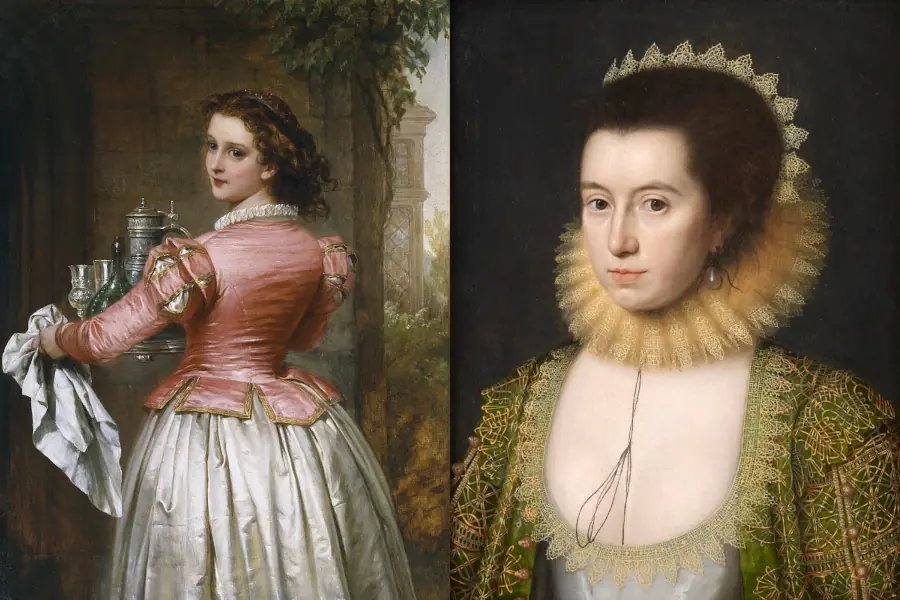
...the resemblance seems coincidental rather than evidentiary. Without systematic comparison to other portraits, this exemplifies confirmation bias.
Mechanism missing: No explanation exists for how Bassano's works were systematically stolen by Shakespeare without contemporary detection or why she'd embed easily discoverable clues. The theory ignores practical Elizabethan theater operations.
Valuable Context Despite Flaws
Where the book succeeds is contextual analysis:
- Illuminating Bassano's remarkable life as a published poet and businesswoman
- Examining gender dynamics in Shakespeare's works alongside historical constraints on women writers
- Exploring Jewish and Moorish experiences in Tudor England
The Enduring Allure
Coslet's work reflects persistent cultural impulses: discomfort with collaborative genius, desire for radical revisionism, and modern projection onto historical figures. As reviewer Terence Eden notes, Bassano deserves rigorous study – but not through "scattershot" methods that prioritize ideology over evidence. The Shakespeare authorship debate continues precisely because definitive proof remains elusive, allowing theories to flourish where documentation falters.
References:
Shakespeare's Dark Lady by John Hudson
Emilia Bassano historical records
Shakespeare Documented
Comments
Please log in or register to join the discussion