Apple's rumored $700 MacBook with A18 Pro chip faces potential cannibalization of MacBook Air sales, but could follow the iBook strategy of distinct design and colors to target different markets.
Apple's rumored low-cost MacBook, powered by the A18 Pro chip and expected to launch on March 4 for around $700, presents an interesting strategic challenge for the company. The device could potentially cannibalize sales of the entry-level MacBook Air, which starts at $1,000, as many users have relatively undemanding computing needs that the A18 Pro can easily handle.
The Cannibalization Problem
A significant portion of MacBook Air buyers use their machines primarily for email, web browsing, and writing—tasks that don't require substantial CPU or GPU performance. While some may scoff at the idea of a MacBook powered by an iPhone chip, the A18 Pro is a capable processor that can easily handle these everyday tasks. This creates a dilemma: why would someone spend $1,000 on a MacBook Air when a $700 MacBook could meet their needs?
Apple has historically been willing to cannibalize its own products, believing that if it doesn't, competitors will. However, the MacBook Air market is somewhat unique. Most buyers specifically want an Apple laptop, and despite strong competitors like the Dell XPS 13 and ASUS Zenbook 14, few Windows laptops have successfully captured significant market share from the MacBook Air.
Learning from the iBook Strategy
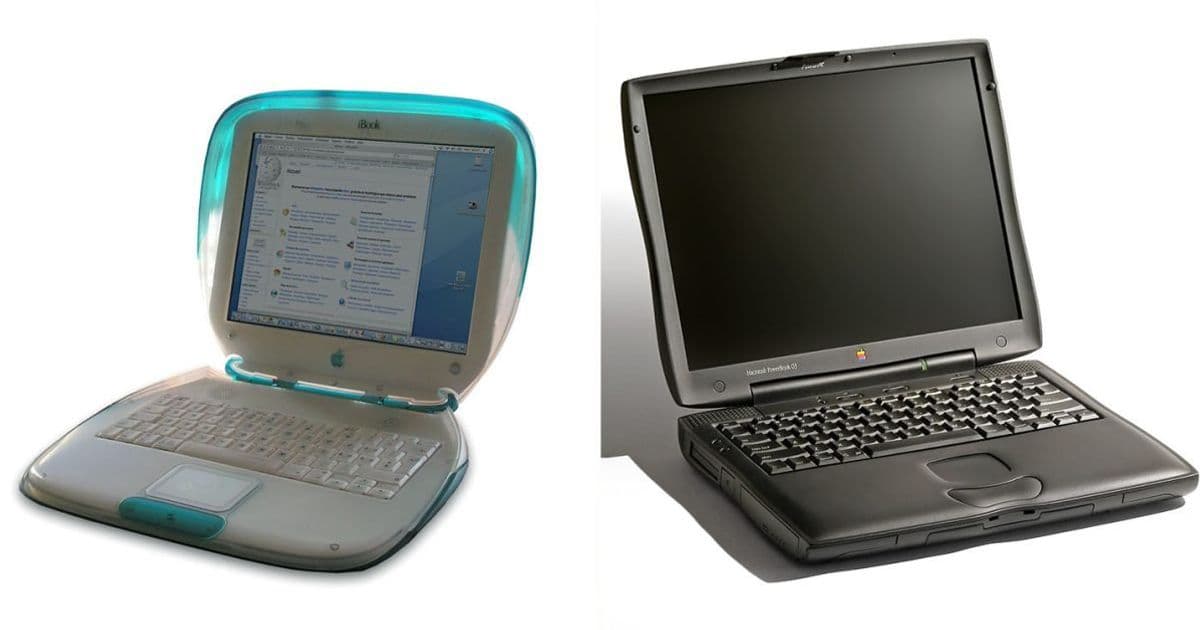
This isn't the first time Apple has faced this challenge. In 1999, Apple introduced the iBook, a consumer-focused laptop aimed at students, while maintaining its professional PowerBook lineup. The company needed to prevent the cheaper iBook from cannibalizing PowerBook sales among business users with basic computing needs.
Apple's solution was brilliant in its simplicity: make the two product lines visually distinct. The PowerBook G3 featured a muted, professional gray design, while the iBook G3 embraced a bold, colorful aesthetic inspired by the iMac. Some critics unkindly compared the iBook's design to a Fisher-Price toy, but that was precisely the point. Apple bet that professionals wouldn't want to bring a brightly colored laptop into business meetings, and the strategy proved successful.
The Colorful Solution
According to Bloomberg's Mark Gurman, Apple is considering offering the new low-cost MacBook in a range of bright colors, potentially including light yellow, light green, blue, pink, classic silver, and dark gray. While not all these colors may ship, the colorful option appears to be a key differentiator between the $700 MacBook and the more expensive MacBook Air.
The strategy makes sense. By offering the low-cost MacBook in playful colors, Apple creates a clear visual distinction from the more professional-looking MacBook Air and MacBook Pro. This approach could help protect MacBook Air sales among users who prefer a more subdued aesthetic or need to maintain a professional appearance in business settings.
Will It Work?
Our own poll suggests that many consumers would actively prefer a colorful laptop over a muted one, and the popularity of the iPhone 17 Pro in Cosmic Orange supports this preference. However, the question remains whether this strategy will be effective in protecting MacBook Air sales.
My personal view is that most consumers wouldn't care about the visual distinction, but some businesses might. If Apple can successfully position the colorful MacBook as a consumer/student device while maintaining the MacBook Air's professional appeal, the strategy could prove worthwhile in protecting at least some of the undemanding MacBook Air market.
The upcoming launch will be fascinating to watch. Will Apple successfully differentiate its product lines through design and color, or will the low-cost MacBook significantly impact MacBook Air sales? Only time will tell, but the company's history with the iBook suggests they have a solid strategy in place.
What's your view? Would you choose a colorful $700 MacBook over a more expensive MacBook Air, or does the professional appearance of the Air matter to you? Share your thoughts in the comments below.
Comments
Please log in or register to join the discussion