F# developers can now write leaner, more readable code by leveraging type inference and a few smart tricks. This article explores why reducing type annotations matters, how it simplifies refactoring, and provides concrete patterns to keep your codebase clean without sacrificing safety.
Why Type Annotations Matter
In statically typed languages, the temptation is to sprinkle type annotations everywhere. While explicit types can aid readability, they also become a maintenance burden: every refactor that changes a return type forces a cascade of edits. F#’s type inference is powerful enough to deduce most types automatically, but the compiler still needs a hint in a few edge cases. By learning how to let the compiler do the heavy lifting, developers can keep code concise and easier to evolve.
Leveraging Inference
let f x = x * 1.0m
let y = f 3.0m
Here f is inferred to take a decimal because it is multiplied by a decimal literal in y. The compiler propagates the type through the call chain, so you never have to write : decimal explicitly.
Practical Tricks
1. Refactoring‑Friendly Chains
When a function’s return type changes, the new type “bubbles” up the chain automatically:
let refactorMe x = x + 1 // returns int
let chain a = refactorMe a * 2
Changing refactorMe to return a float would automatically adjust chain without touching its signature.
2. Readability Over Verbosity
Omitting annotations lets the intent of the code surface. IDEs provide inline type hints on hover, so you can still inspect types on demand.
3. Order Matters – Namespace Isolation
When two types share a name, the one defined last shadows the earlier one. To avoid accidental clashes, split types into separate modules or namespaces:
module A = type AType = int
module B = type BType = string

open A
let a = 42 // A.AType
open B
let b = "hi" // B.BType
4. Function‑Based Type Hints
If a function’s first argument determines the type, you can let that function carry the annotation:
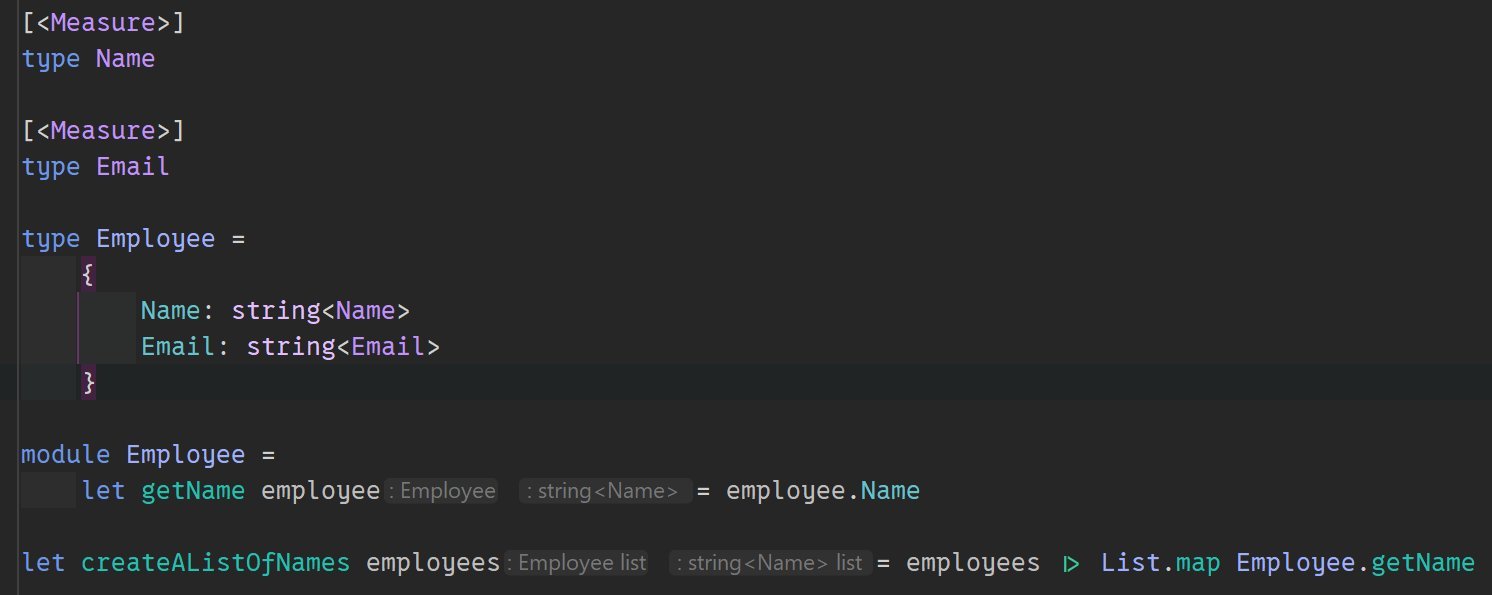
module Employee =
    type Record = { name: string<Name>; email: string<Email> }
    let getName (e: Record) = e.name

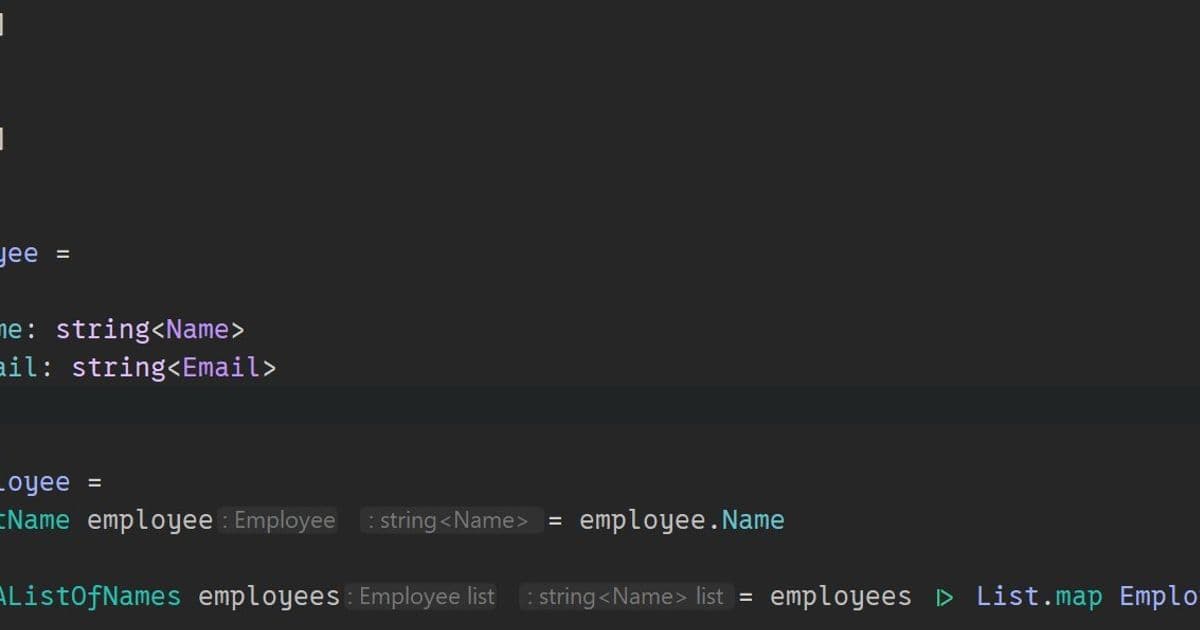
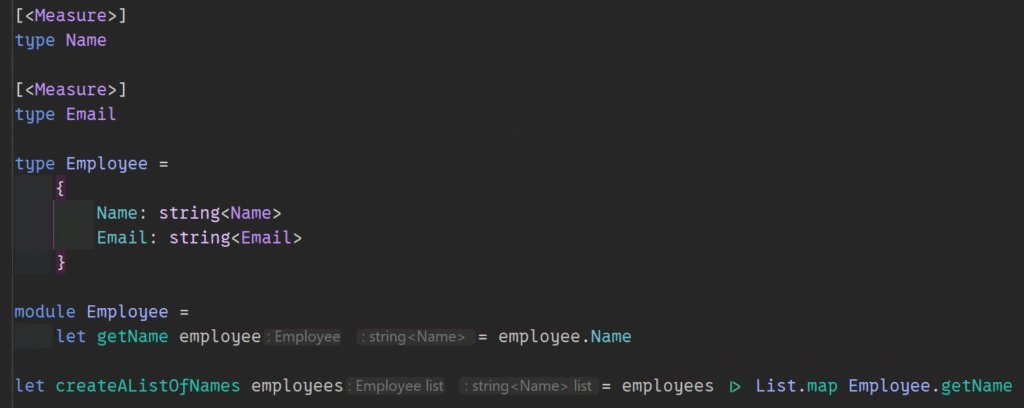
let createAListOfNames employees = employees |> List.map Employee.getName
Here createAListOfNames need not annotate employees; getName already enforces the Record shape.
Takeaway
By strategically leveraging F#’s inference and organizing types into modules, you can write code that is both terse and maintainable. Fewer annotations mean less churn during refactors, clearer intent, and a smoother developer experience.
Source: planetgeek.ch – part of the F# Advent Calendar 2025.
Comments
Please log in or register to join the discussion