Researchers have unveiled an innovative EEG-EMG framework using serious gaming to map corticomuscular control in children with cerebral palsy. The protocol employs phase synchrony analysis and a custom grip-force biofeedback system to overcome limitations of traditional coherence methods, offering new pathways for neurorehabilitation and brain-computer interfaces.
Unlocking Corticomuscular Communication Through Gamified Neuroscience
Sophisticated voluntary movements hinge on precise brain-muscle communication—a process critically impaired in cerebral palsy (CP). Traditional corticomuscular coherence (CMC) analyses, while valuable, face significant limitations: susceptibility to signal amplitude distortions, volume conduction artifacts, and poor spatial specificity. Now, researchers from NOVA University Lisbon present a breakthrough experimental framework in Methods and Protocols that integrates serious gaming with advanced electrophysiology to redefine how we study motor control.
The Core Innovation: Beyond Coherence
At the heart of the protocol lies Reference Phase Analysis (RPA), a source-separation technique that identifies neuronal activity phase-locked to muscle signals:
- Phase-Locking Value (PLV): Measures synchronization independent of amplitude, enhancing robustness
- Temporal Decorrelation (TDSEP): Preprocessing step isolates physiologically relevant frequency bands
- Adaptive Gradient Ascent: Maximizes PLV across sliding windows to capture transient coupling
This approach overcomes traditional CMC’s pitfalls by directly linking cortical sources to EMG activity while minimizing spurious correlations from signal mixing. Preliminary data localized the highest PLV source to the contralateral caudal middle frontal area during pinch-grip tasks—validating RPA’s physiological relevance.
The Gaming Edge: Precision Motor Tasks
A custom Gripping Control Game transforms motor tasks into engaging challenges:
# Simplified game mechanics
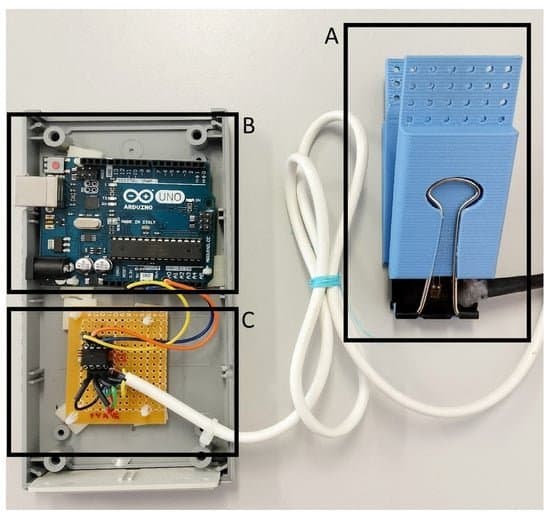
force = read_strain_gauge()  # BF350 sensors on binder clip
cursor_y = map_force_to_position(force)
if path_boundaries.contains(cursor_y):
    set_background(GREEN)  # Positive feedback
else:
    set_background(BLACK)  # Error signal
Why gaming matters:
"Real-time visual feedback standardizes task execution across participants, ensuring transient synchronization events during force transitions are consistently captured. This is critical for studying dynamic corticomotor adaptation in CP." — Protocol Authors
Experimental Rigor
- Participants: 30 children with CP (hemiplegic/diplegic) vs. 30 neurotypical controls (ages 8–14)
- Setup:
- 29-channel EEG (10–20 system) + bipolar EMG on adductor pollicis/first dorsal interosseous
- Custom actuator with Wheatstone bridge circuit (413× signal amplification)
- Tasks:
- Bimanual path-tracking with game interface
- Unimanual path-tracking (dominant/non-dominant hand)
- Rhythmic pinch-grip (0.5 Hz)
- Bilateral synchronous grip
- Maximal force sustain
Why This Matters for Neurotech
- Clinical Biomarkers: Aberrant phase synchrony patterns could quantify motor impairment severity in CP
- BCI Optimization: Source-localized PLV maps may enhance neural decoders for prosthetics
- Rehabilitation: Game-based biofeedback creates engaging, adaptive therapy tools
The Road Ahead
While currently focused on hand movements and beta-band (13–30 Hz) activity, future work will explore cross-frequency coupling and lower-limb applications. The open-sourced gaming interface (Zenodo) invites community validation—a significant step toward personalized neuromotor therapeutics.
Source: Correia et al. Methods Protoc. 2025, 8(4), 74 (CC BY 4.0)
Comments
Please log in or register to join the discussion