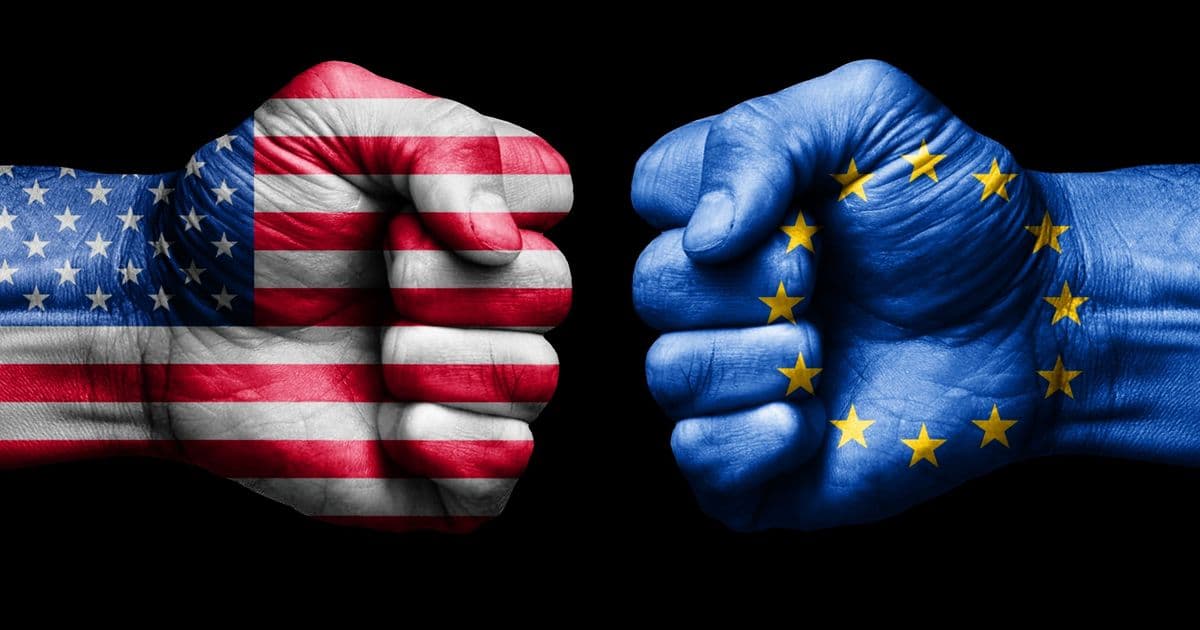
European policymakers are urgently reassessing their reliance on US tech giants like Microsoft, warning that American companies could effectively 'turn off' European IT infrastructure at will, prompting a major push toward open-source alternatives and digital sovereignty.
European tech leaders are raising urgent alarms about the continent's dangerous dependence on US technology infrastructure, warning that American companies could effectively "turn off" European IT services at will. The stark assessment came during the 2026 Open Source Policy Summit in Brussels, where Finnish MEP Aura Salla delivered a blunt message: "The EU runs on Microsoft. In case some listeners didn't see the problem with that: The US could turn us off inside one hour."
This growing concern reflects a fundamental shift in European thinking about digital sovereignty, particularly as the continent grapples with the implications of relying on American cloud services and software platforms. The warning carries special weight given the current political climate, with Donald Trump beginning his second term as US president.
Germany's Schleswig-Holstein state has emerged as a pioneer in breaking free from Microsoft's ecosystem. The state government successfully transitioned from Microsoft Exchange Server and Outlook to Open-Xchange and Mozilla Thunderbird, while replacing Microsoft Office with LibreOffice on "nearly 100 percent" of machines. Dirk Schrödter, head of Schleswig's Chancellery and Minister for Digital Transformation, framed the achievement as a declaration of independence: "We are free; now everyone must follow."
Schrödter acknowledged the transition wasn't without cost, requiring significant expenditure. However, he emphasized that this investment benefited European businesses that assisted in the migration. His critique of the status quo was pointed: "We're in the habit of exporting public money out of Europe, and importing dependencies."
The economic implications are substantial. Public sector spending accounts for half of the EU's GDP, with approximately 0.4 percent allocated to software licenses. Blogger Markus Sandelin estimates the EU spends over €200 million annually just on Microsoft 365 licenses. This represents a massive transfer of wealth from European taxpayers to American corporations.
European companies working on open source stand to benefit significantly from this shift. Thales's Daniel Glazman captured the sentiment bluntly: "Open source will succeed when we forget the word 'cost.'" IBM's Jochen Friedrich offered a pithy summary of Europe's needed economic transformation: "We need code and speed, in place of coal and steel."
The concerns extend beyond Microsoft's productivity suite. Eclipse Foundation's Mike Milinkovich highlighted that Microsoft's control over European IT infrastructure is even more extensive than many realize. Beyond Office 365, Microsoft owns GitHub, which Milinkovich noted is critical infrastructure for European software development: "More or less every company and organization in Europe pulls from GitHub, because it uses JavaScript and Maven, so this applies to them too."
This isn't merely a European problem. The issue applies equally to the nearly 200 countries in the United Nations. The upcoming UN Open Source Week 2026 and the UN Open Source Principles represent a global recognition of these risks. The city of Barcelona has already adopted these principles, which emphasize open by default approaches, contributing back to the open source ecosystem, security by design, inclusive participation, reusability, documentation, and sustainability.
European policymakers are increasingly viewing open source not just as a cost-saving measure but as a matter of economic security and digital sovereignty. The shift represents a fundamental reassessment of how European governments and businesses approach their IT infrastructure, moving from a model of dependency to one of self-determination.
The transition won't be easy. Germany's state-level IT management and strategy create particular challenges for digitization efforts. However, Schleswig's pragmatic approach offers a roadmap: "Don't look at the big mountain in the distance. Look at concrete steps you can take to start."
As European leaders continue to sound the alarm about the risks of US-controlled technology infrastructure, the push toward open source alternatives appears set to accelerate. The question is no longer whether Europe should reduce its dependence on American tech giants, but how quickly and comprehensively it can make the transition to a more sovereign, open-source-based digital infrastructure.
Comments
Please log in or register to join the discussion