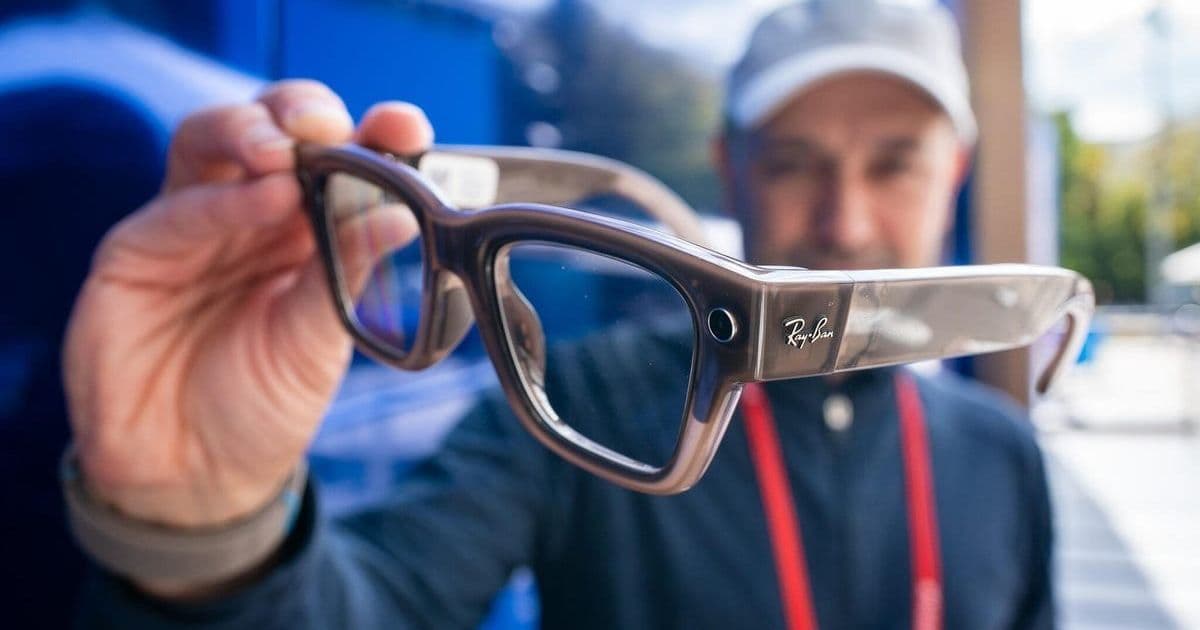
Meta's new Ray-Ban Display glasses integrate a groundbreaking neural wristband interface and 5,000-nit color display, enabling gesture-controlled computing while maintaining situational awareness. This $799 wearable represents the most advanced consumer smart glasses to date, with features like AI-powered live captioning and contextual note-taking that reduce smartphone dependency.
Beyond the Smartphone: Meta's Ray-Ban Display Glasses Deliver Two Revolutionary Breakthroughs
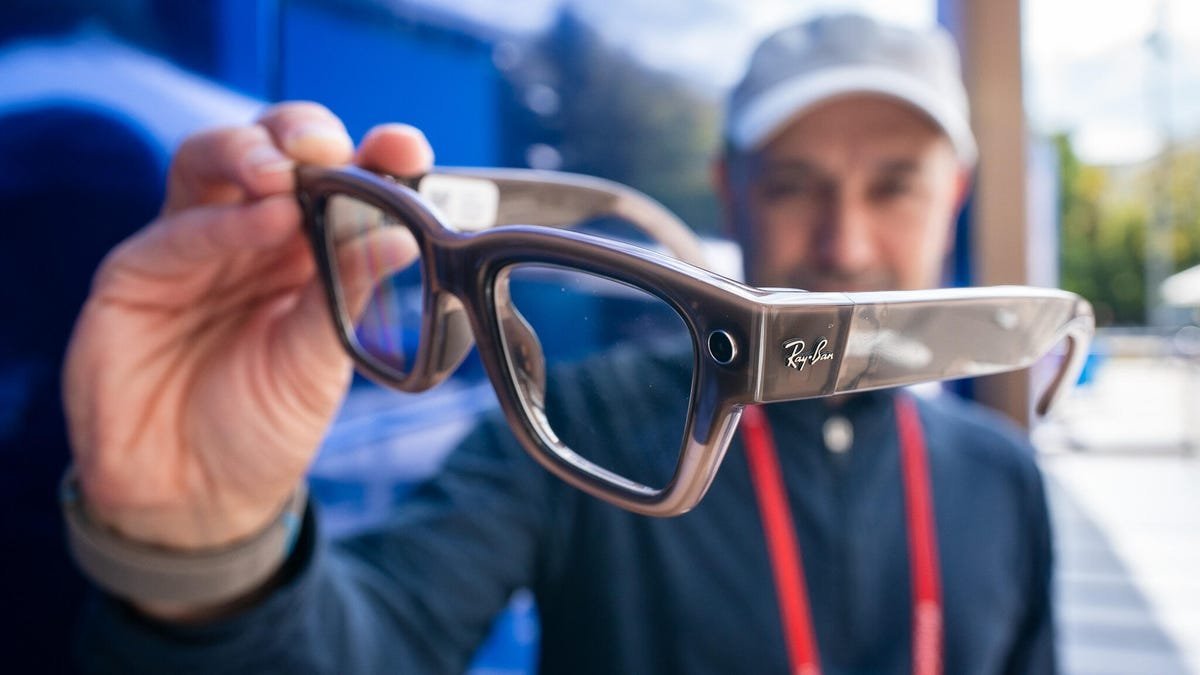
At Meta Connect 2025, I witnessed Mark Zuckerberg's palpable excitement as he unveiled the Ray-Ban Display glasses—a decade-in-the-making project he called "one of those special moments." After testing them firsthand, it's clear why: these glasses merge two transformative technologies that could fundamentally alter our relationship with digital interfaces.
The Hardware Revolution: Display and Neural Interface
The 69-gram glasses feature a 5,000-nit LCOS color display—brighter than any smartphone or Apple Watch—projected discreetly to the right eye. Crucially, the display remains invisible to others, avoiding the social awkwardness of earlier smart glasses. Paired with transition lenses and water resistance, they deliver 18-hour battery life with 6 hours of active use.
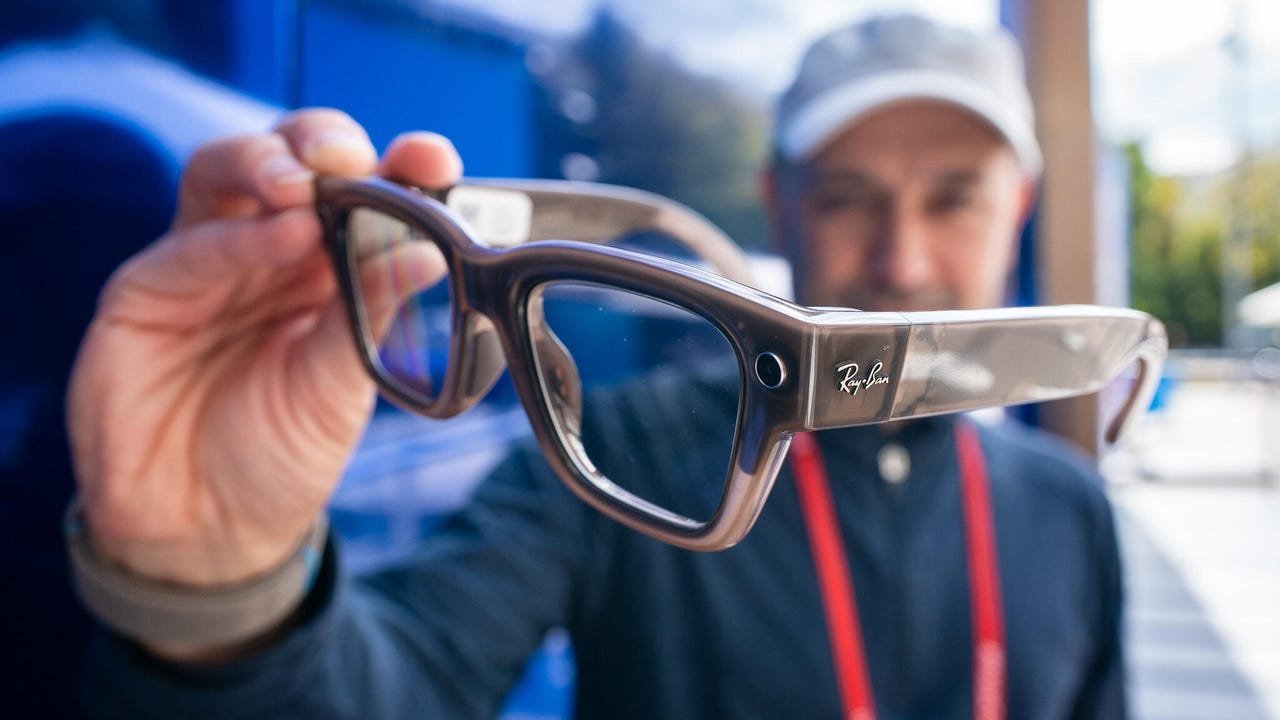 Meta Ray-Ban Display with neural wristband (Credit: Kerry Wan/ZDNET)
The true revelation is the EMG neural wristband, hailed by Zuckerberg as "the world's first mainstream neural interface." Within minutes, I mastered intuitive gestures:
- Pinching thumb/middle finger to navigate back
- Thumb swipes for menu traversal
- Pinch-twist wrist motions for volume/zoom control This eliminates the need for voice commands in noisy environments—a quantum leap in wearable interaction.
AI-Powered Use Cases: Beyond Basic Convenience
During testing, three features demonstrated paradigm-shifting potential:
- Live Conversation Focus: The glasses isolated and transcribed a target speaker's words in a noisy room while filtering out surrounding chatter—invaluable for meetings or crowded spaces.
- Contextual AI Assistance: When requesting a banana bread recipe, the AI organized steps into swipeable cards—ideal for hands-free kitchen use.
- Live AI Note-Taking: An upcoming feature will summarize critical conversations in real-time (e.g., instructions or messages), ensuring no details are lost.
The Developer Implications
This platform presents new opportunities and challenges:
- Gesture SDK Potential: The wristband's neural input could spawn novel app interactions beyond touch/voice
- Privacy Engineering: Always-on cameras/microphones demand new privacy safeguards
- Contextual Computing: Apps must adapt to micro-interactions during real-world activities
The Road Ahead
Priced at $799 (including wristband), these glasses won't replace smartphones overnight—but they demonstrate a viable path toward Zuckerberg's vision of "staying in the moment." With Google's Android XR glasses looming and prescription support (+4.00 to -4.00) making them accessible, we're witnessing the acceleration of wearable computing. As I left Meta Connect, one thought persisted: The era of staring down at glowing rectangles may finally be nearing its twilight.
Source: Jason Hiner, ZDNET
Comments
Please log in or register to join the discussion