
Researchers at MIT have developed microscopic silicon devices that perform computations using heat instead of electricity, potentially transforming a common byproduct of electronics into a useful computational resource.
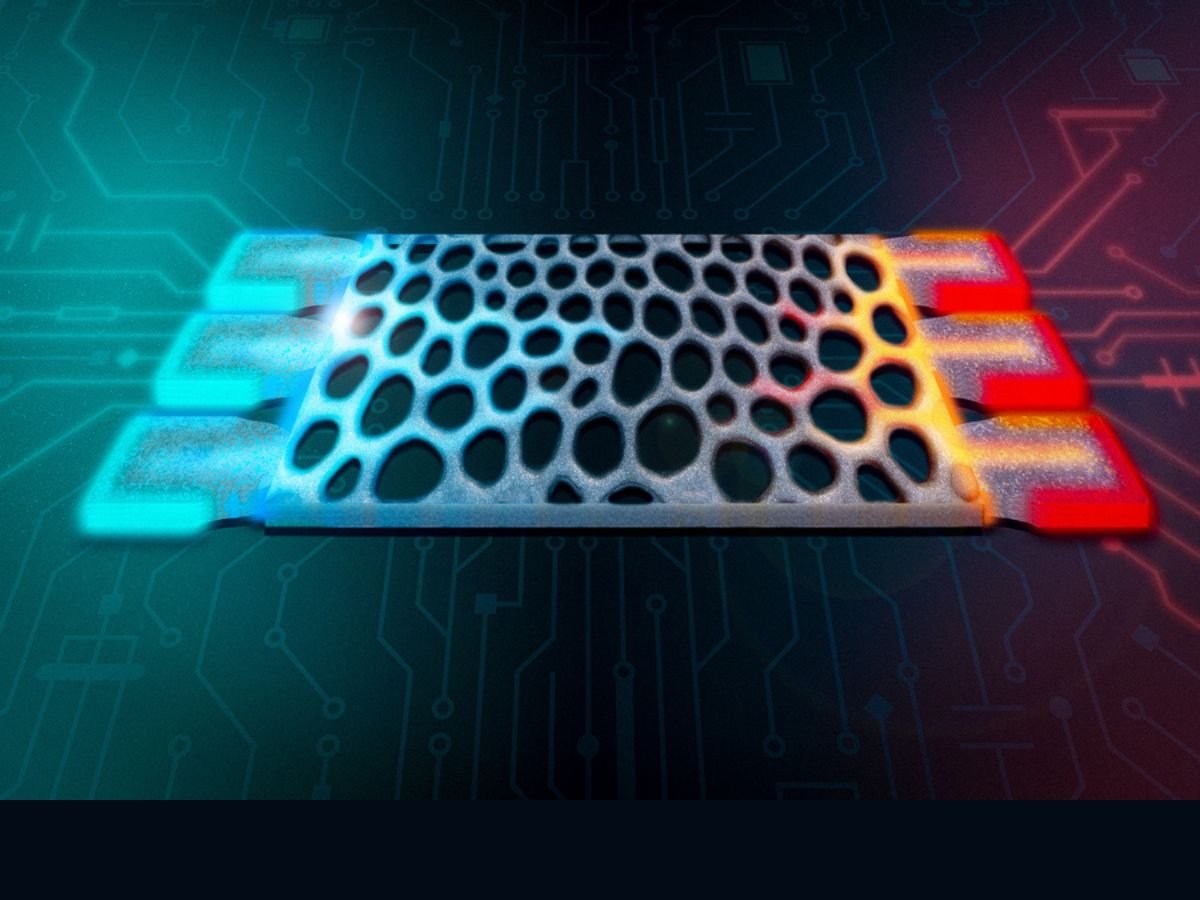
MIT engineers have created microscopic silicon structures that repurpose waste heat for computational tasks, a breakthrough detailed in Physical Review Applied. This innovation transforms thermal energy—typically an unwanted byproduct in electronics—into a functional computing medium. The structures, designed using inverse computational methods, perform matrix vector multiplication operations fundamental to machine learning with over 99% simulated accuracy.
Technical implementation
The team overcame intrinsic thermodynamic limitations by splitting computational matrices into positive and negative components processed through separate silicon pathways. Each dust-sized structure contains precisely engineered pores that direct heat flow. By varying silicon thickness, researchers finely control thermal conduction properties. This approach bypasses electricity entirely for specific calculations.
Compared to traditional electronic computing:
- Energy efficiency: Eliminates power consumption for heat-based computations
- Material simplicity: Uses standard silicon rather than exotic materials
- Passive operation: Functions without additional energy input
- Limitations: Current bandwidth constraints prevent scaling to complex deep learning models
Practical applications
These structures excel in thermal management scenarios:
- Embedded overheating detection systems requiring zero external power
- Autonomous temperature gradient monitoring in laptops and smartphones
- Supplemental computing in high-heat environments like processors or battery compartments
For electronics manufacturers, this technology presents opportunities to repurpose existing thermal waste. While not replacing primary processors, it could handle sensor-based computations near heat sources. The team's next objective involves developing programmable thermal circuits for sequential operations.
Full research details available via MIT News.
Comments
Please log in or register to join the discussion