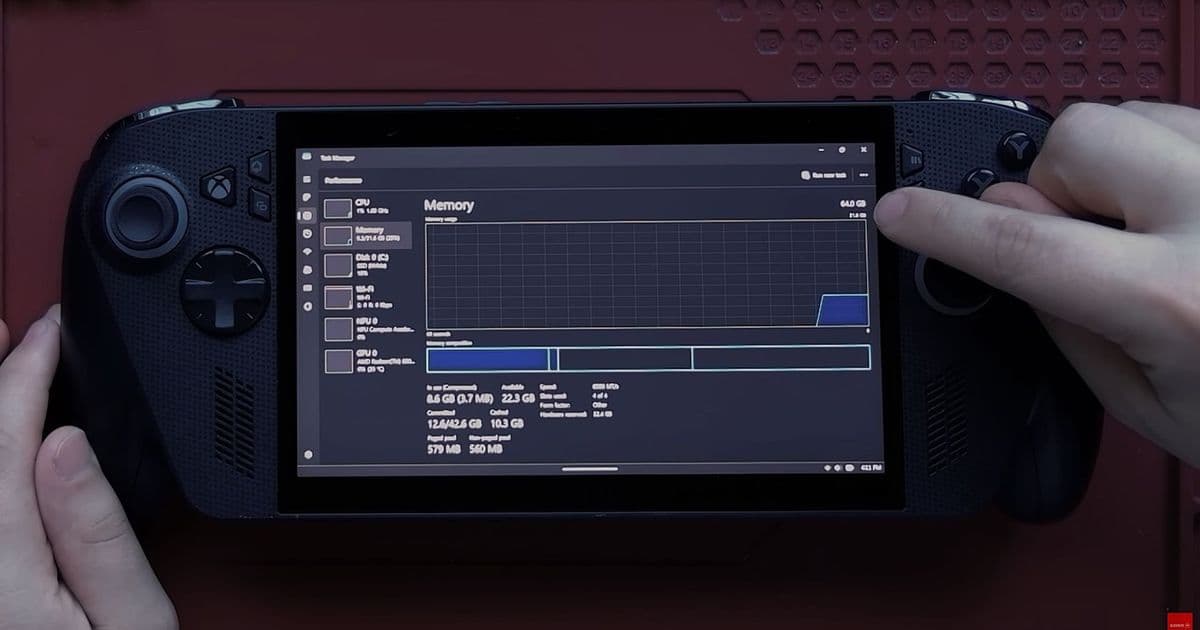
SlickBuys Mods and Repairs successfully upgraded the Asus ROG Xbox Ally X from 24GB to 64GB of LPDDR5X memory through advanced soldering techniques and BIOS modification, though the complex process remains impractical for most users.
A skilled hardware modder has successfully pushed the boundaries of Microsoft's first Xbox-branded gaming handheld by upgrading the Asus ROG Xbox Ally X's memory from its stock 24GB to an impressive 64GB capacity. The modification, performed by SlickBuys Mods and Repairs, demonstrates both the potential for hardware customization and the technical challenges involved in such ambitious upgrades.
The Technical Challenge
The ROG Xbox Ally X comes equipped with 24GB of LPDDR5X memory, which already exceeds most gaming handhelds on the market. However, for users seeking maximum performance or planning to use the device as a hybrid portable desktop replacement, the modder saw room for improvement.
The process began with complete disassembly of the handheld, requiring the removal of numerous screws to access the internal components. The modder systematically removed the battery, SSD, joysticks, heatsink, and various ribbon cables to gain full access to the motherboard.
Memory Module Replacement
The stock configuration uses 6GB Micron LPDDR5X modules running at 8533 MT/s. To achieve the 64GB upgrade, the modder replaced these with 16GB SK Hynix LPDDR5X modules. The new memory chips arrived soldered to custom PCBs, requiring desoldering and reballing of each chip before installation.
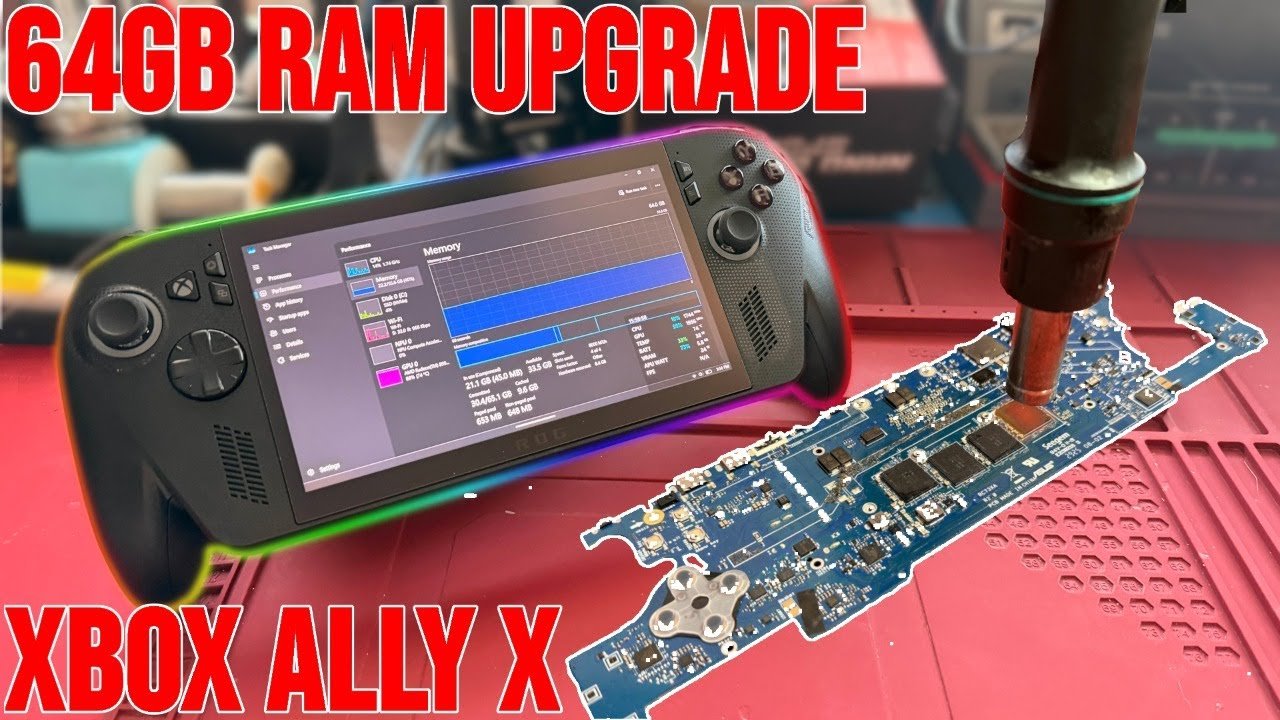
Using a heat gun, the original memory modules were carefully removed from the motherboard, along with any remaining solder residue. The new 16GB modules were then precisely positioned and soldered onto the motherboard, requiring exceptional precision to avoid damaging the delicate components.
BIOS Modification
Simply installing new memory chips wasn't sufficient. The system's BIOS needed modification to recognize and properly configure the new 64GB configuration. The original BIOS chip was removed and read using a CH341A USB programmer.
The APCB file was then edited with numerous values to accommodate the new memory configuration. After editing, the BIOS chip was re-soldered to the motherboard. Additionally, two strap resistors were repositioned to ensure the new memory modules operated at their maximum clock speeds.
Results and Limitations
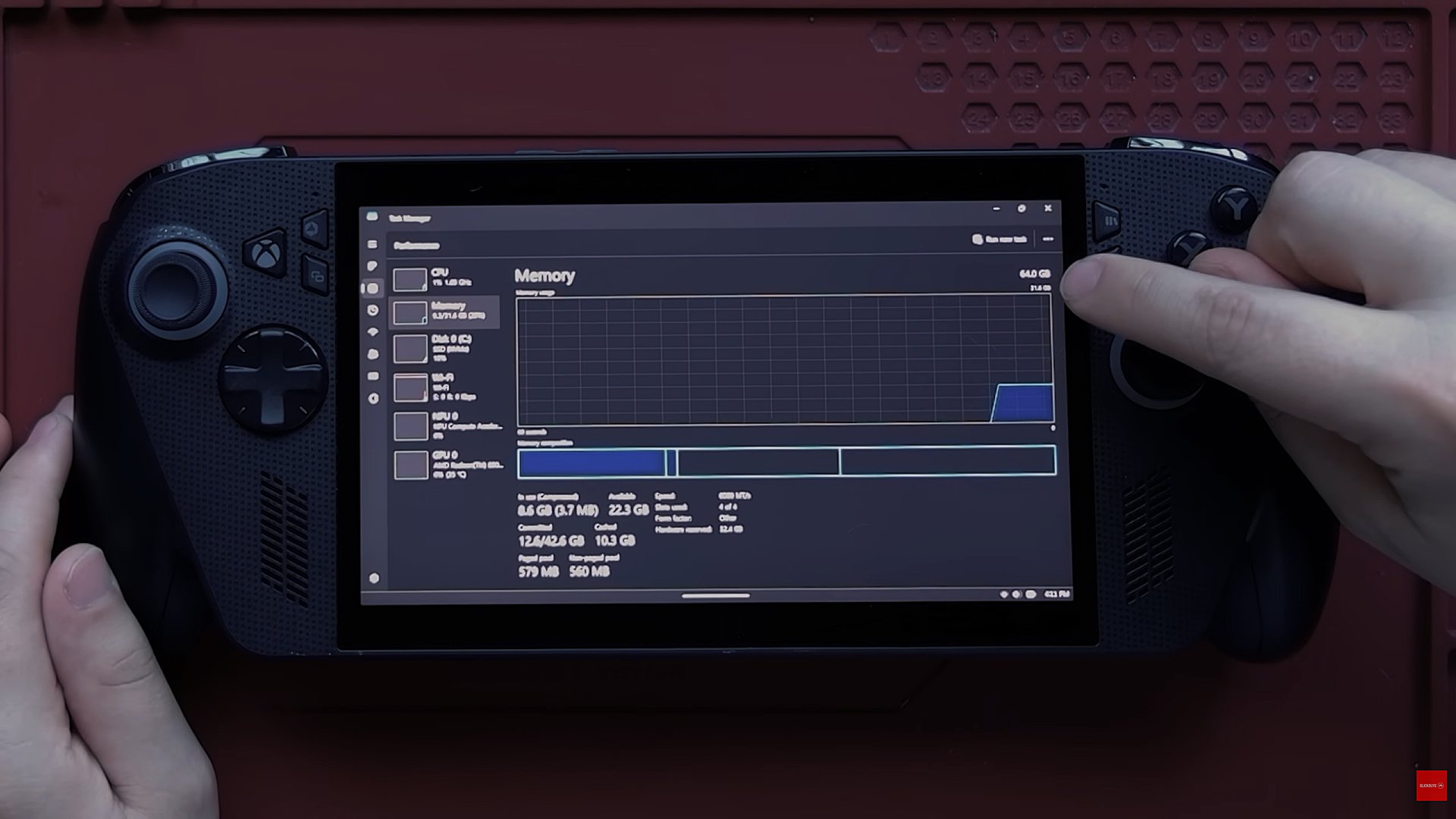
Following reassembly, the system successfully booted with Windows Task Manager confirming the full 64GB of installed memory. However, the modder did not provide performance benchmarks or cost details for the upgrade.
Given that a previous 32GB upgrade for the original ROG Ally cost approximately $300, and considering current DRAM market volatility, the 64GB upgrade likely costs upwards of $500 - nearly half the price of the gaming handheld itself.
Technical Expertise Required
This modification demonstrates the extreme technical expertise required for such upgrades. The process demands:
- Specialized soldering equipment and skills
- Knowledge of memory chip reballing techniques
- BIOS modification experience
- Understanding of memory timing and configuration
- Risk tolerance for potential motherboard damage
Even for experienced modders, the complexity and risk involved make this upgrade impractical for most users. The process requires not only advanced technical skills but also specialized tools that aren't readily available to the average consumer.
Market Context
The successful upgrade highlights both the potential and limitations of modern gaming handhelds. While manufacturers like Asus and Microsoft design devices with specific memory configurations, skilled modders continue to push these boundaries, revealing that many devices have untapped potential.
However, the practical barriers - cost, complexity, and risk - mean that such modifications will likely remain the domain of specialized modders rather than mainstream users. For most consumers, the stock 24GB configuration of the ROG Xbox Ally X remains more than adequate for gaming and general use.
The modification serves as a testament to the ingenuity of the hardware modding community and provides insight into the technical architecture of modern gaming handhelds. It also raises questions about the future of user-upgradable components in increasingly compact and integrated devices.
While the 64GB upgrade may not be practical for most users, it demonstrates the technical possibilities that exist within these devices and the skill level of the modding community in pushing hardware beyond its intended specifications.
Comments
Please log in or register to join the discussion