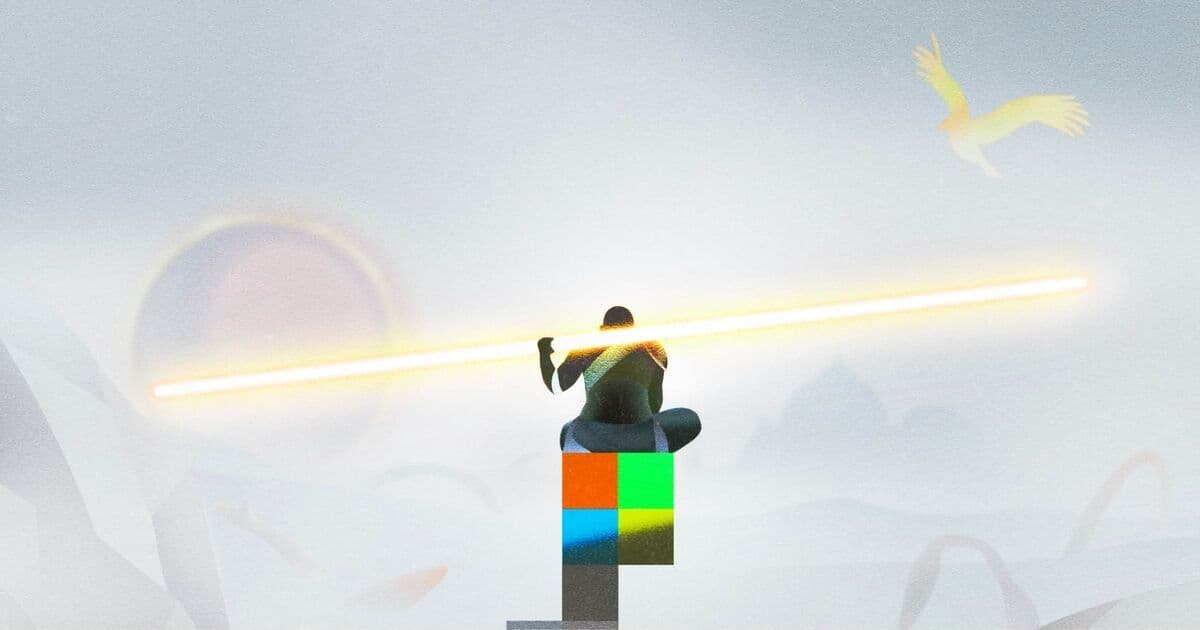
Microsoft's acquisition of Obsidian Entertainment in 2018 aimed to preserve the studio's creative identity while addressing development challenges. With three titles released in 2025, the studio now faces pressure to expedite production and reduce costs without compromising its signature storytelling.
Microsoft's acquisition of Obsidian Entertainment in 2018 was positioned as a partnership that would preserve the studio's creative independence while providing the resources of a tech giant. Six years later, as Obsidian releases three titles in 2025, the studio finds itself at a crossroads between its artistic heritage and the operational demands of its corporate parent.
The Creative DNA That Made Obsidian
Obsidian built its reputation on narrative-driven RPGs that prioritized player choice and complex storytelling. Games like Pillars of Eternity, Tyranny, and The Outer Worlds established the studio as a haven for writers and designers who wanted to craft morally ambiguous worlds where decisions had meaningful consequences.
The studio's approach was deliberately counter to mainstream trends. While other developers chased photorealistic graphics and multiplayer modes, Obsidian doubled down on branching narratives, companion relationships, and systems that rewarded player agency. This creative philosophy attracted a dedicated fanbase willing to overlook technical issues in favor of compelling stories.
The Microsoft Acquisition: Promises and Reality
When Microsoft acquired Obsidian for $33 million in 2018, the messaging emphasized preservation over transformation. Studio head Feargus Urquhart stated that Microsoft understood Obsidian's creative process and wouldn't impose rigid corporate structures. The acquisition was framed as providing stability and resources rather than dictating creative direction.
However, the realities of corporate ownership began to surface. Microsoft's internal metrics for success differ from those of independent studios. While Obsidian could previously survive on cult classics that sold modestly but earned critical acclaim, Microsoft expects titles to contribute to Game Pass growth, hardware sales, and broader ecosystem engagement.
The 2025 Release Schedule: A Double-Edged Sword
Releasing three titles in a single year represents both an achievement and a warning sign. On one hand, it demonstrates that Obsidian has scaled its operations and can deliver multiple projects simultaneously. On the other, it suggests that development cycles have been compressed, potentially at the expense of polish and innovation.
The titles themselves reveal the tension between creative ambition and production efficiency. Early reports indicate that while the games maintain Obsidian's narrative strengths, they also show signs of rushed development: reused assets, simplified systems, and storylines that don't reach the complexity of earlier works.
The Cost Reduction Challenge
Microsoft's push for cost reduction comes at a time when game development expenses have skyrocketed. AAA titles now require budgets exceeding $100 million, with marketing costs often doubling development expenses. For a studio like Obsidian, which built its identity on handcrafted content and branching narratives, reducing costs without sacrificing quality presents a fundamental challenge.
The traditional Obsidian approach involved extensive writing, multiple dialogue branches, and systems that allowed for emergent gameplay. Each of these elements requires significant human resources. Streamlining these processes risks diluting what made the studio distinctive in the first place.
The Efficiency Paradox
Obsidian's situation illustrates a broader paradox in creative industries: the tension between artistic vision and commercial viability. The studio's most celebrated works often emerged from extended development periods where writers and designers could iterate on ideas. Rushing this process risks producing competent but forgettable games.
Microsoft's efficiency drive reflects a rational business strategy. Game Pass subscribers expect a steady stream of content, and shareholders demand returns on the company's substantial gaming investments. However, this approach may be fundamentally at odds with the creative processes that produced Obsidian's best work.
The Path Forward: Finding Balance
The challenge for Obsidian isn't simply about working faster or cheaper—it's about identifying which elements of its creative process are essential and which can be streamlined without compromising quality. This requires difficult conversations about what makes an Obsidian game feel like an Obsidian game.
Some possibilities include:
- Modular narrative systems that allow writers to create branching content more efficiently
- Procedural generation for environmental details while preserving handcrafted key moments
- AI-assisted development for routine tasks, freeing human creators for high-value work
- Focused scope that prioritizes depth over breadth in game worlds
The Broader Industry Context
Obsidian's struggles reflect industry-wide challenges. As development costs continue to rise, studios face pressure to either scale massively or find ways to work more efficiently. The middle ground—maintaining creative independence while achieving commercial success—becomes increasingly difficult to navigate.
Microsoft's ownership of multiple studios creates both opportunities and constraints. While the company can share resources and technology across its portfolio, it also expects each studio to contribute to its strategic objectives. For Obsidian, this means balancing its creative identity against the needs of Game Pass, Xbox hardware sales, and Microsoft's broader gaming ecosystem.
What Success Looks Like
The ultimate measure of success for Obsidian under Microsoft won't be the number of titles released or the efficiency metrics achieved. It will be whether the studio can continue producing games that resonate with players in the way its earlier works did.
If Obsidian can find ways to maintain its creative voice while adapting to new production realities, it could serve as a model for how acquired studios can thrive under corporate ownership. If it fails, it may become another cautionary tale about the challenges of preserving creative identity in an industry increasingly dominated by consolidation and efficiency metrics.
The Stakes for Players and Industry
For players, Obsidian's evolution matters because it represents one of the few remaining studios dedicated to narrative-driven RPGs with meaningful player choice. The gaming landscape has shifted toward live-service games and multiplayer experiences, making studios that prioritize single-player storytelling increasingly rare.
The outcome of Obsidian's current challenges will influence how other studios approach the balance between creativity and efficiency. If Microsoft can help Obsidian work faster and cheaper without sacrificing quality, it could provide a blueprint for the industry. If not, it may reinforce the perception that creative independence and corporate ownership are fundamentally incompatible.
Obsidian's journey under Microsoft ownership represents more than just one studio's challenges—it's a microcosm of the broader tensions facing the gaming industry as it grapples with rising costs, changing player expectations, and the ongoing consolidation of creative talent under corporate umbrellas.
Comments
Please log in or register to join the discussion