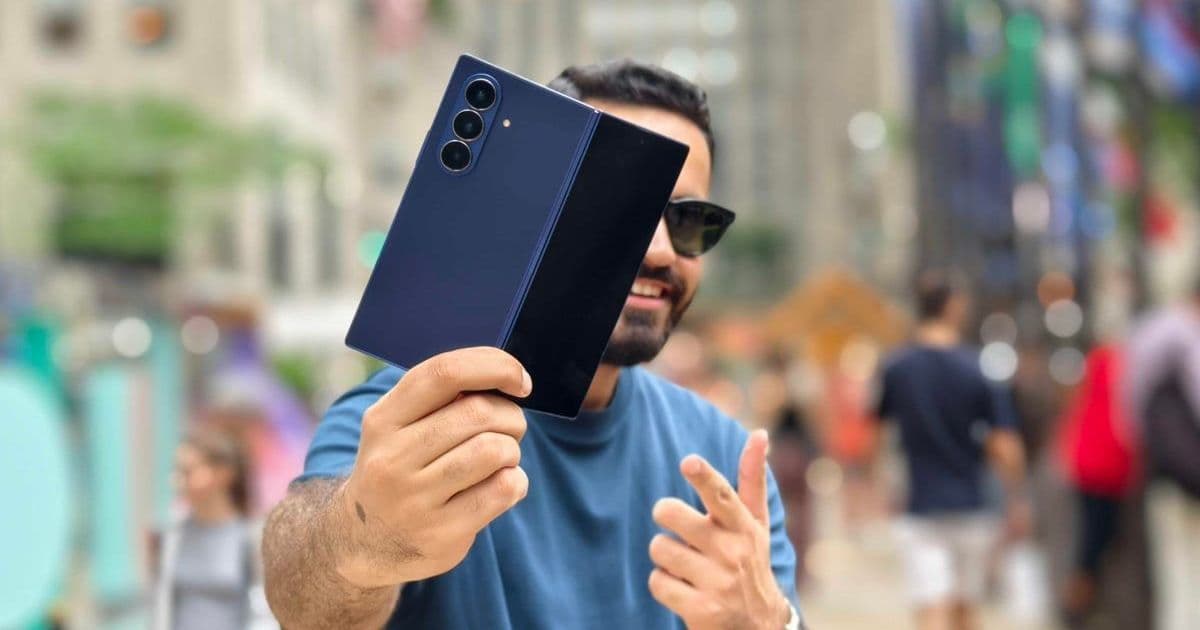
Samsung's Galaxy Z Fold 7 delivers a significant hardware evolution, becoming the thinnest and lightest book-style foldable while virtually eliminating the screen crease. Despite retaining battery limitations and a premium $2,000 price tag, its refined form factor, S25 Ultra-grade main camera, and practical Galaxy AI integration position it as the most polished foldable experience available.
For years, Samsung's foldable phone strategy involved incremental refinements, but the Galaxy Z Fold 7 marks a pivotal design overhaul – the most substantial since 2020. After extensive testing, it's clear Samsung has listened to user feedback, addressing critical pain points to create its most compelling foldable yet.
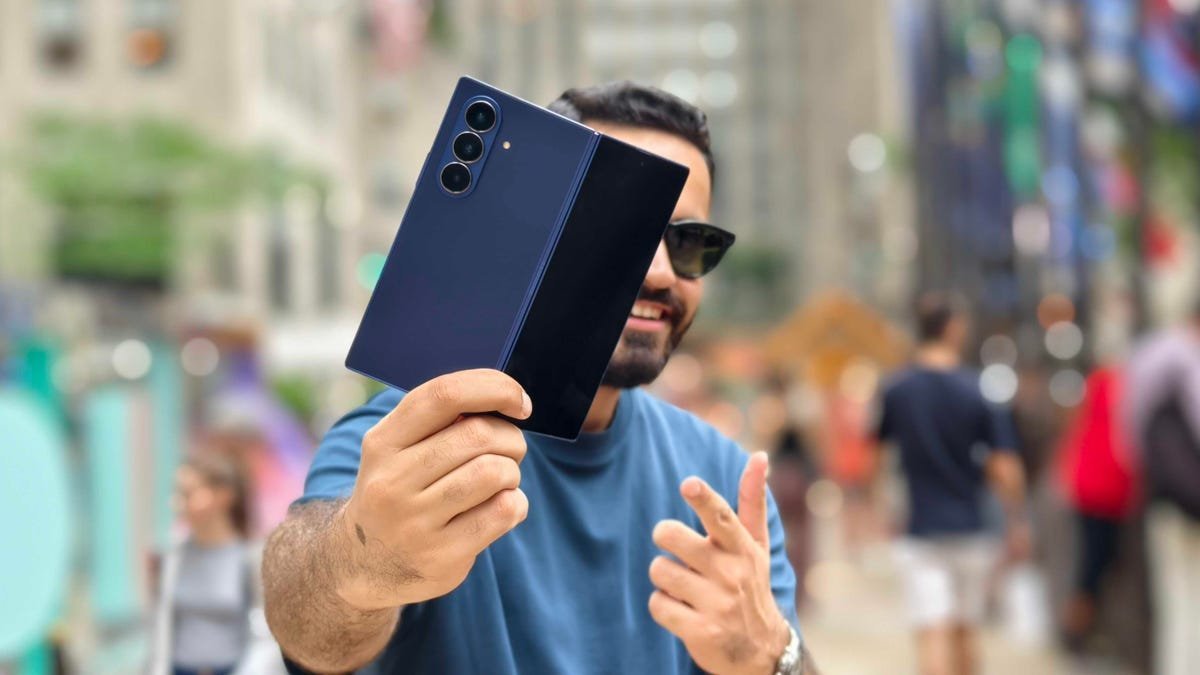 Samsung Galaxy Z Fold 7 showcasing its slim profile and unfolded display (Credit: Prakhar Khanna/ZDNET)
The Thinnest, Lightest Foldable Contender The Z Fold 7's most immediate impact is its physical transformation. Measuring a mere 4.2mm thin when unfolded and 215 grams, it claims the title of the lightest book-style foldable on the market, undercutting rivals like the Oppo Find N5 and Honor Magic V5. This dramatic slimming, combined with a wider 6.5-inch cover screen sporting a more usable 21:9 aspect ratio, makes the folded experience feel remarkably close to a traditional flagship. Durability sees upgrades too, featuring Gorilla Glass Victus Ceramic 2 on the cover, Victus 2 on the back, a titanium plate for inner display reinforcement, and IP48 water/dust resistance.
Conquering the Crease, Embracing Utility Samsung's new butterfly hinge mechanism delivers arguably the Z Fold 7's crowning achievement: a virtually non-existent screen crease. This leap forward surpasses competitors like the Vivo X Fold 5 and Honor Magic V3, offering a significantly more seamless viewing experience across the expansive 8-inch LTPO AMOLED 2X inner display. While the switch from an under-display camera (UDC) to a punch-hole front camera slightly reduces immersion for some tasks, it drastically improves video call quality – a pragmatic trade-off favoring real-world utility. The hinge itself exudes premium quality, though it requires a brief break-in period to achieve its full range of motion.
Camera Parity and AI Integration For the first time, Samsung equips its foldable with the same formidable 200MP main camera found in the Galaxy S25 Ultra. Paired with a 12MP ultrawide and a modest 10MP 3x telephoto, the system captures vibrant, detailed images, particularly when utilizing the full 200MP mode for cropping flexibility. Shutter lag improvements aid in capturing moving subjects.
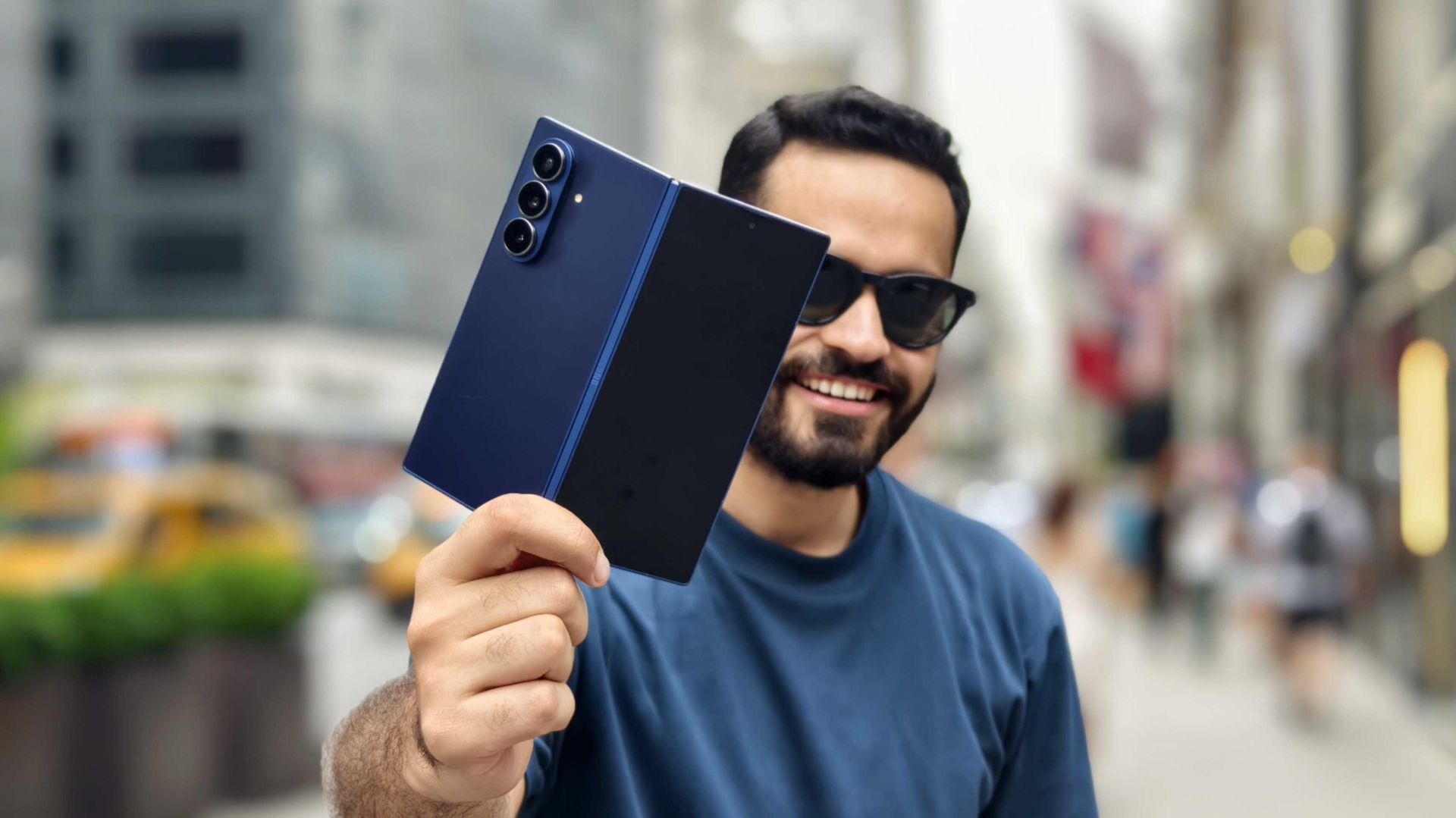 Sample portrait and zoom shots highlighting the Z Fold 7's camera capabilities (Credit: Prakhar Khanna/ZDNET)
Galaxy AI features prove genuinely useful. Tools like Live Translate for multilingual conversations, Generative Edit for object removal, and the versatile AI Select (enabling actions on any screen element) demonstrate practical applications. However, accessibility could be improved, such as making Live Translate more prominent during calls. The new Audio Eraser effectively isolates voices in video recordings, albeit with occasional robotic artifacts.
Endurance: The Lingering Compromise The Z Fold 7's primary weakness remains unchanged: its 4,400mAh battery – unchanged since the Z Fold 3. While optimized hardware and software ensure it lasts a full day for moderate users (5-6 hours screen time), heavy users or those reliant on 5G will need an afternoon top-up. Charging speeds (25W wired, 15W wireless) feel decidedly sluggish compared to rivals boasting larger capacities and faster charging.
A Premium Price for Premium Refinement Starting at $2,000, the Galaxy Z Fold 7 commands a significant investment. However, it justifies this through unparalleled hardware refinement, class-leading software support, robust US availability, and a cohesive user experience. It represents a generational leap over the Z Fold 6, making it a compelling upgrade and the current pinnacle of book-style foldables, especially for productivity-focused professionals seeking maximum screen real estate without sacrificing pocketability. While the battery and telephoto camera leave room for future improvement, Samsung has delivered its most convincing foldable argument yet.
Source: Prakhar Khanna, ZDNET (https://www.zdnet.com/article/i-replaced-my-galaxy-s25-ultra-with-the-samsung-z-fold-7-and-didnt-regret-it/)
Comments
Please log in or register to join the discussion