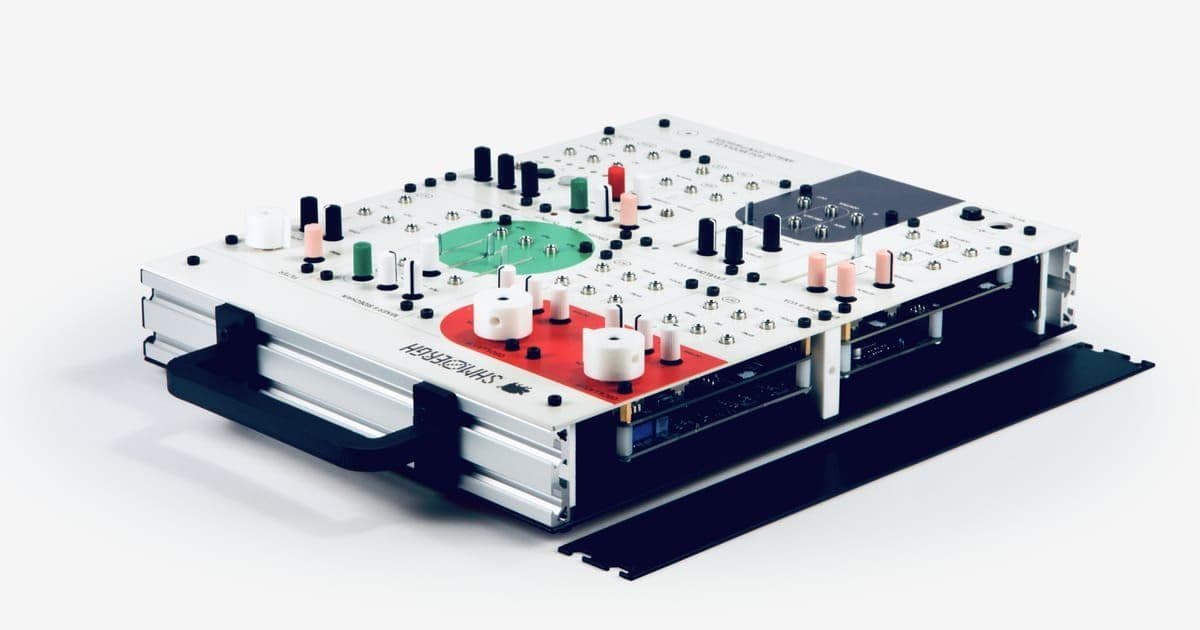
The Shmøergh Moduleur blurs the lines between musical instrument and hacker playground with its fully open-source hybrid analog/digital synth architecture. Designed for customization, its Eurorack-compatible modules and programmable Raspberry Pi Pico brain invite developers to reshape sound generation at the hardware and firmware level.
Where Synth Design Meets Open-Source Philosophy
The Shmøergh Moduleur isn't just another synthesizer; it's an invitation to explore sound creation at its most fundamental level. Developed by a small independent team, this instrument combines seven analog modules with a versatile digital 'Brain' built around the Raspberry Pi Pico microcontroller. Its creators emphasize accessibility: every schematic, PCB design, panel layout, and firmware component is openly available on GitHub, transforming the Moduleur into both a musical tool and a hands-on hardware development platform.
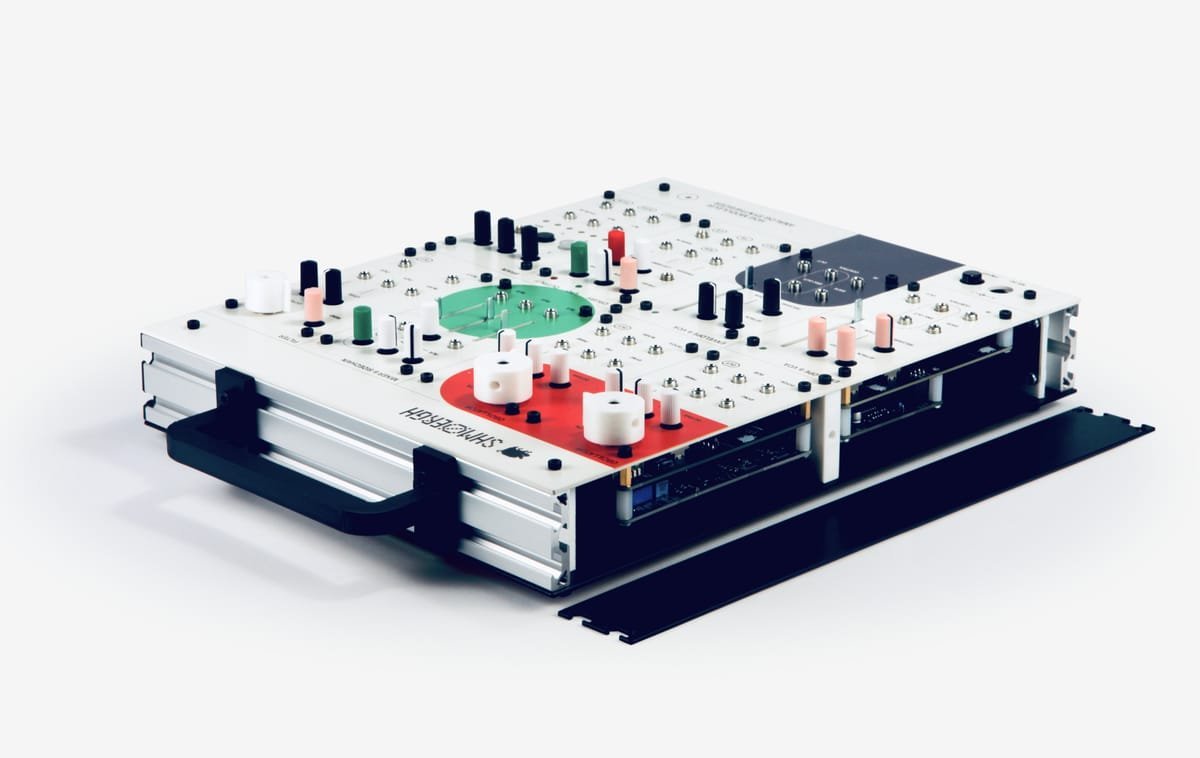 The Shmøergh Moduleur's design emphasizes both sonic capability and hardware accessibility.
Technical Architecture: Hybrid Power
At its core, the Moduleur functions as a prepatched subtractive analog synthesizer, featuring:
- Analog Signal Path: Two voltage-controlled oscillators (VCOs) with sub-oscillator options, a diode-ladder filter based on the classic Steiner-Parker circuit, ADSR envelope generator, VCA, and diode/LED-based overdrive.
- Digital Flexibility: The 'Brain' module utilizes a Raspberry Pi Pico (or Pico 2), providing MIDI-to-CV conversion by default but reprogrammable via C++ or MicroPython for entirely new functionalities like sequencers, effects, or digital voices.
- Eurorack Integration: Each analog module adheres to Eurorack voltage standards and uses Eurorack power connectors (12HP size), allowing seamless integration into larger modular systems.
"The Moduleur is hackable on many levels. Code your digital module, take out any module and add it to your Eurorack system, 3D print accessories or even build your own synth. Anything goes. All open source." - Shmøergh Team
Designed for Deconstruction
The Moduleur's hardware is engineered explicitly for modification:
- Stacked PCBs: Each module separates core functionality (core PCB) from user interface components (UI PCB), enabling custom interfaces.
- Default Patch Flexibility: A removable PCB handles initial signal routing; jumpers allow full disconnection for custom patching.
- Enclosure as Platform: Built around Bosch rails, the chassis supports custom 3D-printed accessories like handles or supplementary modules.
- Tiered Hackability:
- Level 1 (No Soldering): Reconfigure patches, swap modules into Eurorack cases.
- Level 2 (Soldering): Build entire units or custom modules using provided designs.
- Level 3 (PCB Design): Create entirely new front panels or reuse core circuits in original designs.
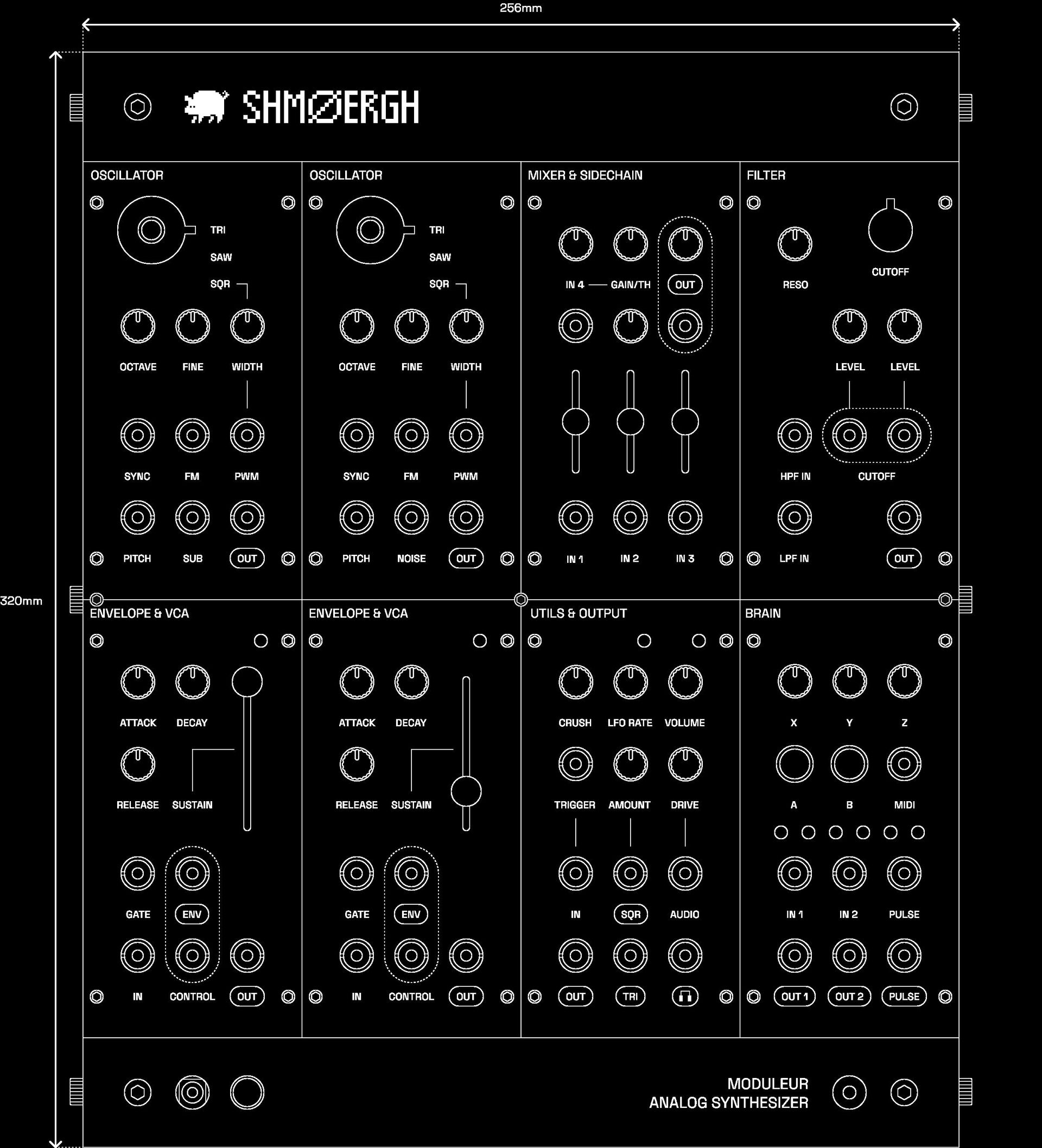 Module blueprints highlight the separation between core functionality and user interface PCBs.
Why This Matters for Developers and Makers
The Moduleur exemplifies a growing trend where open-source principles penetrate hardware domains traditionally dominated by closed systems. Its significance extends beyond music:
- Embedded Development Playground: The Raspberry Pi Pico 'Brain' offers a tangible project platform for learning embedded C++ or MicroPython, with practical MIDI/I/O control applications.
- Hardware Experimentation: Accessible schematics and modular design lower barriers to understanding analog audio circuits and digital-audio signal processing.
- Community-Driven Evolution: Continuous firmware updates and planned hardware revisions signal an instrument designed to evolve with user input, contrasting static commercial products.
The Future is Patchable
Rather than chasing mass production, Shmøergh embraces limited, unique-unit craftsmanship while betting heavily on community engagement. The Moduleur positions itself not as a finished product, but as a starting point—a catalyst for exploration at the intersection of sound, code, and solder. For developers seeking a physical manifestation of open-source culture that bridges music and embedded systems, this synth offers a resonant invitation to play, dissect, and rebuild.
Comments
Please log in or register to join the discussion