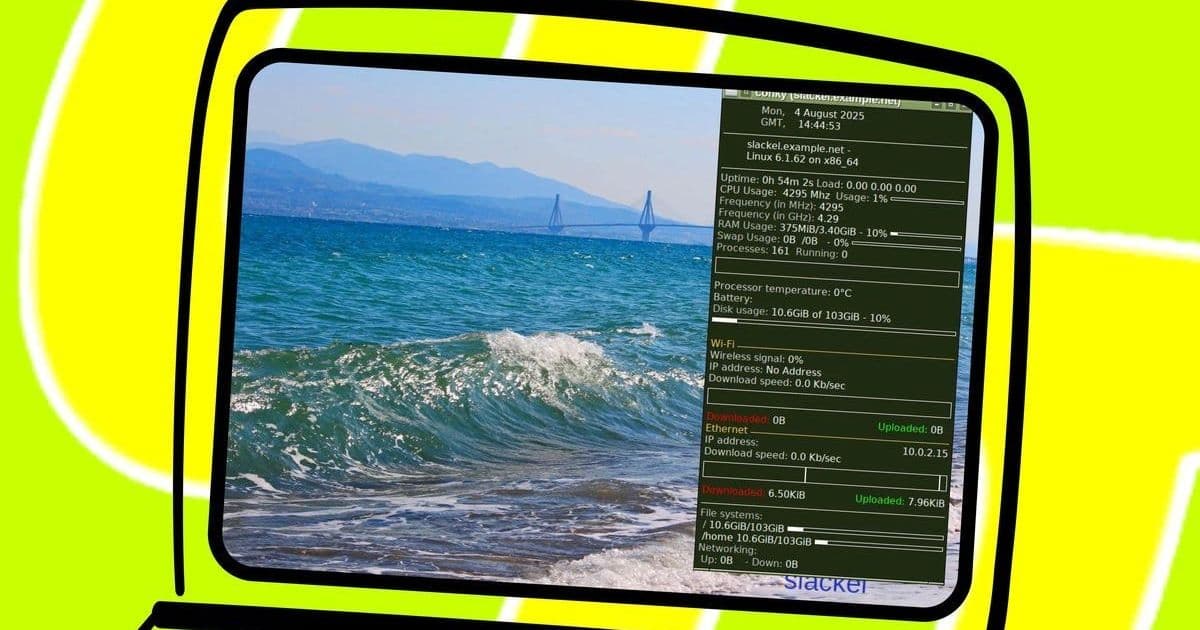
Slackel emerges as a crucial bridge between Slackware's legendary stability and UNIX-like purity and the need for user-friendly accessibility. Offering four distinct desktop spins—OpenBox, KDE Plasma, MATE, and FluxBox—it provides GUI tools for installation and package management, making this venerable distribution approachable without sacrificing its core philosophy. This distro is a compelling option for those seeking to learn deeper Linux internals or breathe new life into older hardware.
For decades, Slackware Linux has held a hallowed place in the open-source pantheon. Launched in 1993, it prioritized stability and adherence to UNIX principles, deliberately avoiding modifications to upstream packages, anticipating user needs, or—critically—providing a graphical installer. This commitment to purity created a steep learning curve, often relegating Slackware to the realm of experienced Linux veterans. Enter Slackel: a distribution designed to make the power and stability of Slackware accessible to a much broader audience.
Slackel achieves this accessibility primarily through two key innovations:
- A Graphical Installer: Replacing Slackware's notoriously text-based setup, Slackel offers a point-and-click GUI installer. While it still requires users to prepare their drive (using the included GParted tool) by creating an MS-DOS partition table and an ext4 partition beforehand, the core installation process is significantly streamlined and familiar to users of mainstream distros.
- GUI Package Management: Borrowing tools from Salix OS (another Slackware derivative), Slackel includes
Gslapt, a graphical frontend for package management. Functioning similarly to Synaptic, it allows users to easily search for, install, remove, and update software without touching the command line.
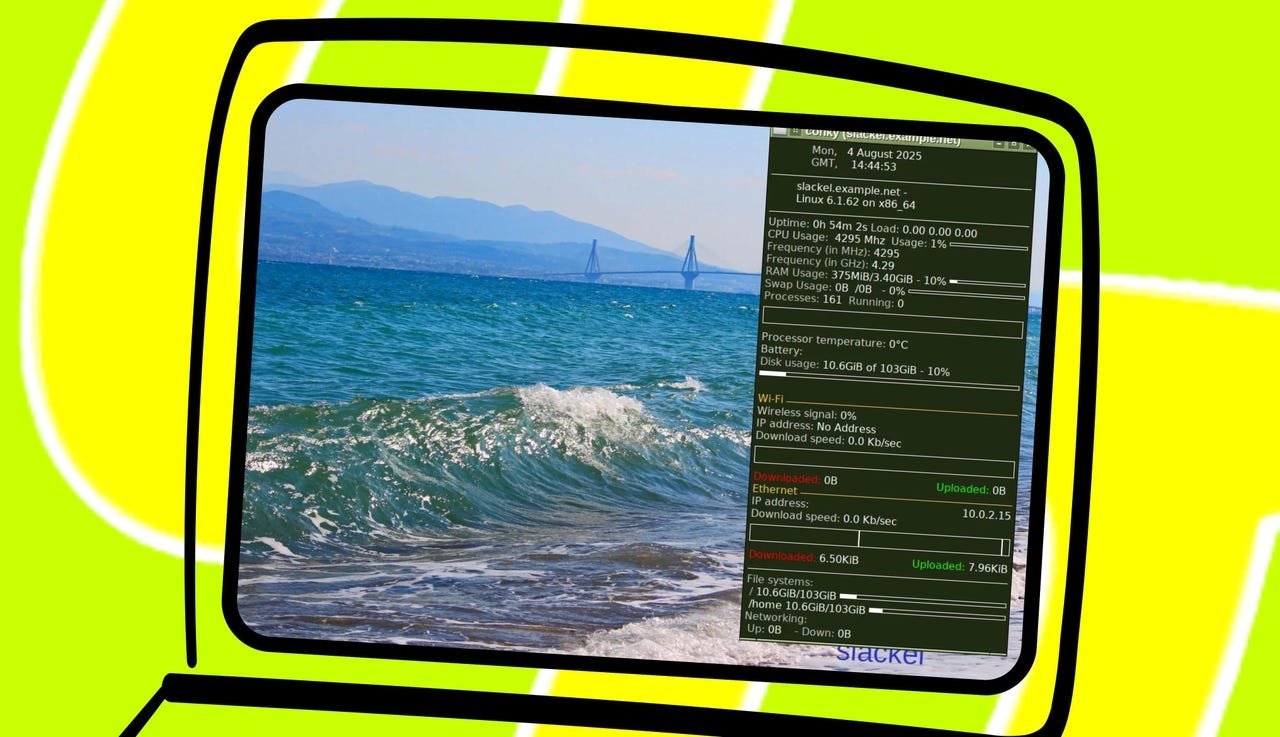
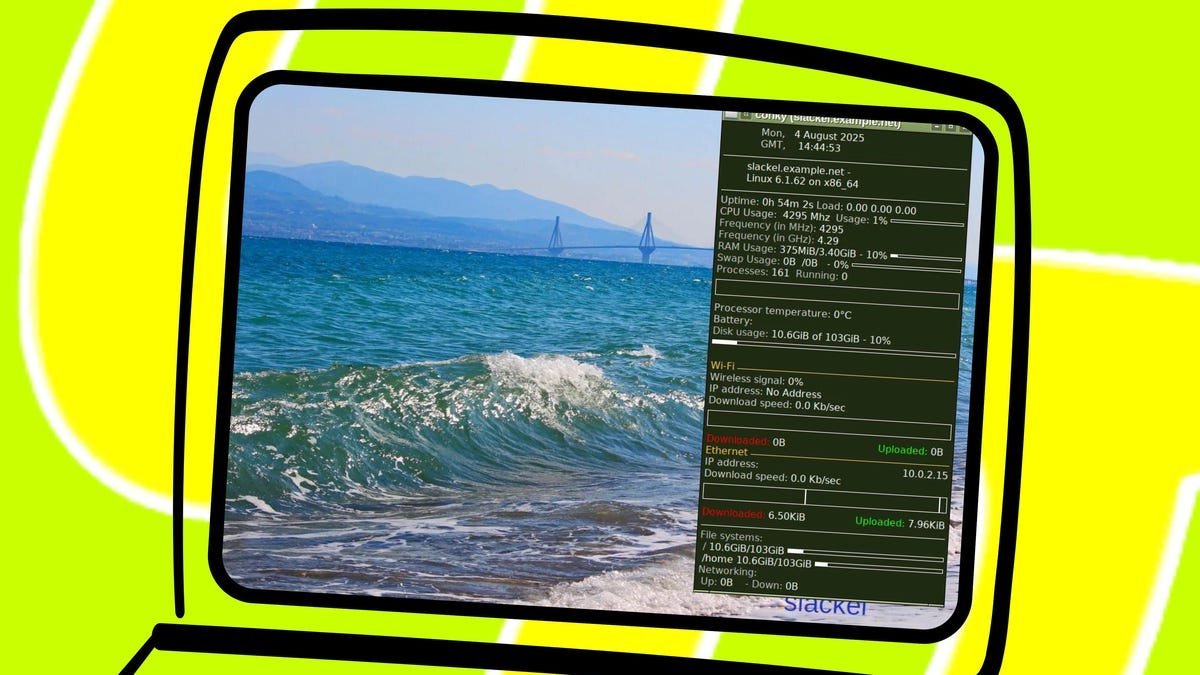 The OpenBox desktop environment in Slackel prioritizes speed and simplicity over modern aesthetics. (Image: Jack Wallen / Elyse Betters Picaro / ZDNET)
Understanding that user preferences vary, Slackel offers four distinct desktop environment spins:
- OpenBox & FluxBox: These lightweight window managers offer blazing-fast performance, ideal for older hardware. While their aesthetics may appear dated (reminiscent of early 2000s Linux), they adhere to the traditional desktop metaphor (panel, start menu, system tray, icons) and deliver exceptional responsiveness.
- MATE: A fork of the classic GNOME 2 desktop, MATE provides a familiar, robust, and user-friendly experience that strikes a balance between modernity and resource efficiency.
- KDE Plasma: For users desiring a contemporary, feature-rich interface with modern aesthetics and extensive customization options, the Plasma spin is the recommended choice.
Beyond the desktop, Slackel ships with a practical suite of applications ready for daily use: LibreOffice, Firefox, Thunderbird, GIMP, MPlayer, and the HP Device Manager. Crucially, it includes the Slackel Dashboard, a central hub providing quick access to essential system configuration tasks like setting up printers, monitors, keyboards, and launching the Gslapt package manager.
 The Slackel Dashboard acts as a control center for common setup tasks and application installation. (Image: Jack Wallen / Elyse Betters Picaro / ZDNET)
Implications and Target Audience: Slackel's significance lies in its potential to broaden the reach of Slackware's core values. It lowers the barrier to entry, allowing more users to experience the stability and "vanilla" software approach that defines Slackware. This makes it an excellent learning distribution for those wanting to understand Linux internals beyond surface-level desktop environments, as it retains Slackware's underlying structure while adding essential usability layers.
Is Slackel for Everyone? While the GUI tools make Slackel far more approachable than vanilla Slackware, it's not necessarily the first distro a complete Linux novice should try. Distributions like Ubuntu, Linux Mint, or Zorin OS offer even more hand-holding and polished out-of-the-box experiences. Slackel shines for:
- Users with some Linux experience seeking a deeper understanding.
- Those valuing software purity and minimal upstream modifications.
- Individuals needing to revitalize older hardware (especially with OpenBox/FluxBox).
- Anyone curious about the Slackware philosophy but intimidated by its traditional installation and management.
Slackel stands as a testament to the adaptability of the Linux ecosystem. It successfully preserves Slackware's commitment to stability and UNIX-like principles while thoughtfully addressing the modern expectation for accessibility. By offering choice in desktop environments and providing essential graphical tools, it opens the door to a powerful, time-tested platform for a new generation of users. For those willing to embrace its potentially retro aesthetic in exchange for performance or seeking a stepping stone into deeper Linux waters, Slackel presents a uniquely compelling proposition.
Source: Based on original reporting by Jack Wallen for ZDNET.
Comments
Please log in or register to join the discussion