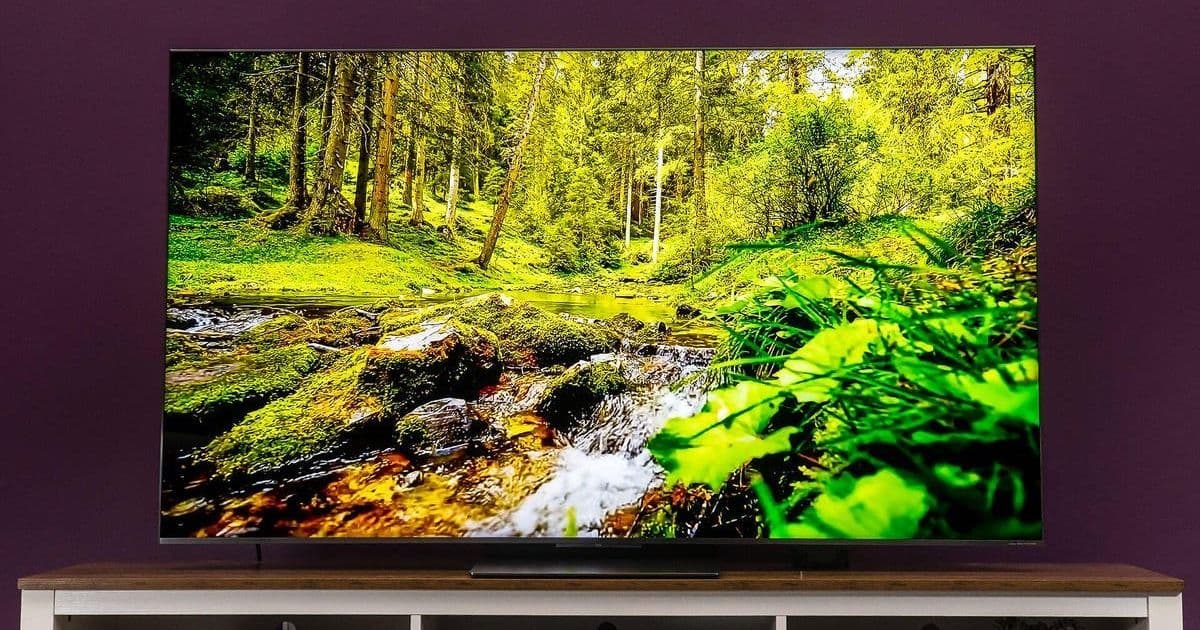
TCL's flagship QM8K mini LED TV delivers stunning 4,500-nit HDR brightness and gaming-ready 144Hz performance, now at $900 off for Prime Day. While it challenges OLED in luminosity and value, our deep dive reveals where this display excels—and where competitors still hold an edge in audio and viewing angles.
TCL QM8K Mini LED TV Review: When Brightness Meets Value
In the high-stakes arena of premium televisions, TCL continues its aggressive play with the QM8K—a mini LED behemoth boasting specs that read like an enthusiast's wishlist. With a current $900 discount on the 65-inch model (down to $1,598), this flagship isn't just competing on price; it's forcing a reckoning for bright-room viewing. But does its performance justify the investment over TCL's own QM7K or pricier OLED alternatives? Our testing reveals a display that shines brilliantly, yet casts subtle shadows.
The Torchbearer: HDR Performance That Defies Ambient Light
At the heart of the QM8K lies its party trick: a blistering peak brightness of 4,500 nits (70% screen coverage) powered by 3,800 dimming zones. During lab evaluations, HDR content like "Dune 2" exhibited explosive luminosity—sun-scorched desert scenes retained jaw-dropping detail even in sun-drenched rooms where OLEDs typically falter. TCL's "Halo Control System" and QD-Mini LED backlight deliver near-OLED black levels, though faint blooming persists in extreme contrast scenarios. As one tester noted:
"For 99% of real-world viewing, the QM8K's blacks are inky enough to suspend disbelief. But in pitch darkness with test patterns, that last 1% reminds you this isn't OLED—it's something brighter, bolder, and more practical for living rooms flooded with daylight."
Gaming Chops and Setup Quirks
Gamers will appreciate native 144Hz support, VRR, and sub-10ms input lag—features that make titles like "Helldivers 2" fluid and responsive. The inclusion of HDMI 2.1 on two ports (a curious limitation for a flagship) handles 4K/144Hz gaming, though multi-console households may feel pinched. Setup, however, remains a baffling weak point: assembling the stand requires 12 screws and patience, unchanged from TCL's more affordable QM7K line. The plasticky remote also feels incongruous on a premium model, despite useful backlighting and Google TV integration.
Audio and Viewing Angle Tradeoffs
TCL's Bang & Olufsen partnership elevates audio clarity beyond typical built-in speakers, with crisp dialogue and respectable mid-range. Yet physics intrudes: thin chassis constraints prevent deep bass, making scenes like "Dune's" sandworm attacks feel less visceral. Audiophiles will still crave a soundbar. Similarly, the CrystGlow WHVA panel improves off-axis viewing versus predecessors, but color fidelity degrades beyond 30 degrees—a consideration for wide couches.
The Value Equation: QM8K vs. QM7K
Here’s where TCL’s strategy fascinates. The QM7K—$1,200 cheaper at 65 inches—shares the same AiPQ Pro processor and nearly matches the QM8K in real-world viewing angles. For most buyers, the step-down model delivers 90% of the experience. Yet the QM8K’s brightness supremacy and refined dimming make it a unicorn for sunlit spaces. As Chris Bayer observed for ZDNET:
"In a brightly lit room, where my OLED sometimes struggles... the QM8K is a torch. If your battleground is glare, this is your weapon."
Ultimately, the QM8K isn’t just a TV—it’s a statement about mini LED’s maturation. At full price, it’s a tough sell against OLED’s perfectionism. But at $900 off, it becomes a compelling beacon for those prioritizing luminosity over absolute contrast. As living rooms get brighter and HDR content proliferates, TCL’s gamble illuminates a path where value and performance aren’t mutually exclusive.
Source: ZDNET, July 2025
Comments
Please log in or register to join the discussion