
Swift just gained a first-class Temporal SDK, and with it, a credible answer to one of distributed systems’ hardest problems: making long-running workflows reliable by default. For teams betting on server-side Swift, this release is less about syntax and more about signaling that Swift is ready for serious, fault-tolerant cloud workloads.
Temporal Comes to Swift: Durable Workflows for a Language Growing Up on the Server
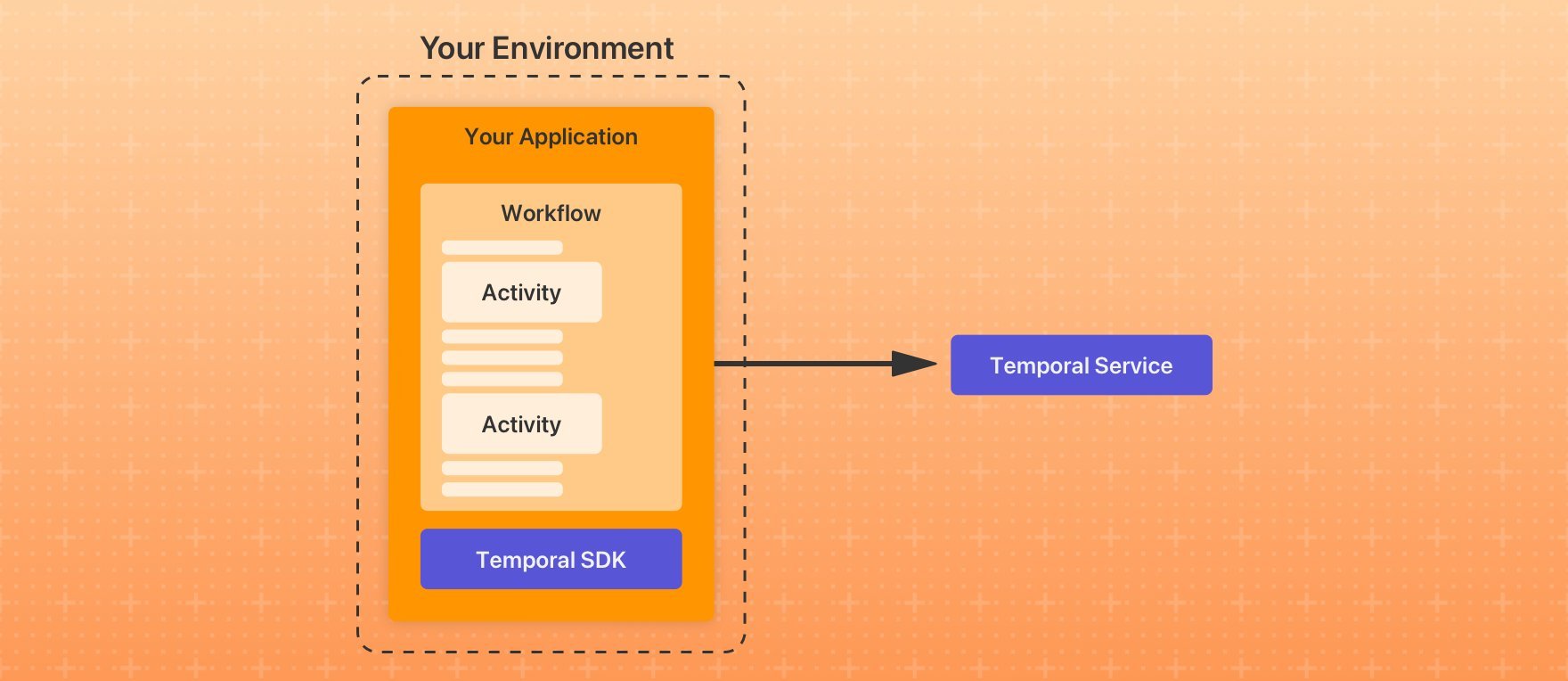
When Swift was introduced a decade ago, few would have predicted its future as a backend workhorse orchestrating complex, distributed systems. Yet here we are: the Temporal Swift SDK has landed as an open source project, bringing one of the industry’s most respected workflow orchestration models directly into the Swift ecosystem.
This is not just another language binding. It is a statement of maturity.
Temporal—already entrenched in Java, Go, TypeScript, Python, and more—has become a de facto standard for encoding business processes and long-running operations as durable workflows. With native Swift support, Apple’s language steps more fully into the domain of resilient cloud services, enterprise automation, and highly available infrastructure.
Source: Swift.org — “Introducing Temporal Swift SDK: Building durable and reliable workflows”
Why Temporal Matters for Swift Developers
At scale, reliability stops being a feature and becomes table stakes. Distributed systems fail in annoyingly creative ways:
- A payment flow times out after step three of five.
- A long-lived data migration dies midway through a batch.
- A background job succeeds, but its status never gets updated.
Traditional solutions lean on hand-rolled retry logic, ad hoc state machines, idempotency patches, and a patchwork of queues, schedulers, and cron jobs. Every team reimplements the same brittle machinery.
Temporal’s pitch has always been brutally pragmatic:
- Write your workflow as normal code.
- Temporal records event history durably.
- If workers crash, restart, or move, Temporal resumes from the last known state.
- No lost progress, no hidden partial failures.
Bringing that model into Swift is strategically significant for three reasons:
- Server-side Swift legitimacy: Temporal is used in serious production systems. Supporting Swift implies Temporal (and its users) expect Swift to power real backends, not just experiments.
- Unified language surface: Teams invested in Swift for mobile, services, or edge environments can now model business workflows in the same ecosystem, reducing conceptual friction.
- Operational discipline by design: Durable execution ceases to be bespoke infra and becomes a language-native pattern backed by a proven runtime.
Durable Execution, in Swift’s Own Idioms
The Temporal Swift SDK doesn’t just expose an API; it aligns with how modern Swift is written.
Key design choices stand out:
- Async/await and structured concurrency: Workflows are expressed using Swift’s concurrency model, making orchestration code readable and familiar. Instead of external DSLs or callback hell, you use
asyncfunctions andTask-driven structures that Swift developers already rely on. - Strong typing for invariants: Temporal’s model benefits from deterministic, predictable behavior. Swift’s type system catches a class of errors at compile time—particularly around data contracts and control flow—that in dynamic languages often appear only at runtime.
- Macros to kill boilerplate: Temporal requires workflows and activities to follow specific conventions. The Swift SDK introduces macros to declare workflows and activities succinctly, keeping ceremony low while preserving clarity.
Conceptually, the same Temporal execution model applies:
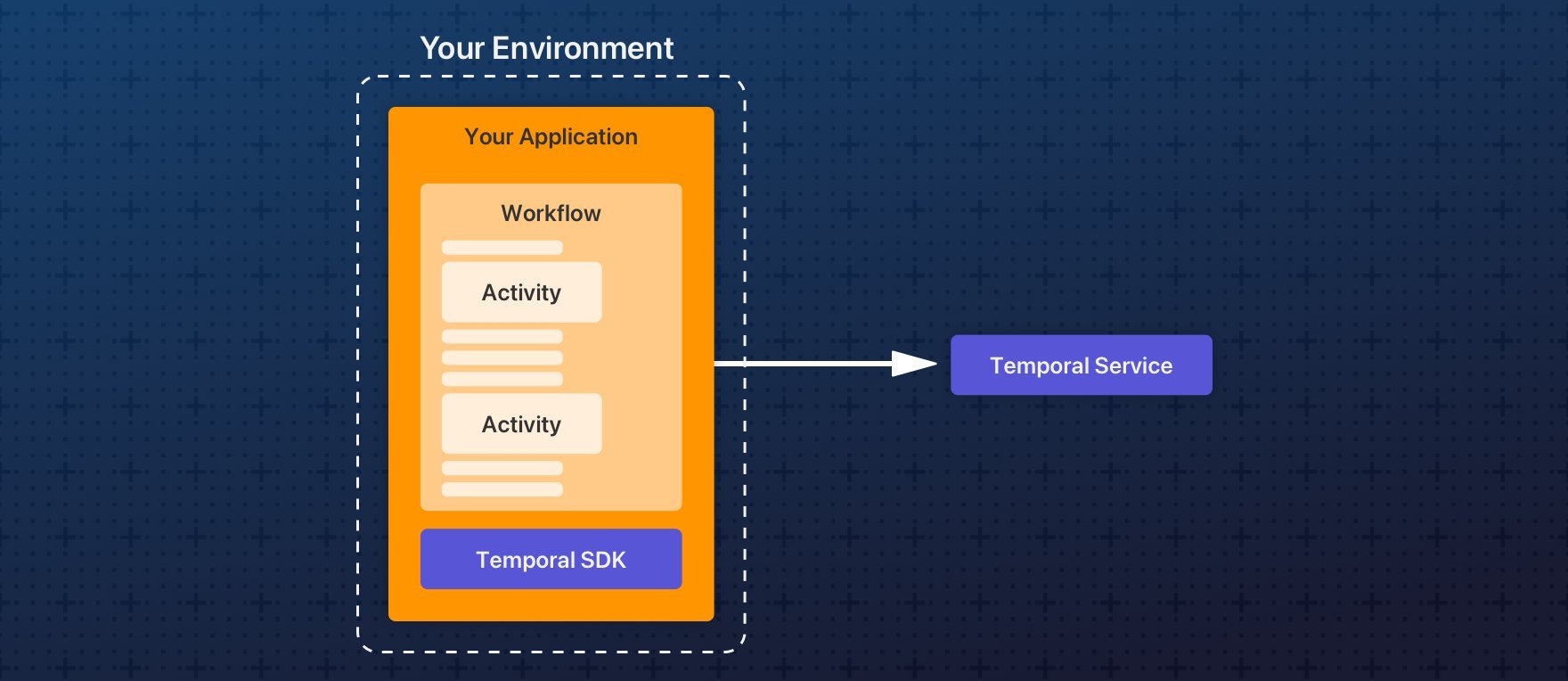
- Workflows define the orchestration logic: sequences, branches, compensation strategies, and error handling. They must be deterministic; given the same history, they must make the same decisions.
- Activities perform side-effecting work: hitting APIs, updating databases, talking to external systems. They should be idempotent to support safe retries.
Think less “write complex distributed state machines” and more “write straightforward Swift that Temporal replays and persists for you.”
Where This Actually Changes the Game
For technical leaders and backend engineers, the value of Temporal Swift isn’t theoretical. It sharpens Swift’s viability in concrete scenarios:
1. Payment Flows and Financial Operations
Multi-step payment flows—authorization, capture, fraud checks, ledger updates, notifications—are classic sources of partial failure and data drift.
With Temporal in Swift:
- Each step becomes an activity with clear semantics.
- The workflow encapsulates compensating actions (refunds, rollbacks) as code.
- Crashes or deploys don’t abandon in-flight operations; the state is durably tracked.
This lowers the risk of using Swift in regulated or financially sensitive systems where correctness and traceability are non-negotiable.
2. Data Pipelines and Back-Office Automation
Long-running imports, ETL processes, or document workflows benefit from Temporal’s history and resumption model.
Swift’s concurrency model makes it approachable to:
- Fan out work to multiple activities.
- Coordinate dependent steps.
- Resume safely after restarts without bolting on external schedulers.
For teams already using Swift on the server (e.g., with Vapor or Hummingbird), this tightens the ecosystem story.
3. Operational and Infrastructure Tasks
Certificate rotation, compliance checks, large-scale maintenance tasks—these are operational workflows that developers routinely under-specify.
Encoding them as Temporal workflows in Swift means:
- Auditability of every step.
- Built-in retry semantics.
- Safer handling of partial failures during sensitive operations.
This aligns cleanly with the broader industry shift toward treating platform operations as code, not as an afterthought.
Developer Experience: What You Can Expect
While the official docs and examples are the canonical guide, a few experience notes matter for practitioners evaluating this SDK.
- Natural Swift APIs: Rather than contorting Temporal’s concepts into awkward wrappers, the SDK leans into Swift-native patterns. If you’ve written modern async/await Swift, workflows will feel intuitive.
- Determinism by construction (mostly): Temporal’s deterministic requirements can be a footgun in some languages. Swift’s predictability and type system reduce accidental nondeterminism, though developers still need discipline around things like non-deterministic random values, system time, and external I/O within workflows.
- Macro-driven ergonomics: Macros help annotate workflows and activities, trimming the glue code and improving discoverability. For teams standardizing on Temporal, this means cleaner code reviews and clearer ownership boundaries.
From an ecosystem perspective, this is also an invitation:
- Framework authors can ship ready-made Temporal-enabled components in Swift.
- Companies with mixed-language stacks can pilot Swift services without giving up mature workflow tooling.
Integration, Community, and the Signal Behind the Release
The SDK is open source, actively developed, and backed by collaboration between the Swift server community and the Temporal ecosystem.
Key resources:
- Temporal Swift SDK repository: examples ranging from simple orchestrations to complex business flows.
- Temporal’s core documentation: architectural deep dives on workflow execution, history, and scaling.
- Server-Side Swift 2025 talk: a video walkthrough of design decisions and usage patterns.
The collaboration here is worth calling out. Temporal gains access to a growing pool of Swift backend developers; Swift gains alignment with a platform that many high-reliability shops already trust.
For engineering leaders, this lowers one of the big objections to server-side Swift: the lack of proven, standardized primitives for resilience. With Temporal now in the toolkit, “we can’t trust Swift for critical workflows” becomes a much harder position to defend.
When Reliability Stops Being Heroics
Durability in distributed systems has too often depended on a few senior engineers who “just know how it all fits together.” The Temporal Swift SDK moves Swift shops toward a healthier norm: resilience as an encoded, testable, observable workflow model—not tribal knowledge.
If your teams are already all-in on Swift, this SDK is an immediate call to refactor fragile long-running jobs, payment flows, or orchestration scripts into something durable. If you’ve been skeptical of Swift on the backend, this is one of the first developments that makes it look less like a gamble and more like a platform with the right failure semantics baked in.
Because in 2025, reliability is no longer the differentiator of exceptional teams; it’s the minimum bar. The real question is which ecosystems give you that reliability without demanding heroics. Swift, with Temporal at its side, just made a compelling argument that it intends to be one of them.
Comments
Please log in or register to join the discussion