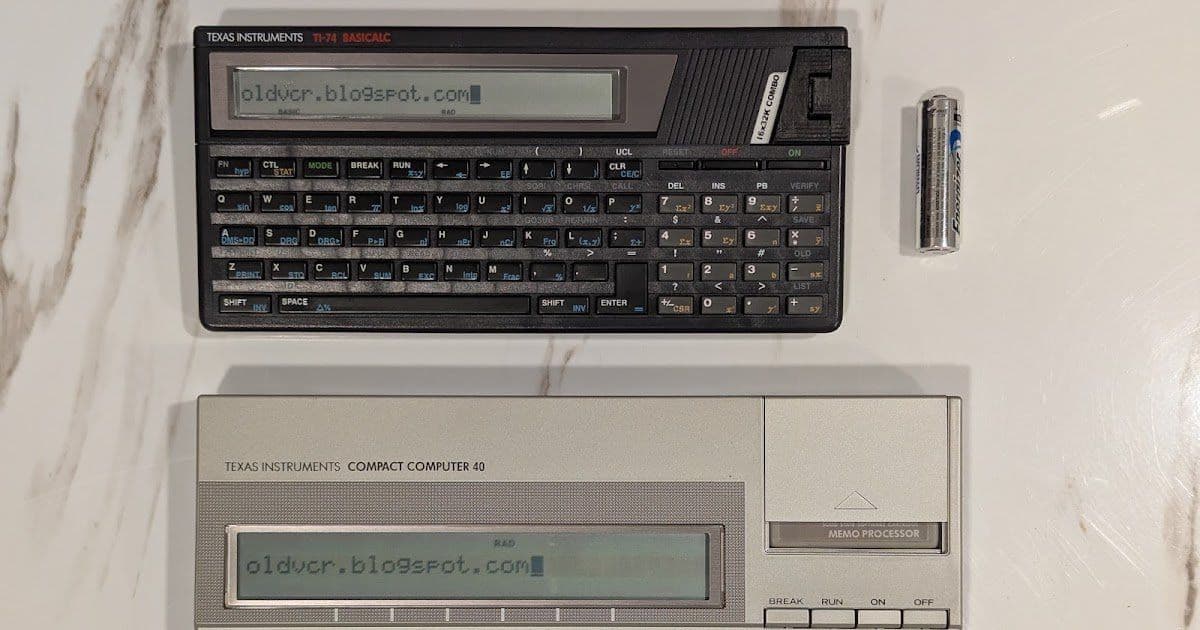
Discover the Texas Instruments CC-40, a portable computer from the early 1980s that packed a punch with its modular design and BASIC programming. This overlooked gem offered expandable memory and a unique interface, bridging the gap between calculators and full-fledged PCs. Explore how it captured the spirit of innovation in an era of rapid technological evolution.
The Texas Instruments CC-40: A Compact Powerhouse from the 1980s
In the early 1980s, as personal computing exploded onto the scene, Texas Instruments dared to dream small—literally—with the release of the CC-40, a portable computer that fit in the palm of your hand. Launched in 1983, this 'Portable Professional Computer' blurred the lines between the company's renowned calculators and its more ambitious home systems like the TI-99/4A. With its sleek, calculator-like form factor and modular expansion, the CC-40 embodied TI's push toward versatile, on-the-go computing.
A Brief History of Innovation
Texas Instruments, a titan in electronics, had already revolutionized education with devices like the SR-52 calculator. The CC-40 built on that legacy, targeting professionals and hobbyists who needed more power without the bulk. Priced at around $400, it featured a 2.5 MHz 8-bit TMS 9940 CPU derived from the TI-99/4A, 18K of ROM for the Extended BASIC interpreter, and 4K of RAM—expandable via cartridges up to 32K. This made it a serious contender for fieldwork, from engineering sketches to quick data analysis.
What set the CC-40 apart was its portability: at just 1.1 pounds, it ran on four AA batteries or an AC adapter, with a 32-character by 16-line LCD display. Users could connect a full-sized keyboard or even a small printer, turning this pocket device into a productivity hub. Its 'cartridge' system allowed swaps for additional software, from financial tools to games, showcasing TI's modular vision long before USB.
Technical Deep Dive
Under the hood, the CC-40's TMS9940 processor clocked in at 2.5 MHz, a step down from desktop contemporaries but optimized for efficiency. It supported TI Extended BASIC, a dialect familiar to TI-99/4A owners, enabling scripts for scientific calculations or simple business apps. Memory was king, and the base 4K RAM could be augmented with cartridges, a foresight that anticipated modern expandable hardware.
The device's Achilles' heel? Its monochrome LCD lacked the vibrancy of emerging color displays, and its expansion port, while innovative, required proprietary cartridges that weren't as ubiquitous as later standards. Nevertheless, for its time, it offered a compelling mix of calculator precision and computer versatility, appealing to engineers and students alike.
Why It Matters Today
Though overshadowed by giants like the IBM PC, the CC-40's influence lingers in the portable devices we carry. It represented TI's last major foray into personal computing before shifting focus to embedded systems and DSP chips. Today, collectors and retro enthusiasts cherish it as a symbol of compact innovation, a bridge between eras when computing meant portability without sacrificing power.
Source attribution: This article draws from historical documentation on the Texas Instruments CC-40, including product manuals and contemporary reviews from the 1980s computing press.
Comments
Please log in or register to join the discussion