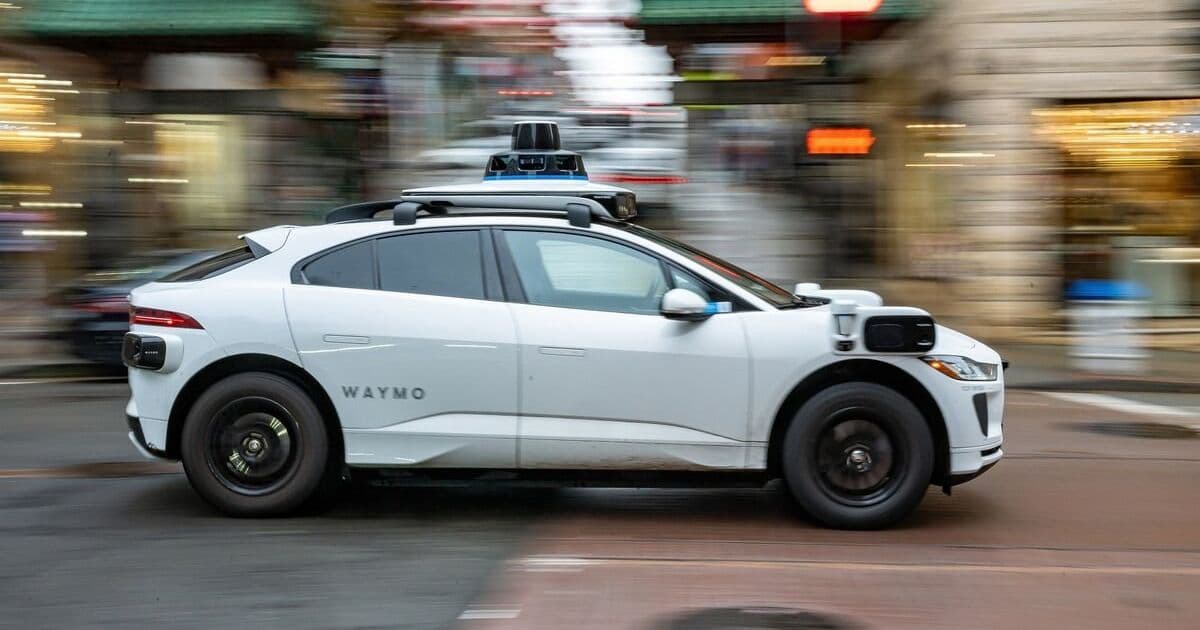
Alphabet's Waymo secures massive funding round, reflecting growing investor confidence in autonomous vehicle technology despite ongoing regulatory and technical challenges.
The autonomous vehicle industry reached a significant milestone this week as Waymo, Alphabet Inc.'s self-driving technology unit, raised $16 billion in a funding round that values the company at $126 billion. The investment, led by Sequoia Capital, DST Global, and Dragoneer Investment Group, represents one of the largest private funding rounds in the autonomous vehicle sector and signals growing investor confidence in the technology's commercial viability.
Waymo plans to use the capital to accelerate its expansion across the United States and into the United Kingdom later this year. The company currently operates robotaxi services in Phoenix, San Francisco, and Los Angeles, with plans to launch in Austin and Atlanta in the coming months. The UK expansion would mark Waymo's first international market entry.
The Scale of Investment Reflects Industry Maturation
The $16 billion raise is particularly noteworthy given the autonomous vehicle industry's history of overpromising and underdelivering. After years of hype followed by significant setbacks and consolidation, Waymo's funding round suggests that investors now see clear paths to profitability and scalability.
"This level of investment indicates that the autonomous vehicle market has moved beyond the experimental phase," said automotive industry analyst Mary Thompson. "Waymo has demonstrated consistent operational capability and is now scaling to new markets, which reduces the perceived risk for investors."
Technical Achievements Enable Expansion
Waymo's ability to secure such substantial funding stems from several technical achievements that have addressed key challenges in autonomous driving:
Safety Record: Waymo has accumulated over 20 million miles of autonomous driving on public roads with a significantly lower incident rate than human drivers. The company reports that its vehicles have been involved in 76% fewer injury-causing crashes compared to human drivers in similar conditions.
Weather Adaptability: Recent software updates have improved Waymo's performance in adverse weather conditions, particularly light rain and fog, which were previously significant limitations for autonomous vehicles.
Fleet Management: Waymo has developed sophisticated systems for managing its fleet of vehicles, including predictive maintenance, dynamic routing, and efficient charging/refueling operations.
Regulatory Progress Opens New Markets
The funding announcement comes amid growing regulatory acceptance of autonomous vehicles. Several states have passed legislation specifically addressing robotaxis, and the National Highway Traffic Safety Administration has begun developing federal guidelines for autonomous vehicle deployment.
However, challenges remain. The UK expansion will require navigating different regulatory frameworks and public acceptance issues. European regulators have generally taken a more cautious approach to autonomous vehicle deployment compared to their American counterparts.
Competition Intensifies
Waymo's massive funding round puts pressure on competitors like Cruise (owned by General Motors), Aurora, and Argo AI (backed by Ford and Volkswagen). While Cruise has faced setbacks including a high-profile accident in San Francisco that led to a temporary suspension of operations, Waymo has maintained a relatively clean safety record.
Traditional automakers are also accelerating their autonomous vehicle programs. Tesla continues to promote its Full Self-Driving capability, though it still requires driver supervision. Toyota, Hyundai, and BMW have all announced plans for commercial robotaxi services in the next three to five years.
The Path to Profitability
The autonomous vehicle industry has long struggled with the economics of scaling. Each vehicle requires expensive sensor suites, and the cost of maintaining and updating the software infrastructure is substantial. Waymo's funding suggests investors believe the company has cracked the unit economics.
"The key question is whether Waymo can achieve profitability at scale," notes transportation economist Dr. James Chen. "The technology works, but can they operate these services at a cost that makes them competitive with traditional ride-hailing while still generating returns for investors?"
Public Perception and Adoption
Despite technological progress, public acceptance of autonomous vehicles remains a significant hurdle. Surveys consistently show that a majority of Americans remain uncomfortable with the idea of riding in a driverless vehicle.
Waymo has attempted to address these concerns through transparency about its safety record and by gradually expanding its service areas. The company also offers passengers the option to speak with a human operator through an in-car communication system.
The Broader Implications
Waymo's funding round has implications beyond just the autonomous vehicle industry. It represents a significant vote of confidence in Alphabet's strategy of developing long-term, capital-intensive technologies. The investment also highlights the ongoing shift in transportation toward service-based models rather than individual vehicle ownership.
For urban planning and infrastructure, the widespread adoption of autonomous vehicles could lead to reduced parking needs, changes in traffic patterns, and new approaches to public transportation. Cities are already beginning to prepare for these changes, with some redesigning streets to accommodate both human-driven and autonomous vehicles.
Looking Ahead
The next year will be crucial for Waymo as it executes its expansion plans. Success in new markets, particularly internationally, will validate the company's technology and business model. Failure or significant setbacks could dampen investor enthusiasm for the entire autonomous vehicle sector.
Industry observers will be watching several key metrics: the rate of customer adoption in new markets, the company's ability to maintain its safety record as it scales, and progress toward profitability. The answers to these questions will determine whether Waymo's massive funding round represents the beginning of a new phase of growth for autonomous vehicles or a high-water mark before a potential industry correction.
The autonomous vehicle industry has been marked by cycles of optimism and disappointment. Waymo's $16 billion raise suggests we may be entering a period of more measured, sustainable growth based on demonstrated capabilities rather than speculative potential.
Comments
Please log in or register to join the discussion