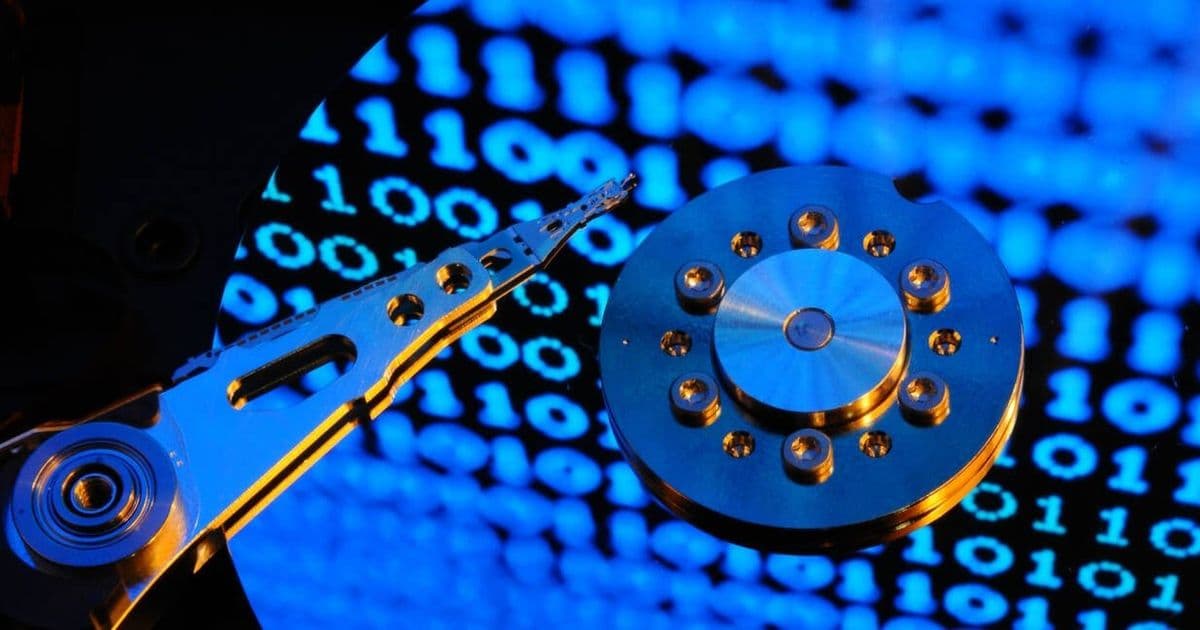
Major hard drive manufacturers have sold out their entire 2026 production capacity to hyperscalers, leaving enterprises and smaller businesses scrambling for storage solutions as AI infrastructure demands consume the market.
The AI infrastructure boom has reached a critical point where even basic hardware components are becoming scarce commodities. In a striking development that underscores the massive scale of AI data center expansion, hard drive manufacturers have completely sold out their 2026 production capacity, with some already booking orders for 2027 and 2028.
The Scale of the Shortage
Two of the three major hard drive manufacturers have confirmed they've exhausted their manufacturing output for the year. Western Digital's CEO Tiang Yew Tan stated bluntly during an earnings call: "We're pretty much sold out for calendar '26. We have firm purchase orders with our top seven customers. And we've also established long term agreements with two of them for calendar year '27 and one of them for calendar year '28."
Seagate's CEO Dave Mosley echoed this sentiment, revealing that their "nearline capacity is fully allocated through calendar year 2026, and we expect to begin accepting orders for the first half of calendar year 2027 in the coming months."
This isn't just about meeting current demand – the situation extends years into the future. Multiple cloud customers are already discussing their demand growth projections for 2028, with supply assurance remaining their highest priority.
Who's Getting Squeezed?
The impact of this shortage creates a stark divide in the tech industry. Hyperscalers – the massive cloud providers and AI infrastructure companies – have locked in their supply through multi-year agreements. Companies like Google, Amazon, Microsoft, Meta, and emerging AI players have secured their storage needs, ensuring their AI training operations and data center expansions continue uninterrupted.
However, this leaves the mid-size market and traditional enterprise IT in a precarious position. "In my view this means no meaningful open production remains for discretionary buyers except the hyperscalers," said Sid Nag, President and Chief Research Officer at Tekonyx. "This will, however, impact the mid-size market who depend on server technology."
Vlad Galabov, Omdia's Senior Research Director for Enterprise Infrastructure, confirmed the severity: "I think it will be a very tough year for the standard enterprise general purpose server and for enterprise storage. We have downgraded our forecast for those markets."
The Storage Technology Shift
The shortage is forcing companies to reconsider their storage strategies. While hard drives have largely been displaced from everyday PCs and laptops, they remain crucial for applications requiring large volumes of data storage at low cost – particularly cloud storage and AI training.
Western Digital recently announced it will ship 44 TB drives this year, with a roadmap to 100 TB by 2029. These massive capacities make HDDs attractive for AI workloads that require storing enormous datasets.
However, the shortage of traditional hard drives is creating ripple effects throughout the storage ecosystem. "We are seeing shortages of memory, storage and even CPU silicon and all of these will be dynamically affecting each other for some significant time," said Andrew Buss, IDC's senior research director for European Enterprise Infrastructure.
Interestingly, the flash storage shortage is pushing some organizations back toward hard drives. "The increase in price and shortage of media is now encouraging many who need storage to reconsider HDDs," Buss noted. "We would expect hybrid flash arrays to have a resurgence, but also HDD only arrays where the traffic patterns are suitable."
The Broader Impact
The hard drive shortage is just one symptom of a larger problem affecting the entire tech supply chain. The AI-driven demand is straining multiple components simultaneously:
- DRAM memory shortages
- NAND flash silicon scarcity
- CPU silicon constraints
- High-performance networking equipment shortages
With next-generation Rubin GPUs apparently requiring 20TB+ of fast SSD storage capacity per GPU, the pressure on storage components will only intensify.
Market Forecasts and Implications
Despite the challenges for traditional enterprise markets, the overall server and datacenter market continues to grow. Omdia raised its overall 2026 server spend forecast to $590 billion and its datacenter capex forecast to more than $1 trillion, driven entirely by the top ten cloud providers increasing their investment plans.
The concentration of spending is remarkable – Omdia forecasts that the top ten cloud service providers (Google, Amazon, Microsoft, Meta, Oracle, CoreWeave, ByteDance, xAI, Alibaba, and Tencent) will account for more than 70 percent of the server capex this year, with AI-optimized servers representing 80 percent of the total server spend.
What This Means for Businesses
For companies planning server refreshes or storage expansions in 2026, the situation presents significant challenges. The shortage and resulting price hikes affect many components, making it potentially a "bad year for a server refresh" unless you're among the hyperscalers with locked-in supply agreements.
Organizations may need to:
- Accelerate purchasing decisions for storage needs
- Consider hybrid storage architectures that combine flash and HDD
- Explore alternative storage solutions or vendors
- Reassess project timelines that depend on storage availability
- Budget for significantly higher storage costs
The hard drive shortage of 2026 serves as a stark reminder of how the AI boom is reshaping the entire technology landscape, creating winners and losers based on who can secure supply agreements and who gets left waiting in line. As AI infrastructure continues to expand at unprecedented rates, the competition for basic hardware components is likely to intensify, potentially affecting everything from cloud services pricing to the pace of AI innovation itself.
Comments
Please log in or register to join the discussion