The story of how Linux transformed from a one-man hobby project into a worldwide open-source phenomenon, driven by early contributors, community trust, and the GPL license.
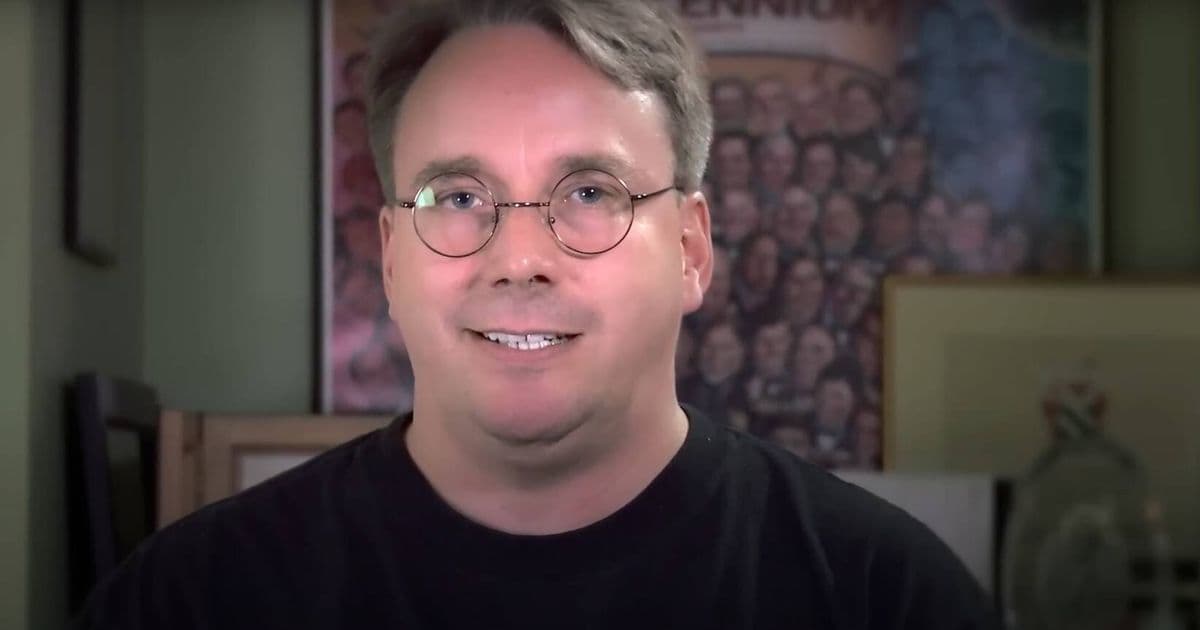
In the early 1990s, a Finnish computer science student named Linus Torvalds posted a message to an online forum that would change computing forever. Working from his University of Helsinki dorm room, Torvalds announced he was developing "a (free) operating system (just a hobby, won't be big and professional like gnu) for 386(486) AT clones." That modest declaration on August 25, 1991, marked the beginning of Linux, which today powers everything from smartphones to supercomputers.
The Humble Beginnings
The project started simply enough. Torvalds and his friend Lars Wirzenius spent their university days tinkering with PCs, playing computer games like Prince of Persia, exploring Usenet (the social networking of the time), and learning about Unix. During the spring and summer of 1991, Torvalds began hacking on a simple Unix-like kernel for his 386 PC, driven by curiosity about operating systems and a desire to build something more capable than Minix, an academic Unix clone.
When Torvalds released the first public snapshot, Linux 0.02, on October 5, 1991, it contained about 10,000 lines of code. The audience was anyone who happened to read that Usenet thread and felt like experimenting with a half-finished kernel. At the time, Torvalds wrote: "Are you without a nice project and just dying to cut your teeth on an OS you can try to modify for your needs?" The answer from the tech community was a resounding yes.
The Name Game
Interestingly, Torvalds initially wanted to call his creation "Freax," a combination of "free," "freak," and "x" to evoke its Unix-like nature. However, when he uploaded the code to the FUNET FTP server, his friend Ari Lemmke disliked the name and renamed the project directory "Linux" instead. That simple act of renaming would become one of the most recognized names in technology.
Early Installation Challenges
Installing Linux in those early days was far from user-friendly. Wirzenius recalled that Torvalds needed to provide an installation method and instructions. Since Torvalds only had one PC, he visited Wirzenius to install Linux on his machine. Wirzenius was taking a nap while Torvalds did the hard work, recommending this as the preferred method of Linux installation. Torvalds, however, quipped that Wirzenius was an "early victim of my efforts."
At this stage, development decisions were entirely up to Torvalds. He would decide what to work on next—whether adding a virtual memory system, getting Bash and GCC to run, or fixing a race condition in the buffer cache so the kernel could finally recompile itself. The barrier to entry was technical; you needed a 386 and comfort with compilers and patches, but socially, the project was still effectively a one-man show that others only tested and tinkered with at the margins.
The First Contributors
The turning point came when Torvalds not only accepted outside changes but actively encouraged them, treating his kernel as a commons that others could extend. One of the first contributors—and still a Linux maintainer today—was Theodore "Ted" Ts'o. He created the first Linux mirror in North America.
Ts'o explained the early challenges: "I started playing with Linux sometime in September 1991. At the time, there was only a 64 kbps link between Finland and the US. Fortunately, Linux sources were a lot smaller back then—the sources for Linux 0.11 was only 93K. Still, we had to share this European interconnect with everyone else using the internet at the time, and so download times could suffer."
Since MIT had multiple 10 megabit microwave links while most universities had only 1.5 megabit T1 lines, Ts'o set up an FTP server using his VAXstation 3100 on his desk, which was called tsx-11.mit.edu. This made Linux accessible to developers on this side of the Atlantic and marked the beginning of Linux's transformation from a European project to a global one.
Ts'o's first contribution to the kernel was the imalloc.c library in Linux 0.11, the first general-purpose kernel memory allocator for Linux. This kind of contribution exemplified how the project was beginning to evolve from Torvalds' solo effort to a collaborative endeavor.
Building Trust Through Community
Another crucial moment in Linux's evolution came when the community rallied to upgrade Torvalds' hardware. His 386 PC didn't have the horsepower he needed, and he couldn't afford a bigger, better machine. That's when H. Peter Anvin stepped up to organize what was essentially an early crowdfunding campaign.
Torvalds recalled: "We ran what was essentially a very early 'GoFundMe' to upgrade my first machine: collected checks in the US and sent the result to me back when international banking fees were ridiculous, and that was how I upgraded my original 386 to a 486DX/2."
Anvin explained the trust-building process: "Linus was still making monthly payments on his computer, and we were all pretty upset about that for obvious reasons. It wasn't really a question of 'If something was going to happen,' but how? In those days, transferring money between countries was expensive. We're talking $100, $150 off the top, which, for a bunch of students, would pretty much limit what you could afford, and we didn't know each other. We didn't even know what the other looked like! How could we establish trust? So I had people send checks to my university mailbox."
This crowdsourced PC not only gave Torvalds better hardware but also helped foster trust among early Linux community members. It was this trust that enabled Linux to grow from a one-man show to a group effort.
The GPL Revolution
Another crucial structural shift came in 1992 when Torvalds moved the kernel under the GNU General Public License (GPL). This clarified that anyone could study, modify, and redistribute the code as long as improvements remained free. That made it possible for developers to build distributions that combined the Linux kernel with GNU tools and other free software.
Early distributions in 1992-1993 transformed Linux from a kernel hackers compiled themselves into complete systems ordinary users could install, widening the contributor base significantly. The GPL created a legal framework that ensured the collaborative nature of the project would continue and that no single entity could take control of the code.
From Hobby to Global Phenomenon
Looking back, the early Linux developers couldn't have imagined how successful their project would become. Hohndel recalled that in 1992, they were joking about maybe building a "real" X terminal based on PC hardware in a few years, which would be much cheaper than expensive dedicated X terminals. "Not one of us talking about this thought that [it] was actually realistically possible, but it seemed like a fun thing to speculate about."
Thirty-three years later, Linux runs on everything from smartphones to supercomputers, from embedded devices to the world's most powerful servers. What started as one person's hobby project has become one of the most important pieces of software in the world, all because of the collaborative spirit that emerged from those early Usenet posts and FTP servers.
The story of Linux's evolution from a solo act to a global jam session demonstrates the power of open collaboration, the importance of community trust, and how the right licensing can create an ecosystem that outlasts any individual contributor. Today, while Torvalds rarely codes and sees his job more as a manager than a developer, the project he started continues to thrive through the contributions of thousands of developers worldwide.
Comments
Please log in or register to join the discussion