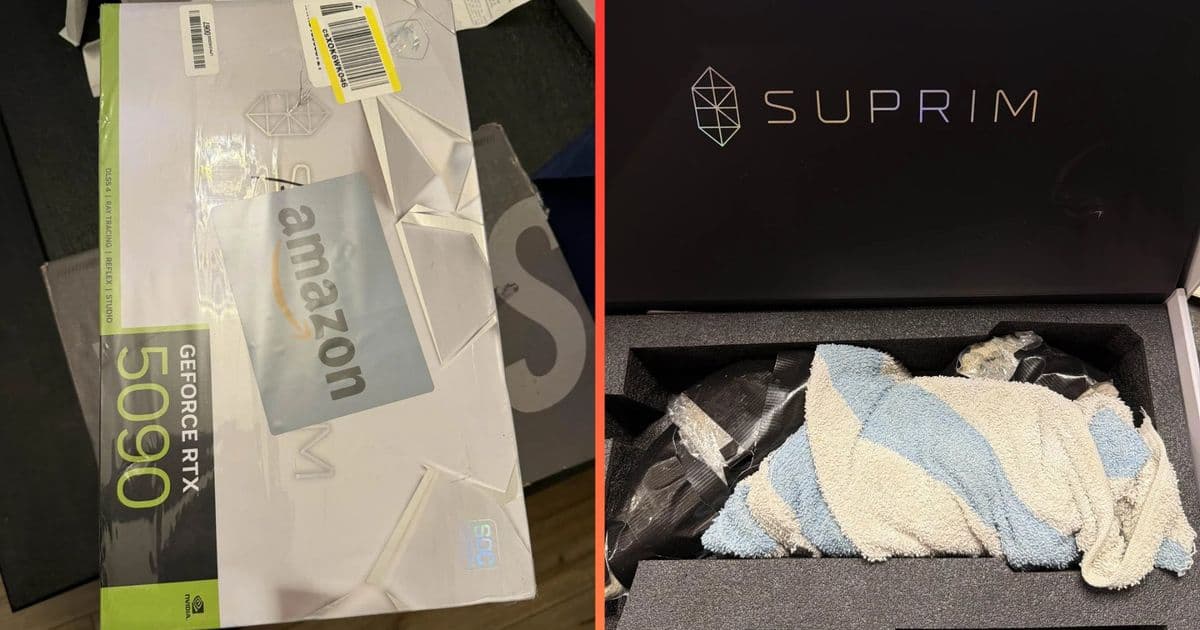
A Redditor's $3,000 MSI Suprim RTX 5090 order from Amazon Resale arrived with rocks and a towel instead of the graphics card, highlighting a recurring fraud pattern where returned items are never properly inspected before being resold.
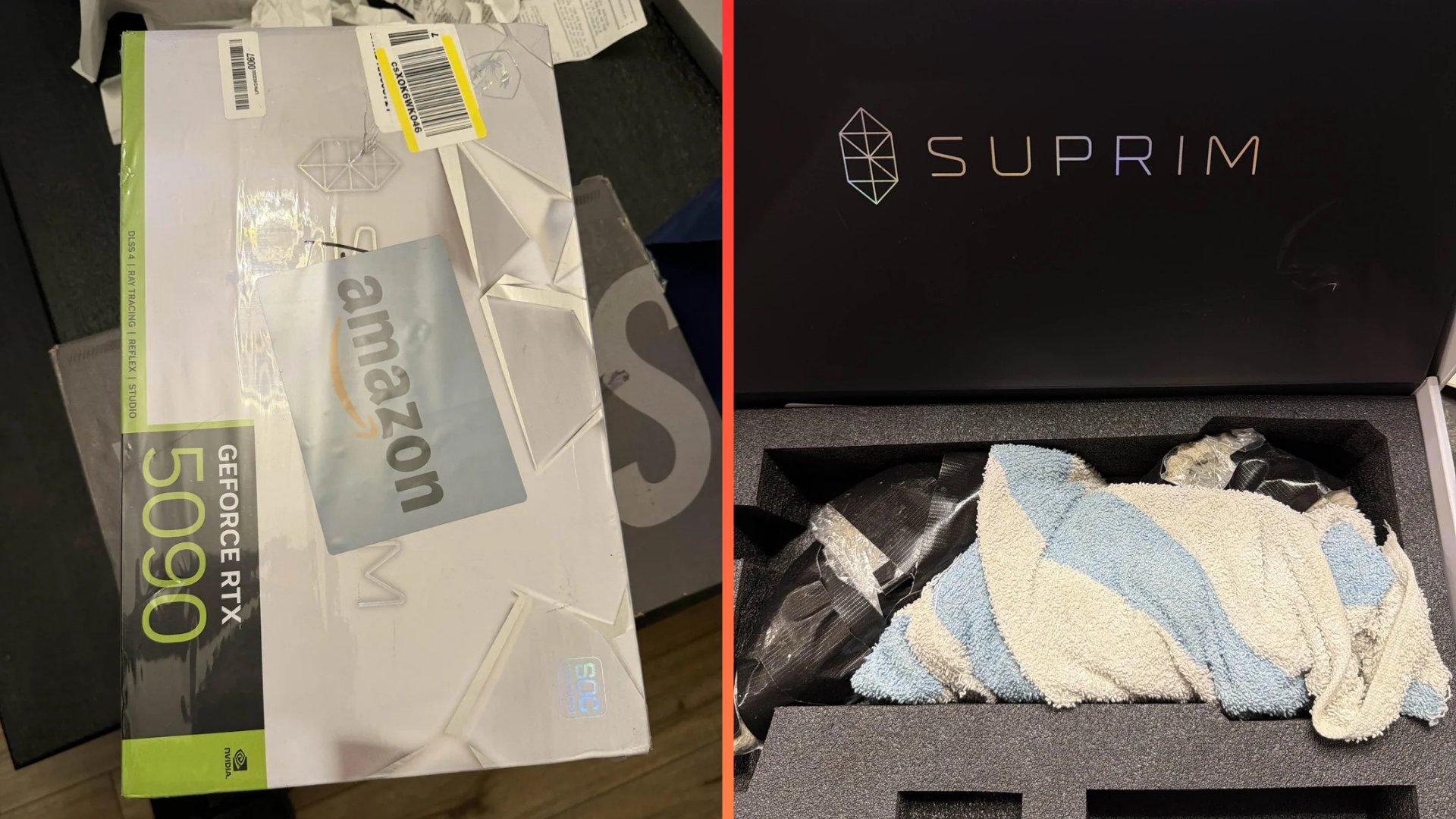
A customer who ordered a $3,000 MSI Suprim RTX 5090 graphics card from Amazon Resale opened their package to find rocks and a towel instead. The incident, shared on Reddit's r/pcmasterrace subreddit, represents the fourth time the original poster has experienced this specific scam, according to their own account. The case exposes a critical vulnerability in Amazon's resale supply chain: returned items receive minimal inspection before being added back to inventory.
The victim, u/Dazzling_Course8755, documented the unboxing after missing the opportunity to inspect the package with the delivery driver. The box showed signs of previous handling, with a barely intact seal and an LPN (Liquidated Product Network) label indicating the item had been returned previously. This pattern matches classic return fraud methodology: a previous buyer purchases the legitimate RTX 5090, swaps it for an equivalent-weight package of rocks and a towel, and returns it to Amazon. The retailer's fulfillment centers, processing millions of returns daily, apparently failed to verify the contents before restocking the item for resale.
The RTX 5090 represents the pinnacle of consumer graphics performance, with our GPU 2026 price tracker listing the MSI Suprim model at a minimum of $3,000. These cards feature advanced process nodes, likely built on TSMC's 3nm or 2nm fabrication process, delivering substantial performance gains over previous generations. The scam's sophistication lies in matching the original packaging weight—rocks provide the necessary heft to deceive basic weight checks during return processing.
This incident follows a nearly identical case from last month where another customer received a large brick instead of an RTX 5080 they ordered. That earlier case prompted an investigation, suggesting Amazon's fraud detection systems may be reactive rather than preventive. The recurring nature of these scams indicates a systemic weakness in Amazon's resale verification process, particularly for high-value electronics.
Amazon Resale (formerly Amazon Warehouse) operates on a model where returned items are inspected, graded, and resold at discounted prices. The grading system includes categories like "Used - Like New," "Used - Very Good," and "Used - Acceptable," with each grade implying a different level of inspection. For premium electronics like RTX 5090 cards, customers expect at least functional testing and visual inspection of contents. The rocks-and-towel incident suggests this inspection is either cursory or completely absent for certain return categories.
The financial implications extend beyond individual losses. Each fraudulent return represents a direct loss for Amazon, as they must refund the customer and absorb the cost of the worthless returned item. For high-value items like RTX 5090s, these losses accumulate quickly. The company's 2023 financial reports show increasing losses from fraud and returns, though specific figures for electronics return fraud aren't disclosed.
From a supply chain perspective, this incident reveals how consumer electronics resale markets have become targets for organized fraud. The RTX 5090's high demand and limited availability create a perfect storm: legitimate buyers struggle to find cards at MSRP, while fraudsters exploit Amazon's return system to extract value. The rocks-and-towel method is particularly effective because it bypasses weight-based detection systems commonly used in fulfillment centers.
For consumers considering Amazon Resale purchases of high-value electronics, several precautions are advisable. First, always inspect packages immediately upon delivery, preferably with the driver present. Second, document the unboxing process with video, as u/Dazzling_Course8755 did. Third, consider purchasing from authorized retailers for items exceeding $1,000, despite potential price premiums. Finally, understand that Amazon's return policy for Resale items typically allows returns within 30 days, but the process becomes more complex when the item itself is fraudulent.
Amazon's response to such incidents generally involves full refunds and investigations, but the company rarely discloses systemic fixes. Industry analysts suggest that implementing blockchain-based return tracking or requiring video verification for high-value returns could reduce fraud, but these measures would increase operational costs. For now, the rocks-and-towel scam continues to exploit the gap between Amazon's scale and its inspection capabilities.
The broader semiconductor market context makes this incident more significant. With RTX 5090 supply constrained by manufacturing capacity and high demand, every legitimate card matters. Fraudulent returns effectively remove working GPUs from circulation, potentially exacerbating shortages. This creates a secondary market where even "resale" items carry risk, pushing consumers toward direct retail channels and potentially increasing overall market prices.
As GPU prices remain elevated due to manufacturing costs and demand, the financial stakes for both consumers and retailers continue to rise. Each successful fraud incident like this one represents not just a $3,000 loss, but also eroding consumer confidence in resale markets—a confidence that's essential for maintaining circular economy models in electronics.
Comments
Please log in or register to join the discussion