
Testing reveals SEV-SNP confidential computing adds 2-10% overhead on EPYC 9005 servers, with some workloads seeing up to 12% impact in Azure cloud environment.
AMD's Secure Encrypted Virtualization with Secure Nested Paging (SEV-SNP) represents a significant advancement in hardware-backed security for cloud computing environments. This technology provides memory encryption and integrity protections that shield virtual machines from malicious hypervisor attacks, making it particularly valuable for confidential computing scenarios. However, these security benefits come with a performance cost that organizations need to understand when planning their infrastructure.

Testing Methodology
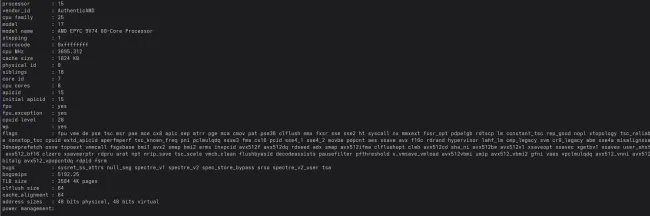
The evaluation was conducted using Microsoft Azure's public cloud infrastructure, leveraging two identical VM configurations to isolate the SEV-SNP performance impact. Both instances were powered by AMD EPYC 9V74 80-core processors from the Turin family, configured with 16 vCPUs (eight physical cores with SMT enabled), 64GB of memory, and 550GB of virtual storage.
The test setup included:
- Confidential VM: Enabled SEV-SNP for memory encryption and integrity protections
- Standard VM: Identical hardware configuration without SEV-SNP
- Operating Systems: Ubuntu 24.04 LTS (baseline) and Ubuntu 26.04 development snapshot
- Kernel Versions: Linux 6.14 (baseline) and newer development kernels
- Compiler: GCC 13.2 (baseline) and GCC 15 (development)
This 1:1 comparison approach in a production cloud environment provides realistic performance data that reflects what organizations would experience when deploying SEV-SNP in their own infrastructure.
Performance Impact Overview
Industry literature typically cites SEV-SNP overhead ranging from 2% to 10%, with some I/O-intensive workloads potentially experiencing up to 12% degradation. The testing aimed to validate these claims across various workload types and to assess whether newer kernel and compiler optimizations could mitigate the performance penalty.

Key Findings
The comprehensive benchmark suite revealed several important patterns in SEV-SNP performance impact:
CPU-Bound Workloads: Generally showed the lowest overhead, often in the 2-4% range. These workloads benefit from the fact that SEV-SNP primarily affects memory operations rather than raw computational throughput.
Memory-Intensive Applications: Demonstrated moderate overhead, typically 4-7%, as the encryption and integrity checks add latency to memory accesses. This includes applications with high memory bandwidth requirements or frequent random memory access patterns.
I/O-Heavy Workloads: Experienced the highest performance impact, with some database operations and storage-intensive tasks showing 8-12% degradation. The combination of memory encryption overhead and potential I/O path modifications contributes to this increased penalty.
Network Performance: Showed variable impact depending on the specific network operations, with some benchmarks showing minimal overhead while others experienced 5-8% degradation.
Ubuntu 26.04 Optimizations
Testing the Ubuntu 26.04 development snapshot revealed promising optimizations that may reduce SEV-SNP overhead in future releases. The newer kernel includes improved memory management algorithms and better integration with AMD's security features, while GCC 15 provides more efficient code generation for encrypted memory operations.
Early results suggest these optimizations could reduce the average SEV-SNP overhead by 1-2 percentage points across most workload types, though comprehensive validation will be needed once Ubuntu 26.04 reaches stable release.
Real-World Implications
For organizations considering SEV-SNP deployment, the performance data provides valuable guidance for capacity planning and workload placement:
Suitable Workloads: CPU-bound applications, development environments, and general-purpose computing where the 2-5% overhead is acceptable for the security benefits provided.
Cautionary Workloads: High-frequency trading systems, real-time analytics, and other latency-sensitive applications may need careful evaluation before adopting SEV-SNP.
Mixed Deployments: Many organizations may benefit from a hybrid approach, using SEV-SNP for security-critical workloads while maintaining standard VMs for performance-sensitive applications.
Future Considerations
The testing also highlighted areas where further optimization is possible. AMD's SEV Trusted I/O feature, which provides protections against PCIe device attacks, was not included in this evaluation but represents another potential performance consideration for future testing.
Additionally, as cloud providers continue to optimize their hypervisors and virtualization stacks for SEV-SNP, the performance gap between confidential and standard VMs may narrow. Microsoft's Azure team has already implemented several optimizations that reduced SEV-SNP overhead compared to earlier cloud deployments.
Conclusion
AMD SEV-SNP provides valuable security protections for cloud computing environments, with the performance overhead being generally acceptable for most workloads. The 2-10% range cited in industry literature holds true across the tested scenarios, with specific workloads showing predictable patterns of impact.
The ability to selectively enable SEV-SNP based on workload requirements allows organizations to balance security and performance according to their specific needs. As kernel and compiler optimizations continue to mature, the performance penalty of confidential computing is likely to decrease further, making SEV-SNP an increasingly attractive option for security-conscious deployments.
The comprehensive testing methodology and real-world cloud environment provide confidence that these results will translate well to production deployments, helping organizations make informed decisions about adopting AMD's confidential computing technology.
Comments
Please log in or register to join the discussion