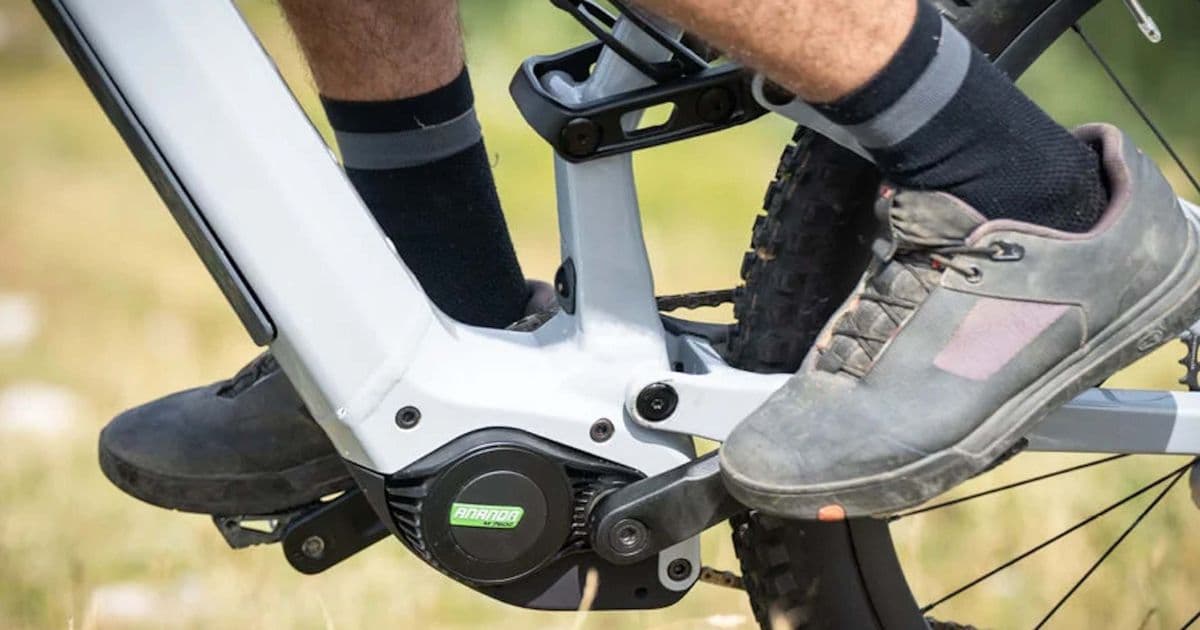
Ananda's new M7600 mid-drive motor enters the competitive e-bike market with a claimed 850-watt peak output and 120 Nm of torque, positioning itself as a high-performance alternative to established brands like Bosch for demanding applications like e-mountain biking.
The e-bike motor market has long been dominated by a few major players, with Bosch's Performance Line and CX systems setting the benchmark for reliability and integration. Now, Ananda, a manufacturer whose components already appear in various e-bike models, is making a direct play for the high-performance segment with its newly unveiled M7600 mid-drive motor. This isn't a subtle entry; the specifications point to a motor designed for riders who prioritize raw power and climbing capability over lightweight efficiency.
What's New: The M7600's Performance Claims
The headline specification is the M7600's peak power output. Ananda specifies 850 watts for the 36-volt system version. For context, most consumer e-bike motors in Europe and North America are electronically limited to 250 watts of continuous power to comply with regional regulations. The 850-watt figure represents the motor's maximum short-term capability, utilized during high-stress moments like rapid acceleration from a stop or tackling steep, technical climbs. The continuous rated output is listed at the standard 250 watts.
The company has not yet published peak or continuous output figures for the 48-volt model, which is common for higher-performance applications. The 48V system would typically allow for even greater peak power potential, though efficiency and heat management become more critical factors.
Torque is where the M7600 aims to make its strongest impression. With a maximum torque rating of 120 Nm, it enters territory occupied by the most powerful mid-drive motors available. For comparison, Bosch's most powerful Performance Line CX motor generates 85 Nm, while Shimano's EP801 tops out at 85 Nm as well. A 120 Nm rating suggests the motor is engineered for e-mountain bikes (e-MTBs) and cargo applications where overcoming significant resistance is a primary concern.
Technical Implementation and Design
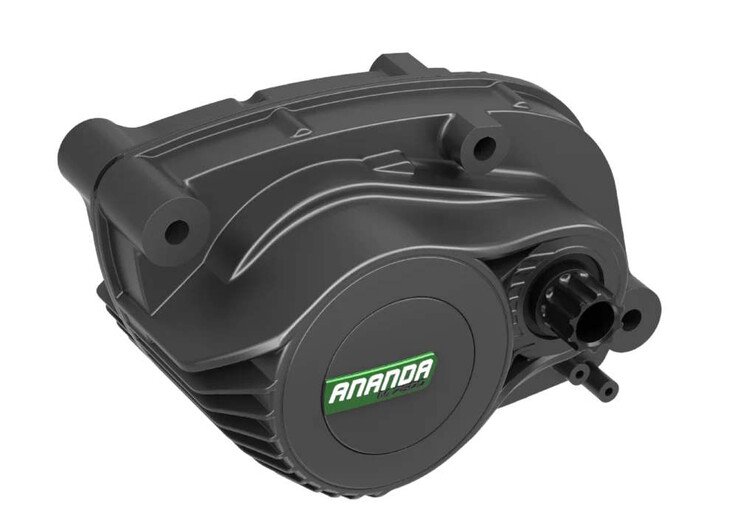
The M7600 is a mid-drive motor, meaning it's positioned at the bike's bottom bracket and drives the crankset directly. This design is inherently more efficient than hub motors, as it leverages the bike's existing gears. Ananda has integrated both pedal sensors and torque sensors into the system. This combination is standard for modern mid-drives, allowing the motor to provide assistance proportional to the rider's pedaling effort. The company claims the sensor system offers "exceptionally quick" response times with "virtually no noticeable delay," a critical factor for rider confidence, especially on technical terrain where immediate power delivery is needed.
Cooling is a significant engineering challenge for high-output motors, as heat buildup can lead to performance throttling or long-term component degradation. Ananda states the M7600's cooling system is "specifically designed for e-mountain bikes." While details are sparse, this likely involves a combination of heat sinks, thermal paste, and potentially a fan or liquid cooling loop to manage the heat generated by sustained high-power output during long climbs. The motor's weight of 2.8 kg (6.17 lbs) is notable; it's heavier than many competitors. For instance, the Bosch Performance Line CX weighs approximately 2.9 kg, so the M7600 is in a similar weight class, not a lightweight option.
The motor also features app connectivity, a modern standard that allows riders and mechanics to customize power profiles, update firmware, and diagnose issues. This is essential for integrating the motor into the broader e-bike ecosystem, which increasingly relies on digital interfaces for user control and maintenance.
Market Context and Competitive Landscape
The mid-drive motor market is fiercely competitive. Bosch, Shimano, Brose, and TQ-HPR are the established leaders, each with a loyal following and specific strengths. Bosch is renowned for its seamless integration, reliability, and extensive dealer network. Shimano is favored for its integration with Shimano's own drivetrain components. Brose motors are known for their quiet operation and smooth power delivery. TQ-HPR has gained traction with its ultra-quiet, lightweight systems, particularly in the premium road and gravel e-bike segment.
Ananda's strategy with the M7600 appears to be a direct challenge to the high-torque segment dominated by Bosch's CX and Brose's S-Mag. By offering higher peak power and torque on paper, Ananda is targeting a specific rider demographic: e-MTB enthusiasts and riders in mountainous regions who need maximum assistance for steep, sustained climbs. The emphasis on a cooling system designed for e-MTBs further solidifies this target market.
However, raw specifications are only part of the equation. Real-world performance depends on the motor's efficiency, which directly impacts battery range. A high-torque motor that draws excessive power can drain a battery quickly. The quality of the power delivery curve—how smoothly the power ramps up and down—is also crucial for a natural riding feel. Reliability and long-term durability, especially under the high stress of e-MTB use, are factors that can only be proven over time and through extensive user feedback.
Who Is This Motor For?
Based on the specifications and design intent, the Ananda M7600 is positioned for:
- E-Mountain Bikers: Riders who prioritize climbing power and technical trail performance over weight or range. The high torque and dedicated cooling system are tailored for this use case.
- Cargo and Utility E-Bike Manufacturers: The high torque output is beneficial for applications requiring heavy loads or frequent stop-start riding in hilly areas.
- OEMs Seeking a High-Performance Alternative: Bicycle manufacturers looking to differentiate their models with a motor that boasts superior power figures compared to mainstream options.
It is less suited for:
- Commuters and Urban Riders: Where lighter weight, quieter operation, and longer range are typically more important than peak power.
- Riders in Flat Terrain: The high-torque advantages would be largely unnecessary.
Availability and Next Steps
As of the announcement, no specific e-bike models equipped with the M7600 have been announced. The motor is likely in the sampling phase, available to OEM partners for integration and testing. Widespread availability in consumer e-bikes will depend on partnerships with major bicycle brands. The official Ananda product page provides the core specifications, but details on pricing, warranty, and specific OEM partnerships are not yet public.
The entry of the M7600 into the market represents a continued trend of specialization in e-bike motors. While the all-rounder market is well-served, there is growing demand for motors optimized for specific disciplines. Ananda is betting that there is a significant enough segment of riders who will prioritize the M7600's power and torque figures over the established reputation and integration of the current market leaders. The success of this motor will ultimately be determined not by its paper specs, but by its real-world performance, reliability, and the quality of the e-bikes that choose to integrate it.
Comments
Please log in or register to join the discussion