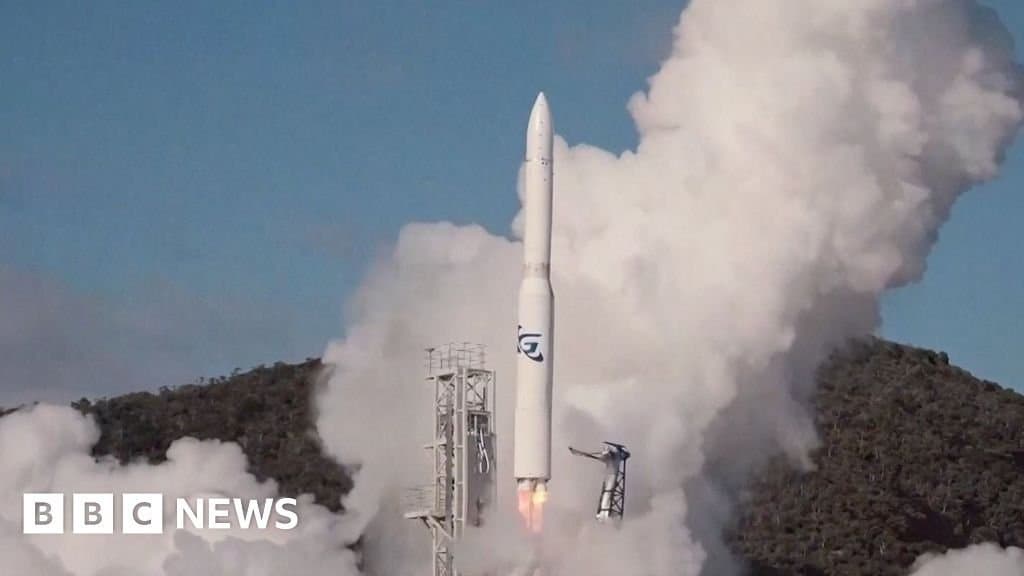
Australia's first domestically designed orbital rocket, Eris, crashed just 14 seconds after liftoff during its debut test flight. Gilmour Space Technologies confirmed no injuries and plans a second launch within six months, calling the attempt a 'giant leap' for the nation's space ambitions. The failure highlights the brutal challenges of rocket development as Australia pushes to join the orbital launch club.
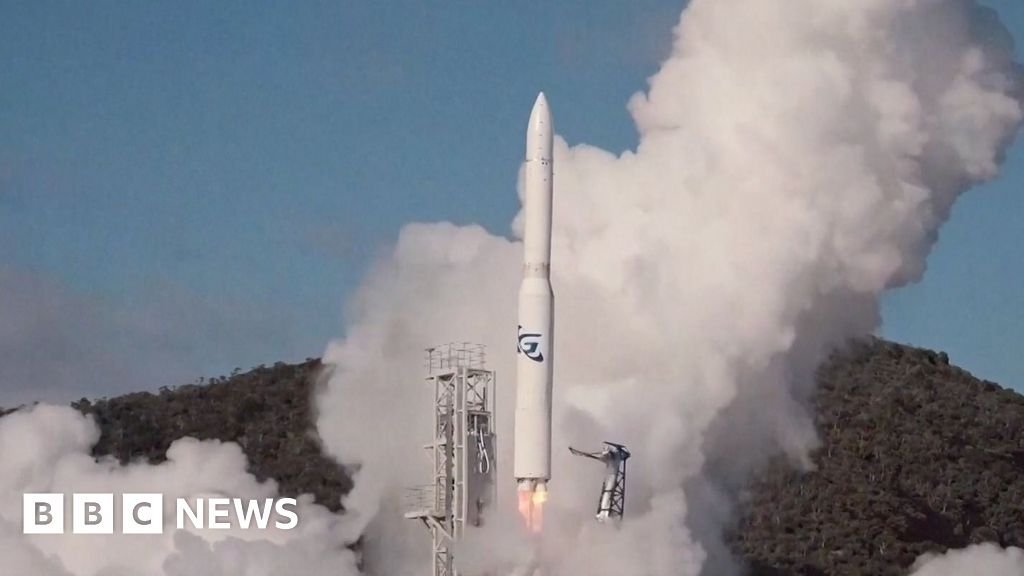
In a dramatic setback for Australia's space ambitions, the country's first indigenously designed orbital rocket crashed mere seconds after its inaugural liftoff. The Eris rocket, developed by Queensland-based Gilmour Space Technologies, managed only 14 seconds of flight before losing momentum and plunging back to Earth at the Bowen Orbital Spaceport in North Queensland. Video footage captured the vehicle ascending briefly before tilting sideways and exploding in plumes of white smoke—a sobering reminder of aerospace engineering's razor-thin margins.
Gilmour Space acknowledged the failure in a statement but framed it as a critical learning milestone: "While not the outcome we hoped for, this test represents a giant leap for Australia's sovereign space capability." Crucially, no personnel were injured in the incident. The company confirmed a second launch attempt is slated within six to eight months, suggesting engineers already have diagnostic leads from the telemetry-rich flight.
The Weight of a Nation's Space Dreams
This launch carried symbolic significance beyond technical validation. Australia has been racing to establish itself in the $500 billion global space economy, with Gilmour Space positioned as its flagship launch provider. The three-stage, 25-meter-tall Eris rocket—powered by proprietary hybrid engines—aims to carry 300kg payloads to low-Earth orbit. Success would have marked Australia as one of only 11 nations capable of orbital launches from their own soil.
Rocket scientists emphasize that early failures are endemic to aerospace development. "First-flight anomalies are the brutal tuition fees of rocketry," remarked Dr. Jason Held, CEO of Saber Astronautics. "SpaceX's Falcon 1 failed three times before reaching orbit. What matters is how Gilmour's engineers translate this data into fixes."
Engineering Challenges in the Spotlight
While the exact failure cause remains unconfirmed, aerospace engineers point to several critical phases in the first 15 seconds of flight:
- Thrust vector control: Maintaining precise engine alignment during initial ascent
- Hybrid propulsion stability: Gilmour's oxygen/paraffin-based system faces combustion oscillation risks
- Aerodynamic stress: Max pressure occurs seconds after liftoff as rockets punch through "Max Q"
# Simplified thrust-to-weight calculation during initial ascent
thrust = 190_000  # Newtons (estimated Eris thrust)
weight = 30_000 * 9.8  # N (30-ton rocket * gravity)
thrust_to_weight_ratio = thrust / weight  # Must exceed 1.0 to lift off
Industry analysts note that Gilmour's rapid timeline—founded in 2012 and now testing orbital hardware—is unusually aggressive. The company recently secured AU$61 million in federal funding as part of Australia's push to capture 10% of the global space market by 2030.
The Path Forward
Despite the visible devastation, the failure yielded invaluable data. Gilmour's engineers reportedly recovered multiple flight recorders, which will scrutinize thousands of sensor readings. The company's swift commitment to another launch suggests confidence in isolating the failure mode—whether in propulsion, avionics, or structural dynamics.
As Australia's space sector watches closely, this crash underscores a universal truth in rocket development: orbital access is earned through iterative failure. Gilmour's next six months will involve forensic engineering, component testing, and the relentless pursuit of that elusive first orbit—a milestone that would transform Australia from spectator to player in the new space race.
Source: BBC News
Comments
Please log in or register to join the discussion