
AWS Distinguished Scientist Byron Cook advocates for integrating formal verification—automated reasoning—with generative AI to combat false assertions and hallucinations. This neuro-symbolic hybrid approach mathematically verifies LLM outputs, enabling trustworthy applications in finance, security, and agentic systems. AWS already uses it to validate billions of real-time decisions and critical infrastructure.

Generative AI’s tendency to "hallucinate"—confidently output false or nonsensical information—remains a core weakness as enterprises deploy large language models (LLMs) into production. At the recent AWS Financial Services Symposium, Distinguished Scientist Byron Cook presented a compelling solution: fusing generative AI with automated reasoning, a decades-old discipline rooted in mathematical logic, to create verifiably truthful systems.
The Logic Gap in Modern AI
Automated reasoning (also called symbolic AI or formal verification) uses algorithmic logic to prove assertions true or false across infinite scenarios—without exhaustive testing. Cook demonstrated with a code snippet: A loop subtracting integer Y from X must terminate because logic dictates X will eventually fall below Y.
"Reasoning takes a model and lets us talk accurately about all possible data it can produce," Cook explained. "We find step-by-step arguments verifiable via mathematical logic. This solves problems in seconds that would take lifetimes to brute-force."
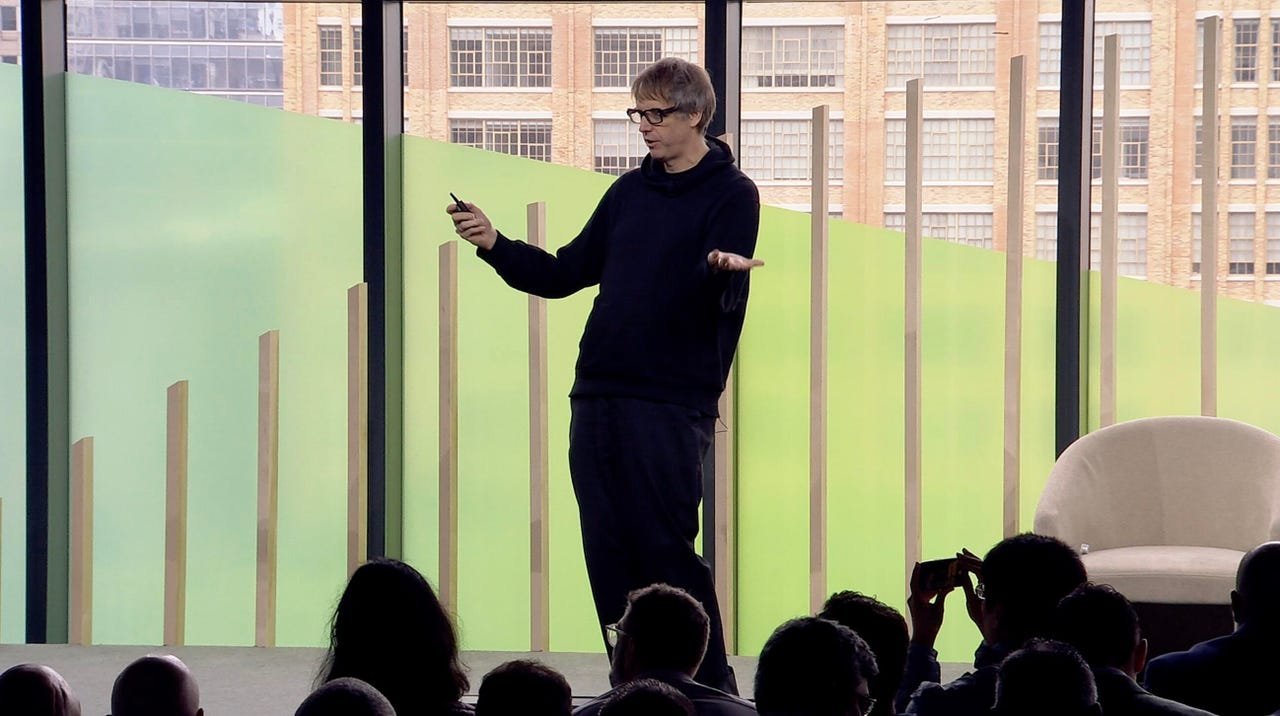 Caption: AWS Distinguished Scientist Byron Cook detailing automated reasoning's role in trustworthy AI.
AWS’s Production-Proven Framework
For over a decade, AWS has harnessed automated reasoning internally via Zelkova, a system translating policies into logical formulas. Key applications include:
- IAM Analyzer: Verifies security policies (e.g., "data is always encrypted") in seconds, replacing impractical exhaustive checks.
- Network Security: Confirms invariants like "unauthorized access never occurs" across complex distributed systems.
- S3 Consistency Proofs: Uses logical voting protocols to guarantee object storage reliability.
Financial institutions like Goldman Sachs and Bridgewater leverage this for auditable compliance, accelerating deployments while cutting costs.
Merging Logic and LLMs: The Neuro-Symbolic Future
Cook emphasized that automated reasoning complements generative AI’s weaknesses. AWS’s Automated Reasoning Checks (in preview) converts chatbot responses into logical statements for validation. For example:
# Simplified logical check for a loan approval bot
assert loan_approval_time <= 1 “business day” given (application_complete and credit_score > 700)
If an LLM claims approvals take “1 business day,” the system mathematically verifies this against policy rules—providing auditable proof or counterexamples.
Why This Matters for Developers and Architects
As AI agents automate high-stakes decisions (e.g., financial transactions or code deployments), Cook argues correctness becomes non-negotiable. Neuro-symbolic approaches:
- Eliminate Hallucinations by grounding outputs in verifiable facts.
- Enable Trustworthy Agents: Distributed agent systems can be validated like AWS’s S3 protocols.
- Democratize Precision: Non-experts define rules in natural language; reasoning handles rigorous enforcement.
Critics like Gary Marcus have long advocated such hybrids. Now, AWS’s scale proves their viability—processing 2 billion authorization requests per second with logical guarantees.
Beyond the Hype Cycle
Cook’s vision positions automated reasoning as “artificial super-intelligence” for deterministic truth. As generative models evolve, this framework offers a path to reliability where it matters most—verifying actions impacting careers, finances, and security. For engineers, tools like Zelkova hint at a future where AI doesn’t just generate answers but proves them.
Source: Tiernan Ray, ZDNET, July 26, 2025.
Comments
Please log in or register to join the discussion