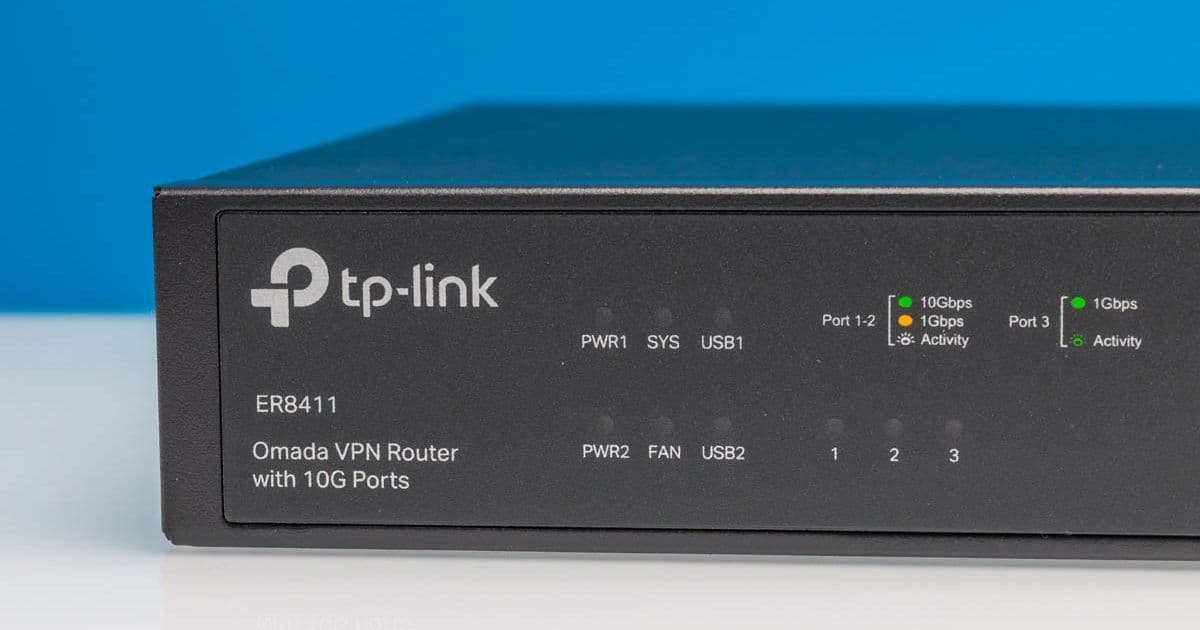
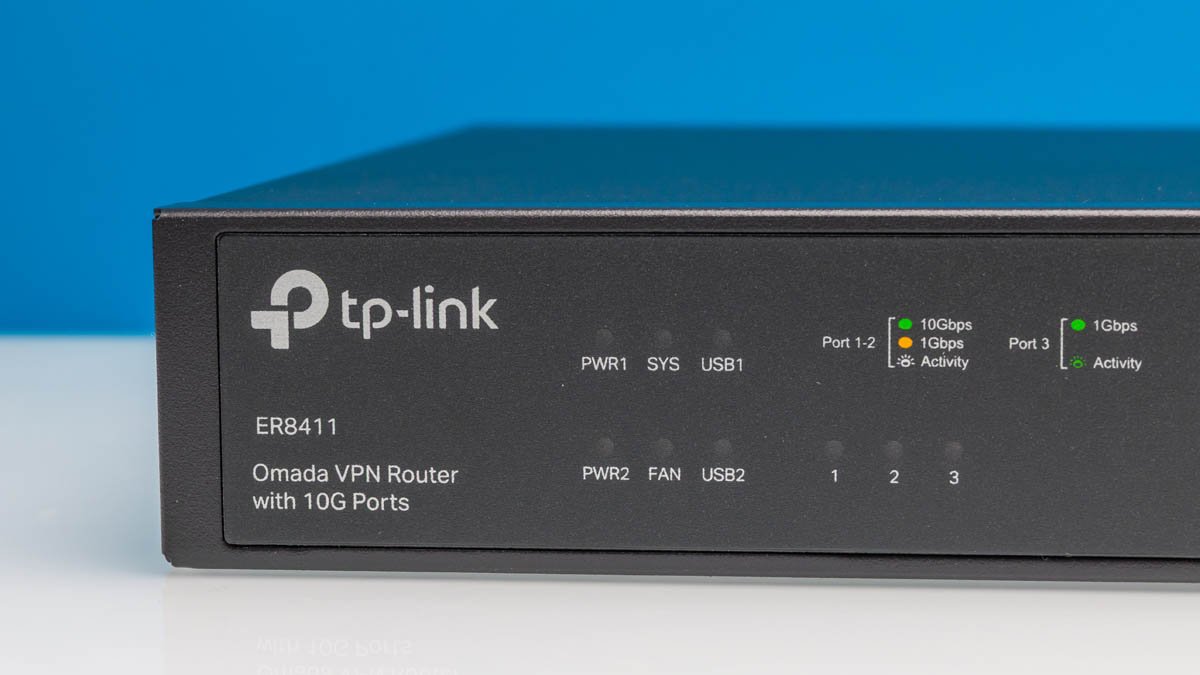
TP-Link's Omada VPN Gateway ER8411 delivers impressive 10Gbps throughput for $399, but with a catch - it's designed for business environments with enterprise management requirements.
The TP-Link Omada VPN Gateway ER8411 represents an interesting entry in the SMB networking space, offering 10GbE connectivity at a price point that challenges traditional enterprise solutions. At $399, this 1U rackmount gateway packs considerable performance potential, though our testing revealed some important caveats for potential buyers.
Hardware Design and Build Quality
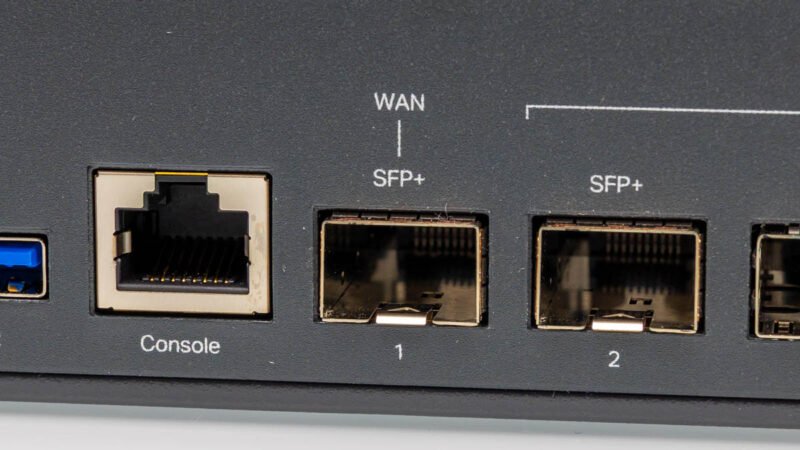
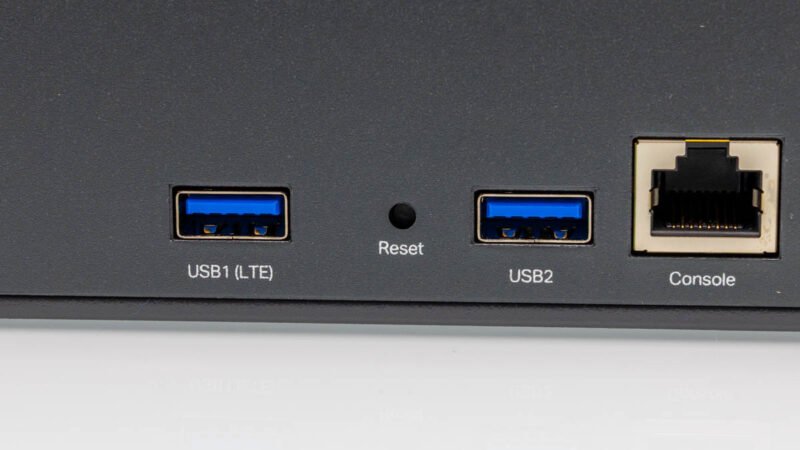
The ER8411 immediately stands out with its professional 1U chassis design, clearly positioning it as part of TP-Link's business product line rather than consumer gear. The front panel features a clean layout with two USB ports - USB1 specifically designated for LTE connectivity, a reset button, and a console port for management access.
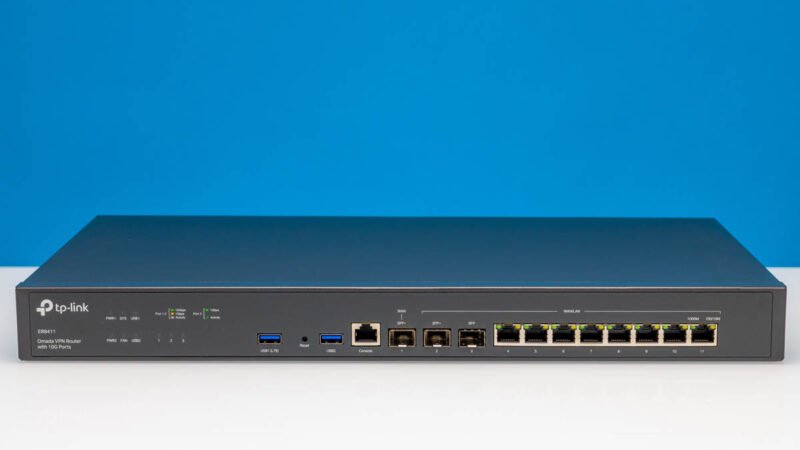
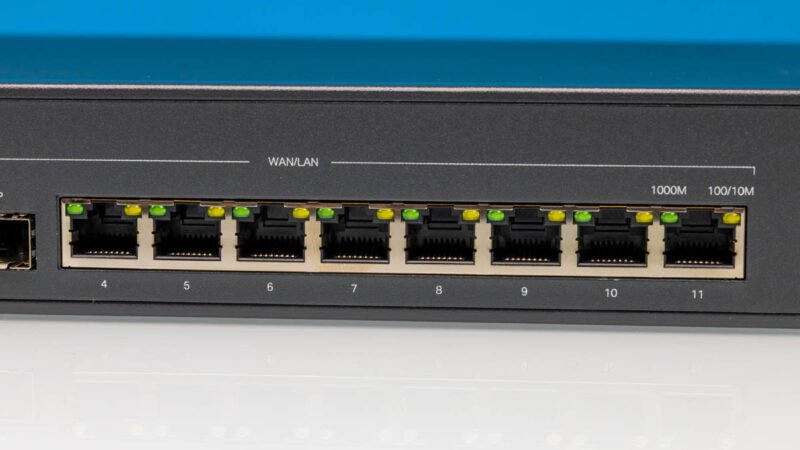
Moving to the rear, TP-Link has equipped this gateway with an impressive port selection that justifies its positioning. The standout features are the SFP+ WAN port and SFP+ LAN port, both capable of 10Gbps throughput. A third SFP 1G port provides additional flexibility for either WAN or LAN connectivity. The eight 1GbE RJ45 ports round out the connectivity options, giving administrators plenty of flexibility for network design.
The chassis employs side-to-side airflow with fans mounted on one side pulling air through the unit. This design choice makes sense for rack environments where front-to-back airflow might conflict with other equipment. The dual AC power inputs provide redundancy, a crucial feature for business-critical infrastructure.
Inside the unit, we found a well-engineered design with two internal power supplies handling AC to DC conversion. TP-Link implemented a power distribution board to manage the dual power inputs and provide redundant power to the gateway. The cooling solution consists of two 3-pin fans that are unfortunately glued to the board - not ideal for serviceability but likely sufficient given the intended deployment scenario.
Internal Components and Architecture
The gateway houses 4GB of DDR4 memory and is powered by a quad-core Arm Cortex-A72 CPU. This processor choice is interesting, as it provides a balance of performance and power efficiency suitable for network gateway applications. The main CPU appears to handle the core routing and VPN processing, while a secondary chip manages the 1GbE ports and the LAN SFP+ port.
During our teardown, we noted several heatsinks protecting the major chips, though these were not easily removable without potential damage to the unit. The PCB layout shows careful attention to signal integrity, particularly around the high-speed 10Gbps ports.
Performance Testing: The 10Gbps Promise
Here's where things get interesting. TP-Link advertises this gateway as capable of 10Gbps throughput, and technically, this is accurate - but with an important caveat. The gateway can indeed pass 10Gbps of traffic, but this performance is achieved under specific conditions.
Our testing revealed that while the SFP+ ports can handle 10Gbps bidirectional traffic, the actual routing and VPN processing throughput is more limited. For pure Layer 2 switching between the SFP+ ports, you'll achieve the full 20Gbps (10Gbps in each direction). However, once you introduce routing, NAT, or VPN processing, the effective throughput drops significantly.
This isn't necessarily a criticism - it's important to understand what you're buying. The ER8411 excels as a 10Gbps-capable edge device for organizations that need high-speed connectivity but don't necessarily need to process all that traffic through complex routing or VPN tunnels.
Management and Software
The ER8411 runs TP-Link's Omada controller-based management software, which is notably different from the firmware used on consumer devices like the TP-Link BE3600 Wi-Fi 7 Portable Travel Router we recently reviewed. This enterprise-grade management platform provides centralized control for Omada devices, including access points, switches, and gateways.
The Catch: Enterprise Requirements
The "catch" in our title refers to the management complexity. While the hardware is capable and the price is attractive, the ER8411 really shines when integrated into a complete Omada ecosystem with the Omada controller software. For small businesses without existing TP-Link infrastructure, this could mean additional investment in access points and switches to justify the management overhead.
Additionally, given the current geopolitical climate and concerns about certain manufacturers, some organizations may have compliance requirements that affect their ability to deploy TP-Link equipment, despite the technical merits.
Who Should Consider the ER8411?
This gateway is ideal for:
- Small to medium businesses already invested in the Omada ecosystem
- Organizations needing 10Gbps-capable edge devices for internet breakout
- Companies requiring LTE failover capabilities via the dedicated USB port
- Environments where the dual power supplies and rackmount form factor are valued
It's less suitable for:
- Home users who don't need enterprise management features
- Organizations requiring maximum VPN throughput at 10Gbps
- Deployments where component transparency is a compliance requirement
Final Thoughts
The TP-Link Omada VPN Gateway ER8411 delivers on its core promise of 10Gbps-capable connectivity at a competitive price point. The hardware is well-built, the port selection is excellent, and the enterprise features are appropriate for its target market. However, potential buyers need to understand that "10Gbps" doesn't mean "10Gbps of routing and VPN throughput" - it means the gateway can pass 10Gbps of traffic under optimal conditions.
For businesses that understand these limitations and are looking for a cost-effective way to deploy 10Gbps-capable infrastructure, the ER8411 represents solid value. Just be prepared for the enterprise management requirements and ensure it fits within your broader network architecture.
The post TP-Link Omada VPN Gateway ER8411 Review 10Gbps with a Catch appeared first on ServeTheHome.
Comments
Please log in or register to join the discussion