Microsoft's new Azure Automated Virtual Machine Recovery feature automatically detects and fixes VM issues across all Azure regions, reducing downtime by more than half without any customer setup required.
Azure has launched a new automated virtual machine recovery feature that reduces VM downtime by over 50% without requiring any customer configuration. The solution, available across all Azure regions for every virtual machine, represents a significant advancement in cloud reliability and business continuity.
{{IMAGE:1}}
Zero-Configuration Recovery for Critical Workloads
The feature operates continuously in the background, monitoring VM health through multiple detection mechanisms. When issues occur, the system automatically executes the optimal recovery strategy within seconds, all without customer intervention. This means businesses can maintain their Service-Level Agreements consistently, even during unexpected failures.
According to the development team, the solution was created to address the cascading impact of even short VM outages. "When a VM stays down for even a short period, the impact can cascade quickly; delayed financial transactions, stalled manufacturing lines, unavailable retail systems, or interruptions to healthcare services," the team explained. "This understanding led to the creation of this solution, with its primary goal of ensuring fast and reliable recovery times so customers can focus on their business priorities without worrying about manual recovery strategies."
Three-Stage Recovery Framework
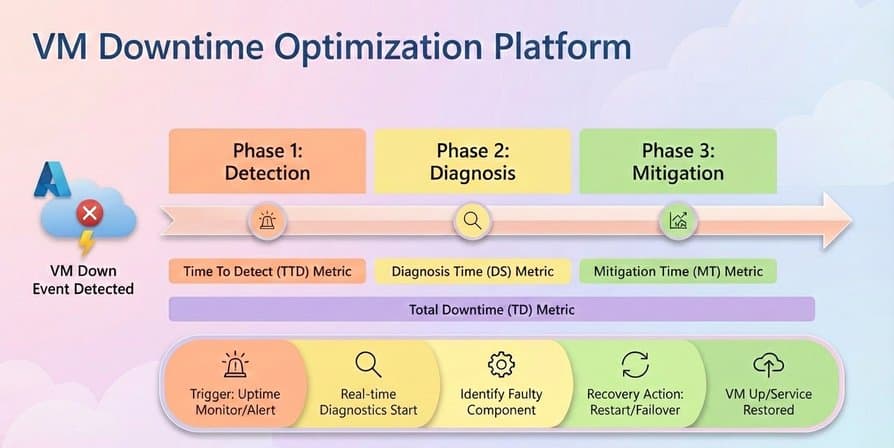
The automated recovery process follows a sophisticated three-stage approach:
Detection: Multiple parallel mechanisms identify issues quickly. Azure hardware devices send regular health signals, which are monitored for interruptions or degradation. At the application level, operational health is tracked via response times, error rates, and successful operations to detect software-level problems rapidly.
Diagnosis: Lightweight diagnostics determine the best recovery action without unnecessary delays. The system operates at multiple levels: host-level checks assess underlying infrastructure, VM-level diagnostics evaluate the virtual machine state, and system-on-chip (SoC) level analysis examines hardware components. This includes network checks, resource utilization assessments, and service responsiveness tests.
Mitigation: Based on diagnostics, the system automatically executes the optimal recovery strategy, starting with the least disruptive methods and escalating as needed. Hardware failures may trigger VM migration, while software issues might be resolved with targeted service restarts. If needed, a host reset is performed while preserving virtual machine state, ensuring minimal disruption to running workloads.
Enhanced Visibility Through Recovery Event Annotations
A key innovation is the Recovery Event Annotations feature, which provides detailed visibility into every stage of VM recovery. These specialized annotations break down each incident into precise time segments, offering metrics like:
- TTD (Time to Detect): Time between a VM becoming unhealthy and the system recognizing the issue
- TTDiag (Time to Diagnose): Duration of diagnostic checks
- Recovery Timing Indicators: Help identify bottlenecks and optimize recovery steps
These annotations enable teams to understand why some VMs recover faster than others, identify which diagnostics add value, highlight opportunities for faster recovery paths, and establish a common language across Azure teams for measuring and improving downtime.
Business Impact and Results
The numbers speak for themselves. Over the past 18 months, Azure Automated VM Recovery has cut average VM downtime by more than half, significantly enhancing reliability and customer experience. This translates to:
- Better customer experience: Minimizing VM downtime helps customers keep services online, avoiding disruptions and potential business losses
- Stronger trust in Azure: Fast, reliable recovery builds customer confidence in Azure's platform
- Reduced financial impact: Lower downtime means less time customers are impacted, reducing potential loss of revenue
- Empowered internal teams: Automated monitoring and clear visibility into recovery metrics help teams track health and identify improvement opportunities
Getting Started
The best part? Azure Automated VM Recovery requires no setup or configuration. Running quietly in the background, this service helps guarantee the highest level of recoverability and a smooth experience for every Azure customer. Your VMs are already benefiting from faster detection, smarter diagnosis, and optimized recovery strategies.
This launch demonstrates Microsoft's commitment to not only high availability but also rapid recovery. By minimizing downtime, it helps customers build resilient applications and maintain business continuity during unexpected failures. The ongoing goal is to provide a platform where customers can deploy workloads with confidence, knowing automated recovery will minimize disruptions.
For businesses operating in industries where downtime translates directly to lost revenue or compromised services, this automated recovery feature represents a significant step forward in cloud reliability and operational excellence.
Comments
Please log in or register to join the discussion