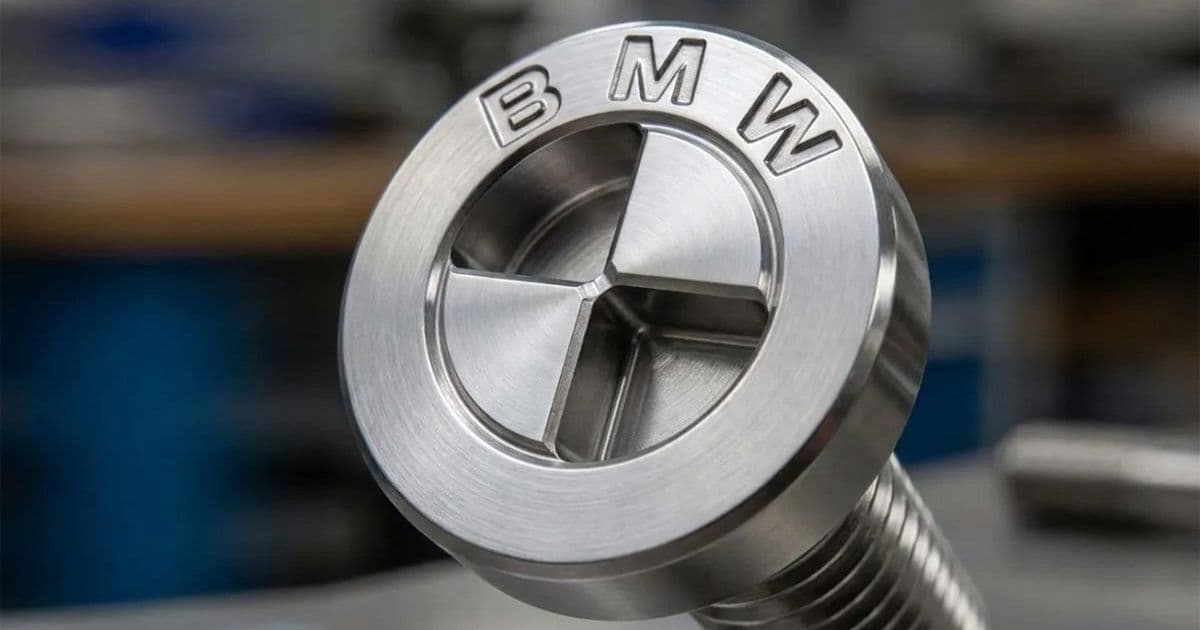
BMW's new logo-shaped security screws, designed to prevent unauthorized access, have drawn criticism from repair advocates and inspired 3D-printed workarounds from the maker community.
BMW's latest patent filing has ignited a heated debate about right-to-repair principles in the automotive industry. The German automaker has developed a new fastener design that incorporates its iconic roundel logo, but critics argue this innovation serves more as a barrier to repair than a genuine engineering advancement.
The Logo Screw Controversy
The patented fastener features a head design where two of the four segments of the BMW roundel logo are voids, requiring a specialized driver bit for proper installation and removal. While the design might appear novel at first glance, repair advocates quickly identified its true purpose.
According to the patent application, BMW intends for this fastener to be implemented "...to prevent being loosened or tightened...by unauthorized individuals." This language has raised red flags among repair communities who see it as a deliberate attempt to restrict access to vehicle components.
Repair-centric site iFixIt didn't mince words in its assessment, calling BMW's plans "a logo-shaped middle finger to right to repair." The criticism stems from BMW's history of implementing measures that complicate third-party repairs and modifications to their vehicles.
Engineering Analysis
From a purely technical standpoint, the BMW fastener design raises questions about its practical utility. The automotive industry has largely standardized on Torx and Hex fasteners for good reason – they offer superior torque transfer, reduced wear, and minimal slippage compared to many alternative designs.
Adafruit, a prominent player in the maker community, conducted a detailed analysis of the patent and concluded that the design's problems, solutions, and other aspects aren't truly patentable. They argue that the fastener is primarily branding and cosmetic rather than addressing any genuine engineering necessity.
The Maker Community Strikes Back
Demonstrating the power of open-source collaboration, Adafruit has already created functional replicas of both the BMW fastener and the corresponding driver bit. The company produced both plastic and metal 3D printed versions that worked "cleanly" according to their testing.
Adafruit's technical guidance for those interested in creating their own versions emphasizes the importance of material selection. They recommend choosing materials "strong enough to survive sharp internal corners without fracture" to ensure reliable performance.
Broader Implications for Right-to-Repair
The BMW logo screw controversy highlights a growing tension between manufacturers and repair advocates. As vehicles become increasingly complex with integrated electronics and software, manufacturers have more tools at their disposal to control who can service and modify their products.
This isn't an isolated incident. Many automakers have implemented various measures to restrict unauthorized repairs, from proprietary diagnostic tools to software locks. The logo screw represents a more physical manifestation of this trend – a deliberately non-standard fastener that serves no engineering purpose beyond complicating repairs.
The Future of Vehicle Repair
The rapid response from the maker community suggests that attempts to restrict repairs through physical barriers may be ultimately futile. Within days of the patent becoming public, multiple 3D printable files for both the screw and driver bit were available online.
This dynamic raises interesting questions about the effectiveness of such anti-repair measures. While they may create temporary obstacles for individual repair shops or enthusiasts, the collaborative nature of the maker community means that workarounds typically emerge quickly.
Industry Response and Consumer Impact
The automotive repair industry has expressed concern about the proliferation of manufacturer-specific fasteners and tools. Independent repair shops argue that such measures increase costs for consumers and reduce competition in the aftermarket service sector.
Consumer advocacy groups have also weighed in, noting that restricted access to repair information and tools can lead to higher maintenance costs and reduced vehicle longevity. They argue that consumers should have the right to choose who services their vehicles and what parts are used.
Technical Considerations
From an engineering perspective, the BMW logo screw represents an interesting case study in the intersection of branding and functionality. While the design successfully incorporates brand elements, it does so at the expense of practical utility.
The fastener's non-standard design means that specialized tools will be required for any work involving these screws, potentially complicating everything from routine maintenance to emergency repairs. This could be particularly problematic in situations where immediate access to specific tools isn't possible.
Looking Ahead
As the automotive industry continues to evolve with increasing electrification and software integration, the battle over repair rights is likely to intensify. Manufacturers will continue to seek ways to protect their intellectual property and maintain control over their products, while repair advocates will push back against measures they see as anti-competitive.
The BMW logo screw controversy serves as a reminder that even seemingly small design choices can have significant implications for consumer rights and the repair economy. It also demonstrates the power of community-driven solutions in the face of corporate restrictions.
The rapid development of 3D printed alternatives suggests that physical barriers to repair may be less effective than manufacturers hope. However, the ongoing tension between proprietary designs and right-to-repair principles ensures that this debate will continue to evolve as technology advances.
For now, BMW's logo screw stands as a symbol of the broader challenges facing the right-to-repair movement – a reminder that the fight for repair freedom extends beyond software and into the physical components that make up our vehicles.
Comments
Please log in or register to join the discussion